
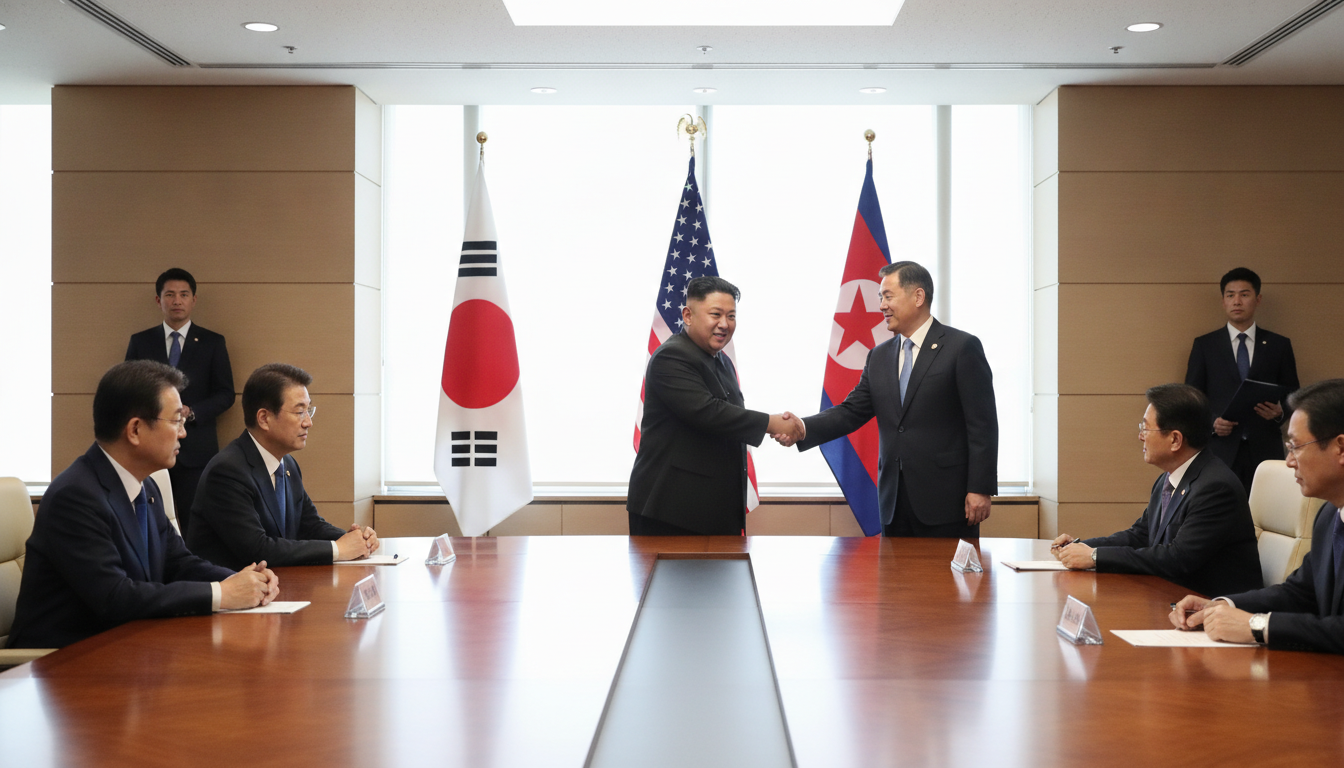
Japan and South Korea Warn of Being Sidelined as US-North Korea Diplomacy Gains Momentum
Japan and South Korea risk marginalization as momentum builds for renewed US-North Korea diplomacy, raising urgent questions about consultation, security and alliance cohesion.
As attention shifts from clashes between the United States and Iran, momentum appears to be building for a restart of high-level US-North Korea diplomacy, a development that has prompted unease in Tokyo and Seoul. Security experts and regional officials warn that Japan and South Korea could be sidelined in any direct negotiations between Washington and Pyongyang, complicating efforts to protect national security interests and maintain alliance coordination.
Signals of renewed Washington–Pyongyang engagement
Recent public comments and diplomatic movements suggest both Washington and Pyongyang are exploring pathways back to talks after a period of limited contact. Observers point to a mix of backchannel approaches and public statements that indicate leaders on both sides see utility in resetting dialogue at the top level. The prospect of direct engagement is creating urgency among neighboring capitals to ensure their concerns are not overlooked in any negotiation framework.
Tokyo and Seoul’s core concerns
Japanese and South Korean officials emphasize several issues they fear might be relegated to the margins if talks proceed without their active participation. Foremost among these are the DPRK’s ballistic missile program, denuclearization verification, and unresolved bilateral matters such as abductions and conventional military threats. Both governments stress the need for explicit consultation mechanisms that bind any US–DPRK understandings to trilateral security priorities.
Impact on alliance dynamics and deterrence
Allied military planners warn that bilateral talks between Washington and Pyongyang, if not carefully coordinated, could undermine established deterrence postures in East Asia. Japan and South Korea maintain integrated defense relationships with the United States that depend on shared threat assessments and synchronized defensive measures. Any diplomatic breakthroughs lacking parallel security guarantees risk creating gaps in regional posture and public confidence in alliance commitments.
Diplomatic tools Tokyo and Seoul can deploy
Analysts outline several practical measures Japan and South Korea can take to preserve influence in US–North Korea diplomacy without obstructing talks. These include seeking formalized consultation guarantees, intensifying trilateral working groups on verification and compliance, and offering confidence-building measures that address humanitarian and verification concerns. Maintaining visible, constructive engagement in Washington is seen as essential to ensuring national priorities are reflected in any outcome.
Domestic political pressures shaping responses
Domestic politics in Tokyo and Seoul are likely to shape how each government approaches renewed diplomacy between Washington and Pyongyang. Political leaders must balance public demands for security with skepticism about concessions that lack verifiable safeguards. Lawmakers and civil society groups in both countries have repeatedly pushed for explicit protections on issues such as missile defenses and citizens’ safety, constraining room for unilateral accommodation.
Risks if consultations falter
Experts caution that sidelining key regional partners could produce unintended consequences that complicate a diplomatic path forward. Excluding Japan and South Korea could erode intelligence-sharing arrangements, weaken enforcement of sanctions regimes, and reduce the credibility of any verification protocol agreed with Pyongyang. The result could be a fragile bargain that fails to deliver lasting reductions in the DPRK’s capabilities or incentives for compliance.
What to watch next in regional diplomacy
Observers will be watching formal statements, the establishment of any consultation timelines, and whether Washington offers binding mechanisms to involve Tokyo and Seoul in negotiation architecture. The cadence of military activities and missile tests will also influence the urgency and content of diplomatic engagement. How quickly allied capitals secure written guarantees and technical roles in verification will be a key indicator of whether they retain meaningful influence.
Maintaining alliance cohesion while encouraging diplomatic openings will require careful diplomacy from all parties, who must reconcile immediate incentives for direct US–DPRK talks with long-term regional security needs. Japan and South Korea are likely to stress that any progress on North Korea must be accompanied by clear, enforceable safeguards and ongoing trilateral coordination to prevent strategic surprises and protect shared security interests.

