
Japan Announces 500 Million Yen Cambodia Defense Aid Under Official Security Assistance
Japan to provide 500 million yen in defense aid to Cambodia, supplying communications gear and patrol boats under its Official Security Assistance program.
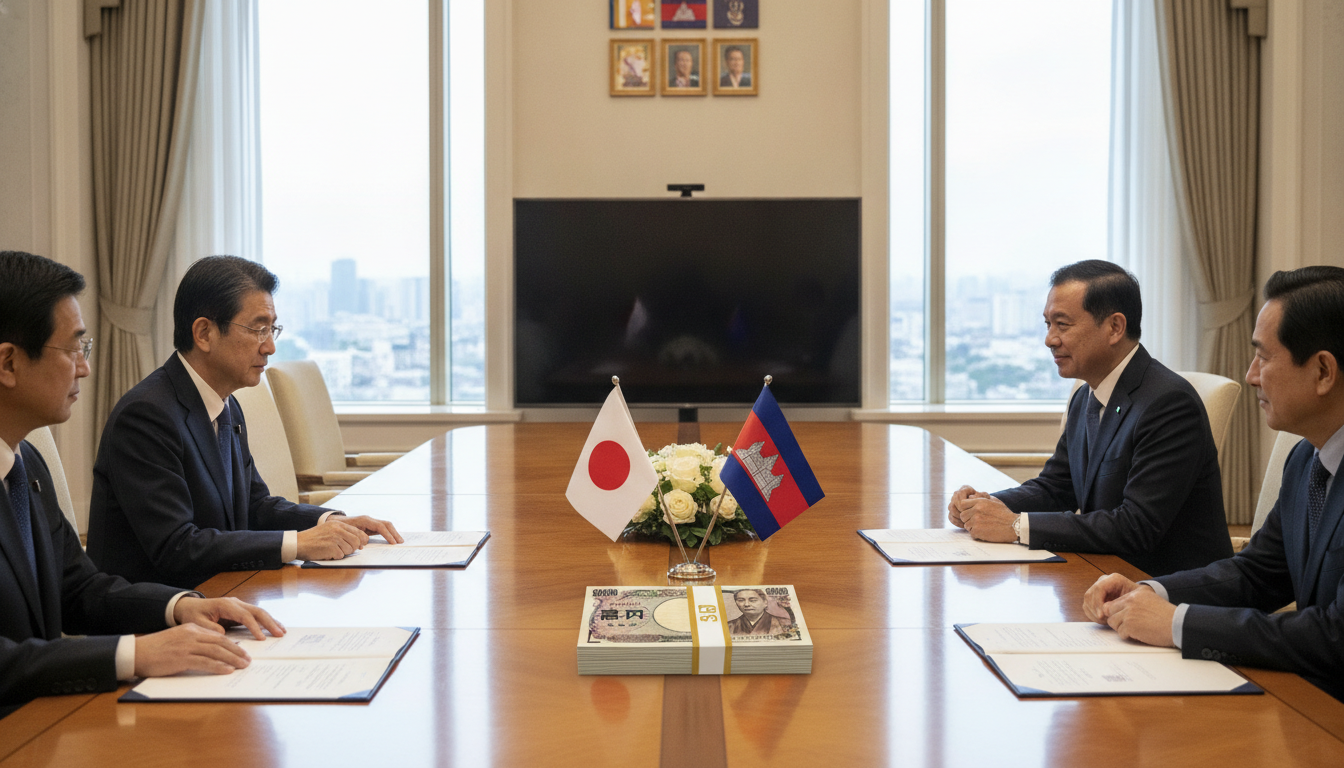
Japan will provide Cambodia with defense assistance worth 500 million yen (about $3.08 million), Tokyo announced, marking the first time the Southeast Asian nation has received support under Japan’s Official Security Assistance program. The package, which includes army communications equipment and naval patrol boats, was formalized during a signing between Japanese and Cambodian officials. The move underscores Tokyo’s effort to deepen security cooperation with friendly countries through non-lethal capacity-building support.
Details of the 500 Million Yen Package
Japanese authorities said the assistance comprises communications equipment geared to improve army coordination and a number of coastal patrol boats intended to bolster maritime presence. The value of the package, 500 million yen, is equivalent to roughly $3.08 million at current exchange rates. Officials described the items as tailored for mission-critical tasks such as coastal surveillance, search-and-rescue, and enhanced interoperability with partner forces.
The equipment is being provided under a framework that prioritizes non-offensive aid and logistical support, according to Japanese statements. Procurement, training, and maintenance arrangements are expected to be coordinated between Tokyo and Phnom Penh in the coming months. Both sides indicated the delivery schedule and operational handover would be announced after technical and diplomatic consultations conclude.
Official Security Assistance Program Milestone
The aid represents the first time Cambodia has benefited from Japan’s Official Security Assistance program, a Tokyo initiative designed to support the defense capabilities of friendlier nations without transferring offensive weaponry. The program has previously supplied communications, transport, and non-lethal equipment to other partner states as part of Japan’s broader effort to contribute to regional stability. Tokyo frames the program as a means to assist partner countries in addressing security challenges while adhering to Japan’s pacifist constitutional constraints.
Japanese officials characterized the Cambodia package as consistent with that approach, emphasizing capacity-building, humanitarian operations, and maritime security cooperation. The decision to expand the program’s reach to Cambodia follows a period of diplomatic engagement aimed at strengthening bilateral ties.
Diplomatic and Strategic Context in Southeast Asia
Observers note the assistance arrives amid intensified strategic competition in Southeast Asia, where regional governments are balancing relationships with major powers. Japan has sought to deepen security and economic ties with ASEAN members as part of a broader push to support a rules-based regional order. Capacity-building assistance, such as communications gear and patrol craft, is often framed as supporting partner-led efforts to manage maritime domain awareness and humanitarian responses.
Cambodia’s geographic position along the Gulf of Thailand and its involvement in regional maritime activities make coastal patrol and communications capabilities particularly relevant. Analysts say the aid may enhance Cambodia’s ability to participate in regional exercises and joint operations while signaling Tokyo’s interest in pragmatic security cooperation across Southeast Asia.
Reactions in Tokyo and Phnom Penh
Japanese officials described the assistance as a practical contribution to Cambodia’s security and disaster-response capabilities, and they framed it as part of a maturing bilateral relationship. Cambodian authorities welcomed the support as a boost to national capabilities and an example of growing cooperation with Japan on practical security challenges. Both sides emphasized that the equipment is intended for defensive and humanitarian purposes rather than offensive military transformation.
Domestic reaction in Japan is likely to be measured, with policymakers mindful of constitutional constraints and public sensitivity around military assistance. In Phnom Penh, officials highlighted the diplomatic significance of receiving support from Tokyo while balancing relationships with other partners.
Planned Implementation and Capacity-Building
Tokyo and Phnom Penh have indicated that training and technical assistance will accompany the equipment deliveries to ensure effective operation and upkeep. Training programs could cover vessel handling, maritime surveillance procedures, and secure communications protocols, enabling Cambodian forces to integrate the new systems into existing operations. Technical support and spare parts provisioning are commonly included in similar assistance packages to promote sustainability.
Multilateral exercises and joint training opportunities with other regional partners may follow, reflecting Japan’s aim to enhance interoperability among friendly forces. Such activities are expected to prioritize maritime safety, humanitarian aid and disaster relief, and the non-combat aspects of security cooperation that Tokyo emphasizes.
Japan’s move to extend Official Security Assistance to Cambodia signals a pragmatic approach to strengthening regional ties and enhancing partner capacities. The 500 million yen package of communications gear and patrol boats will be accompanied by technical support and training, with both governments pointing to maritime safety and humanitarian missions as immediate priorities. As delivery and implementation proceed, officials in Tokyo and Phnom Penh say they will provide further details on schedules, operational plans, and cooperative training initiatives.

