
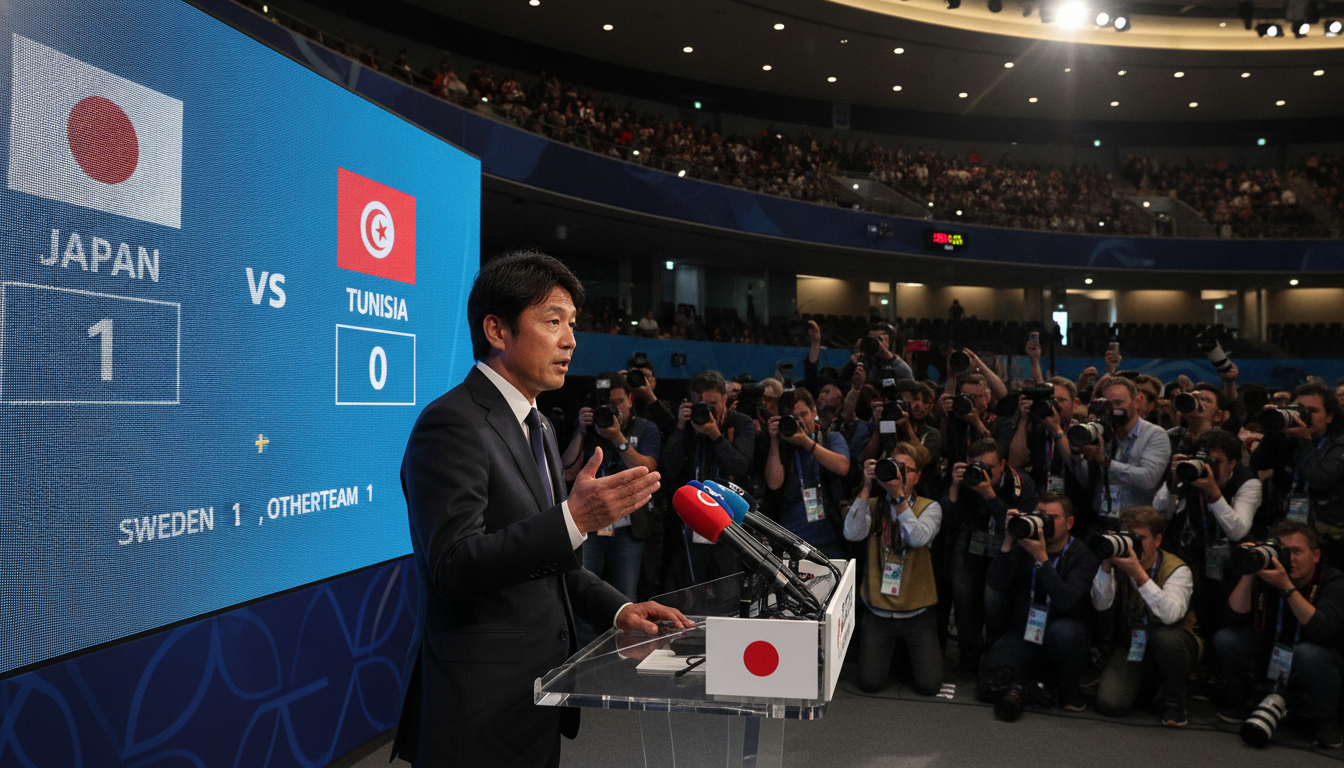
Japan World Cup: What Japan Needs to Do to Advance from Group F
Japan World Cup qualification scenarios explained: standings, tiebreakers and precise results Japan needs in remaining Group F matches to reach the knockout stage.
Strong opening summary
Japan enters the final stages of Group F at the 2026 World Cup with qualification still very much alive, but dependent on specific results over the next two matches. As of 11:04 a.m. JST on June 21, 2026, Japan sits third in Group F with one point after a 2-2 draw with the Netherlands in the opening match. The group currently places the Netherlands on four points (+4), Sweden on three points (goal difference 0), Japan on one point (goal difference 0) and Tunisia on zero points (-4), creating a narrow margin for error.
F Group standings as of June 21, 2026
The table of Group F reflects two rounds of play, with Sweden having beaten Tunisia 5-1 and the Netherlands overcoming Sweden 5-1 in their second-round meeting. Japan’s single point came from the 2-2 draw with the Netherlands in the first round, leaving the side needing positive results to secure a top-two finish. These concrete standings frame the scenarios Japan must navigate in its matches against Tunisia (June 20–21, JST) and Sweden (June 25–26, JST).
What a Japan win over Tunisia would mean
A victory for Japan against Tunisia would lift the team to four points and put it in a strong position going into the final matchday. With four points, Japan would guarantee qualification for the top two in the group with at least a draw against Sweden in the final game, a result that would take the side to five points. Even if Japan were to lose the last match, advancement would still be possible depending on the outcome of the Netherlands’ match against Tunisia and goal-difference comparisons.
Scenarios after a draw or defeat vs Tunisia
If Japan draws with Tunisia and finishes the second matchday on two points, a win over Sweden in the final match would be necessary to secure a top-two berth; such a victory would bring Japan to five points and make qualification automatic. Conversely, a defeat to Tunisia would leave Japan on one point and require a victory over Sweden as an absolute minimum. In that losing scenario, Japan’s progression to second place would also depend on the result of the Netherlands vs Tunisia game; if the Netherlands wins, Japan could finish second with a win over Sweden, while a Netherlands loss would create a points tie that would be settled by tiebreakers.
Tiebreakers that will determine group order
When teams finish level on points in the group, the tournament uses a strict sequence of tiebreakers to determine placings. The primary criteria are head-to-head results: points gained in matches among the tied teams, followed by goal difference in those head-to-head matches, and then goals scored in those head-to-head encounters. If teams remain tied, overall group goal difference and total goals scored across all group matches are applied next. Further separation is decided by fair-play points — with yellow cards counting as -1 and a direct red typically as -4 — and finally by the FIFA world ranking if all other factors are equal.
Route to the round of 16 via third-place ranking
Japan, like any third-placed team, could still qualify for the round of 16 without finishing in the top two by being among the eight best third-placed teams across all groups. That secondary path is decided first by group points, then group goal difference and total goals, and still uses fair-play points and FIFA ranking as later separators. Given the current scoreboard realities and the size of the field, Japan’s most straightforward path remains finishing among the top two in Group F, but a strong goal difference and disciplined play could preserve a third-place route.
Key matches and tactical considerations for Japan
The immediate priority for Japan is the Tunisia match, where securing three points would significantly simplify qualification math and relieve pressure ahead of the Sweden game. Against Sweden, Japan will likely need to approach the match prepared both to attack for goals and to protect its goal difference; the tie-breaking rules place a premium on both head-to-head outcomes and overall scoring. Coaches and players must also be mindful of accumulating yellow and red cards, since fair-play points can become decisive in tight group comparisons.
Japan’s final outcomes will hinge on clear, measurable results in the remaining fixtures, and the team’s margin for error is narrowing as the group stage progresses.

