
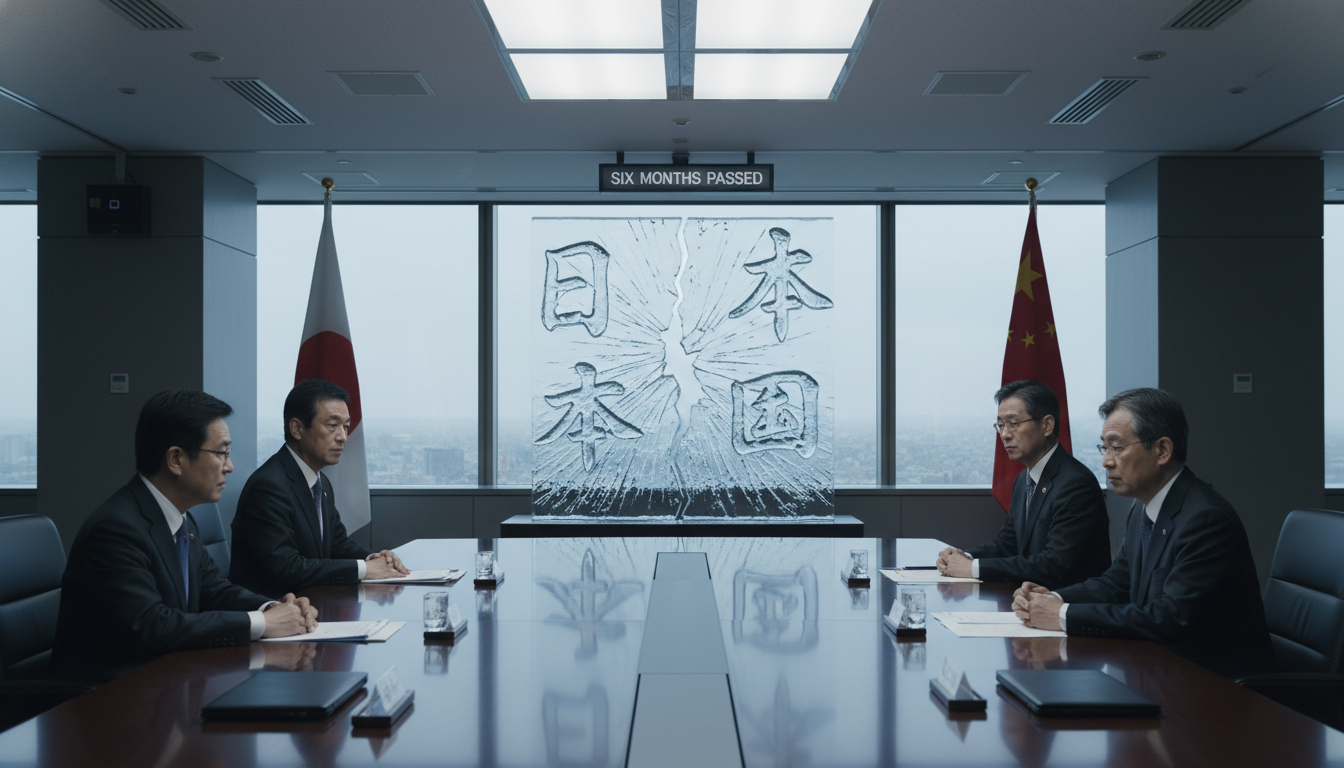
Takaichi Taiwan Remarks Still Strain Tokyo–Beijing Ties Six Months On
Six months after Prime Minister Sanae Takaichi’s remarks on Taiwan, Tokyo and Beijing remain at odds, with diplomatic, economic and security tensions persisting.
Japan’s relations with China have shown little sign of recovery six months after Takaichi’s remarks about Taiwan chilled ties late last year. The comments, delivered as part of a broader security and regional policy address, prompted a sharp reaction in Beijing and have complicated bilateral engagement since. Government sources and business leaders say the freeze has produced tangible effects in diplomacy, trade dialogue and regional security coordination.
Takaichi’s December Remarks and Immediate Fallout
Prime Minister Takaichi warned of risks to regional stability in comments made late last year that referenced Taiwan and Japan’s security posture. Those remarks were widely reported and interpreted in Beijing as an escalation, leading to swift rhetoric from Chinese officials.
Tokyo officials defended the comments as part of a policy discussion on national defense and democratic values, but they acknowledged the diplomatic cost. Japanese government spokespeople have repeatedly emphasized that Tokyo seeks stable relations while safeguarding its own security interests.
Beijing’s Public and Private Responses
Chinese authorities publicly criticized the remarks, characterizing them as interference in China’s internal affairs and a source of bilateral tension. State media coverage and official statements signaled Beijing’s displeasure, and diplomats in both capitals described a marked chill in routine exchanges.
Beyond rhetoric, Beijing took measured steps that slowed the pace of high-level contacts and cultural exchanges, according to diplomatic correspondents. Those measures have included tighter scrutiny of official visits and a pause in some bilateral cooperation forums, creating new barriers for contact at working and ministerial levels.
Tokyo’s Diplomatic Countermeasures
In Tokyo, officials have sought to manage the fallout by emphasizing communication channels and clarifying policy intent, while maintaining a firm stance on national security. The government has balanced outreach with a continued commitment to strengthen Japan’s defense posture and alliances.
Ministry-level exchanges and scheduled talks were reviewed or postponed in several instances, reflecting mutual caution. Japanese diplomats say they continue to pursue pragmatic engagement on issues of shared interest, such as trade, climate and people-to-people ties, even as political relations remain constrained.
Economic and Business Implications
Trade and investment flows have not collapsed, but executives and chambers of commerce report increased uncertainty for companies operating across the two economies. Firms that rely on cross-border supply chains face added friction as diplomatic tensions complicate regulatory and permitting processes.
Japanese exporters and investors are watching for any durable policy shifts from Beijing that could affect market access or procurement decisions. At the same time, Tokyo’s business community has reiterated the importance of stable economic relations and urged both governments to insulate commerce from political disputes.
Security Dynamics and Regional Concerns
Observers say the episode has amplified broader anxieties in East Asia about the Taiwan Strait and the potential for miscalculation. Military patrols, maritime activity and surveillance missions by regional powers continued at heightened levels in the months following the remarks, according to security analysts.
Allied consultations between Tokyo and partners have intensified as policymakers assess contingency options and reinforce deterrence measures. Analysts caution, however, that prolonged diplomatic strain reduces the mechanisms for crisis de-escalation and raises the stakes for accidental confrontations.
Diplomatic Track and Prospects for Normalization
Diplomats in both capitals indicate discreet, behind-the-scenes contacts have not entirely ceased, pointing to limited but ongoing channels for managing disputes. These quiet lines of communication are considered essential for preventing misreads and keeping options open for a future thaw.
Political timing, domestic politics and external events will shape whether relations return to a steadier course, officials say. Both Tokyo and Beijing face internal constraints that complicate rapid rapprochement, and any move toward normalization will likely require careful public messaging and reciprocal confidence-building steps.
Business groups and regional partners have urged pragmatic steps to reduce friction, recommending targeted dialogues that separate contentious political issues from areas of mutual interest. Such approaches are seen as the most viable path to stabilizing ties without requiring either side to abandon core positions.
As Japan and China enter another phase of cautious interaction, the impact of Takaichi’s remarks about Taiwan remains a reminder of how quickly rhetoric can reshape diplomatic terrain. The coming months will test whether measured diplomacy and sustained engagement can restore predictability to one of the world’s most consequential bilateral relationships.

