
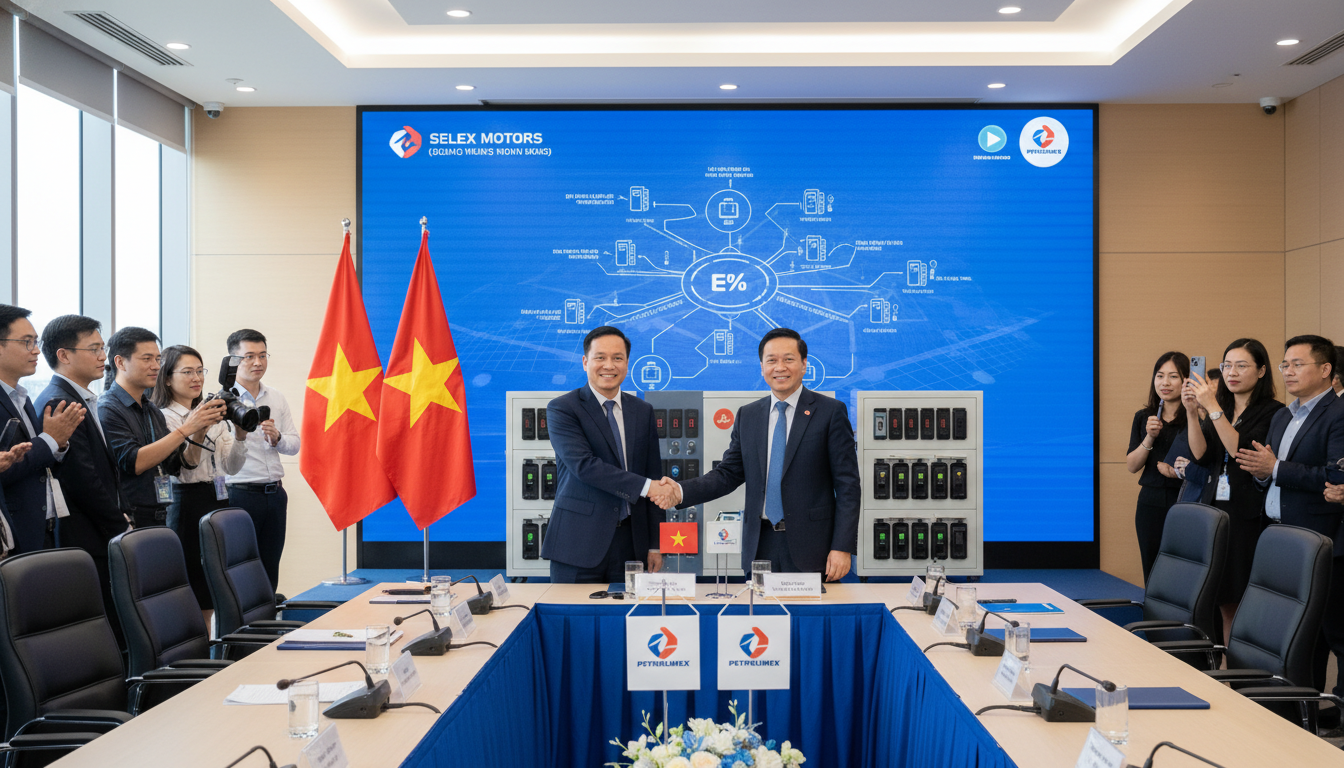
Selex and Petrolimex Launch Battery Swapping Network to Break Brand Lock-In in Vietnam
Selex and Petrolimex have formed a joint venture to build a nationwide battery swapping and charging network, aiming to reduce brand lock-in and accelerate EV adoption in Vietnam.
Opening summary
Selex, a Vietnamese electric motorbike startup and rival to VinFast, has launched a joint venture with state-owned Petrolimex to roll out battery swapping and charging stations that are interoperable across brands. The new network will place facilities at Petrolimex’s existing petrol stations and other locations to give riders access to battery swapping without being tied to a single manufacturer. The move is intended to address a key barrier to electric vehicle adoption in Vietnam by making charging and swapping more convenient and widely available.
Selex and Petrolimex form national charging venture
The partnership pairs Selex’s electric-mobility expertise with Petrolimex’s large retail footprint to create a nationwide presence quickly and cost-effectively. By locating infrastructure at established petrol stations, the venture can leverage sites that already attract regular vehicle traffic and have grid connections, easing deployment logistics. Company statements describe the network as open to multiple vehicle makers, signaling a deliberate shift away from manufacturer-specific ecosystems.
Battery swapping and open charging network
The joint venture will combine battery swapping services with conventional fast-charging points, offering riders flexibility in how they refuel their electric vehicles. Battery swapping allows a depleted battery to be exchanged for a fully charged unit in minutes, addressing range anxiety and reducing downtime for commercial and personal riders alike. The interoperable approach is explicitly designed so users are not forced to buy into a single brand’s hardware or battery format.
Direct challenge to VinFast’s proprietary model
Vietnam’s largest EV maker, VinFast, has developed its own proprietary charging network and battery systems, a strategy that has helped it control customer experience but also raised concerns about interoperability. Industry observers have pointed to proprietary networks as one factor slowing broader EV adoption, since riders face incentives to stay with a single manufacturer to ensure access to charging and swap services. The Selex–Petrolimex initiative aims to present an alternative that prioritizes cross-brand compatibility and wider station availability.
Rollout plan leverages petrol-station footprint
Petrolimex operates one of Vietnam’s most extensive retail fuel networks, and the joint venture plans to use those locations as a backbone for rapid rollout of swapping and charging points. Placing swap stations at petrol forecourts offers a practical transition path for drivers and riders accustomed to stopping at fuel outlets during daily trips. The partners say this model can accelerate coverage in urban corridors and on intercity routes where charging deserts have previously limited electric vehicle use.
Implications for riders and fleet operators
For private riders, access to battery swapping could shrink charging wait times and simplify ownership by removing concerns about battery degradation and replacement costs. Fleet operators, ride-hailing companies and delivery services stand to benefit from predictable turnaround times and centralized battery management, which can lower operating expenses. Open networks can also foster competition among battery suppliers and service providers, potentially reducing costs and improving service standards over time.
Regulatory and commercial hurdles ahead
Despite the strategic advantages, the venture faces commercial and regulatory challenges, including technical standardization, grid capacity at refueling sites, and coordination with local authorities on permitting. Establishing interoperable battery formats and safety protocols will be essential if multiple manufacturers and battery providers are to participate. The partners will also need to align pricing, revenue-sharing and maintenance models to ensure the system is financially sustainable for station operators and attractive to end users.
Selex and Petrolimex’s plan underscores a broader market shift in Vietnam from vertically integrated EV ecosystems toward more open infrastructure, a development that could influence manufacturer strategies and consumer choices. The success of the network will hinge on rapid deployment, technical interoperability and the ability to demonstrate clear benefits to riders and commercial operators alike.

