
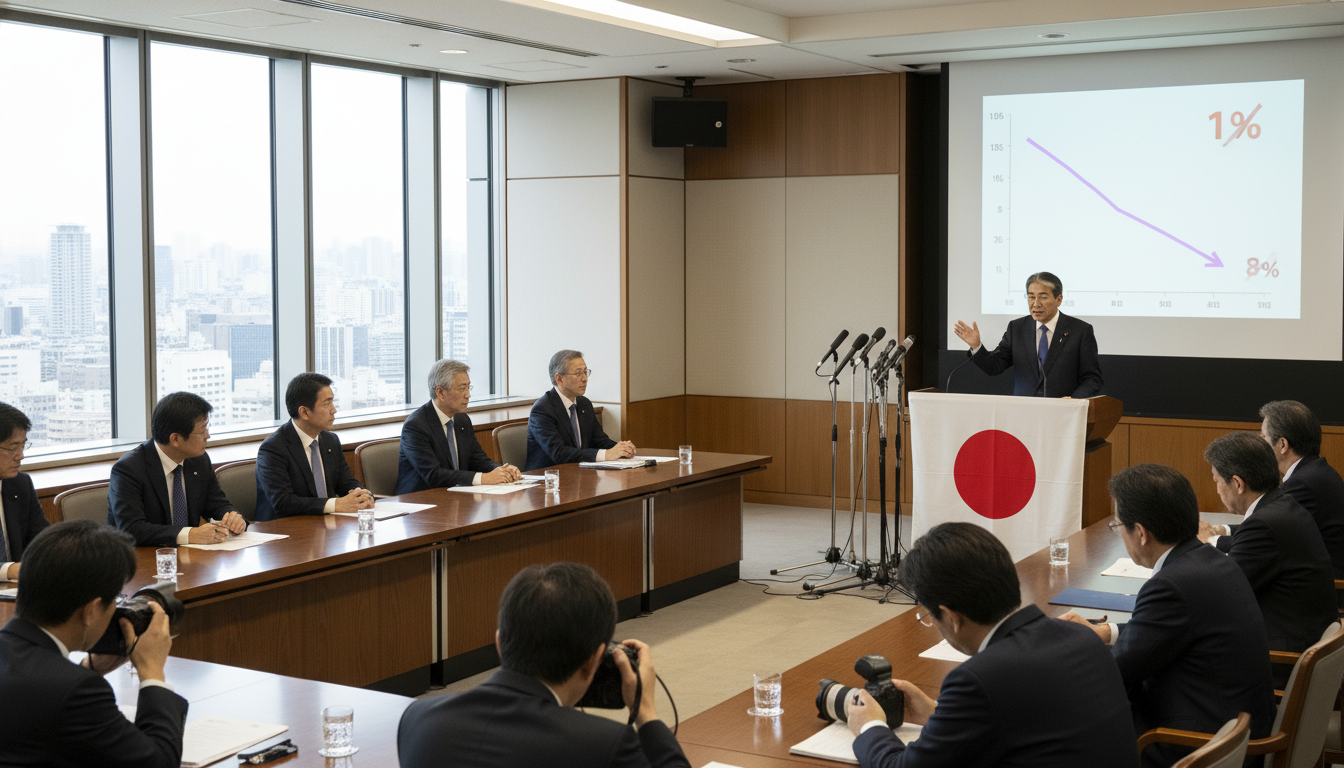
Japan to Implement Food Consumption Tax Cut of 1% from April 2027
Japan’s government plans a two-year food consumption tax cut to 1% from April 2027, prioritizing rapid implementation while discussing compensation for the remaining 1%.
The government has begun adjusting policy to reduce the consumption tax on food items to 1% for a two-year period starting April 1, 2027, sources said. The proposed food consumption tax cut aims to deliver relief quickly after ruling party commitments to a zero rate proved difficult to implement in the short term. Officials and ruling party members signaled that speed of delivery is being weighed against the original pledge to eliminate the levy entirely.
Cabinet and party shift toward a 1% reduction for immediate relief
The move toward a 1% food consumption tax cut reflects a pragmatic shift within the cabinet and the ruling Liberal Democratic Party. Several government officials told reporters that, while the LDP included a zero rate for food in its election pledge, logistical realities have made immediate full exemption infeasible. Prime Minister Sanae Takaichi has expressed interest in accelerating tax relief within the fiscal year, but policymakers have prioritized measures that can be enacted quickly.
Senior government figures said consensus has emerged that implementing a 1% rate sooner would likely gain public support compared with delayed or partial delivery of a promised zero rate. The plan under discussion would limit the reduced rate to two years and target household spending on food items while leaving the current differentiated rates on dining out unchanged.
Technical constraints: zero rate needs longer system upgrades
Government hearings with major systems providers found that point-of-sale and payment systems would require about one year of modifications to handle a full zero consumption tax on food. By contrast, converting the food rate from 8% to 1% could be accommodated in roughly six months, according to the vendors’ assessments. That timetable has been a decisive factor in the government’s shift toward the 1% option.
Officials explained that retailers, especially smaller outlets, face substantial costs and operational disruptions if cash registers and accounting systems must distinguish a zero-tax category. The shorter lead time for a 1% cut reduces the immediate burden on businesses and increases the likelihood that shops can prepare by the April 2027 start date.
Political calculations inside the LDP and coalition partners
Within the ruling coalition, debates have focused on balancing electoral promises with deliverability. The LDP campaigned on accelerating consideration of a zero food tax, and party leaders initially pressed for full exemption as a flagship policy. But as technical assessments clarified implementation timelines, influential party members began arguing that achieving a near-term food consumption tax cut of 1% would be preferable to failing to meet the zero-rate pledge.
Prime Minister Takaichi signaled in a May 20 party debate that speed matters, according to attendees. A number of senior diet members reportedly favor a practical approach that quickly produces tangible relief for households, even if it falls short of the original zero-rate promise.
Fiscal impact and proposed measures to offset the shortfall
A 1% reduction in the food consumption tax, rather than complete exemption, would leave roughly ¥600 billion in foregone relief compared with a zero rate, officials estimated. The government is considering measures to compensate for that remaining burden, including targeted subsidies or one-off rebates to households, and support packages for sectors that would not benefit from the cut. The restaurant and food-service industry, which remains subject to the 10% general consumption tax, is likely to be included in separate assistance plans.
Budget planners and finance ministry officials are weighing how to finance transitional measures without undermining fiscal discipline. Proposals under discussion include time-limited transfers, sector-specific aid, and administrative steps to streamline retailer adaptation costs.
Decision timetable and legislative path toward autumn Diet session
Officials said the cabinet will assess public reaction and the National Council’s deliberations before making a final determination by the end of June 2026. The body known as the National Council is expected to complete an interim report in mid-June, which will inform the government’s final policy choices. If the administration formally adopts the 1% two-year plan, it intends to submit the necessary legislation to the extraordinary Diet session anticipated in autumn 2026.
Lawmakers and ministry staff have been preparing draft bill language and implementation guidelines to meet that timetable. Should the Diet approve the measure, ministries will work with system vendors and industry groups to ensure that retail and accounting systems are ready in time for the April 1, 2027 start of the reduced food consumption tax rate.
Final decision-making will balance political credibility, technical feasibility, and the desire to provide timely relief to households. The proposed 1% food consumption tax cut reflects a compromise aimed at delivering measurable benefit within a compressed implementation window.
Public reactions, industry readiness, and legislative developments will shape the precise contours of the plan in the coming weeks as Tokyo moves from policy discussion to execution.

