
Japan Defense Ministry Seeks Record 8.9 Trillion Yen Defense Budget for FY2027
Japan’s Defense Ministry seeks a record 8.9 trillion yen defense budget for FY2027, aligning with the current five-year buildup plan and signaling new investments in AI and unmanned interceptors. The ministry submitted a draft preliminary request that mirrors the government’s 2023–2027 defense spending framework but includes numerous unspecified items pending policy revisions. Officials warn the final government budget, decided at year-end, could exceed the initial 8.9 trillion yen figure once detailed needs are quantified.
Record Request Follows Five-Year Defense Buildup Plan
The 8.9 trillion yen defense budget request is consistent with a government decision to target roughly 43 trillion yen in defense spending across fiscal 2023–2027, with 2027 earmarked at about 8.9 trillion. Defense Ministry officials framed the request as part of steady implementation of the current defense buildup plan rather than a unilateral escalation. The submission marks the largest preliminary ask in the ministry’s history and underscores long-term efforts to reshape Japan’s capabilities.
Many “Matters Requests” Leave Final Total Open
This year’s draft contains a substantial number of “matters requests,” items submitted without fixed monetary values while the government revises three key security documents. The use of itemized but unspecified requests is intended to preserve flexibility as the National Security Strategy and related policy frameworks are updated later in the year. Budget officials say that because many line items are not yet priced, the amount finally included in the cabinet-approved budget could rise materially above the 8.9 trillion yen request.
AI and Interceptor Drones Highlight New Priorities
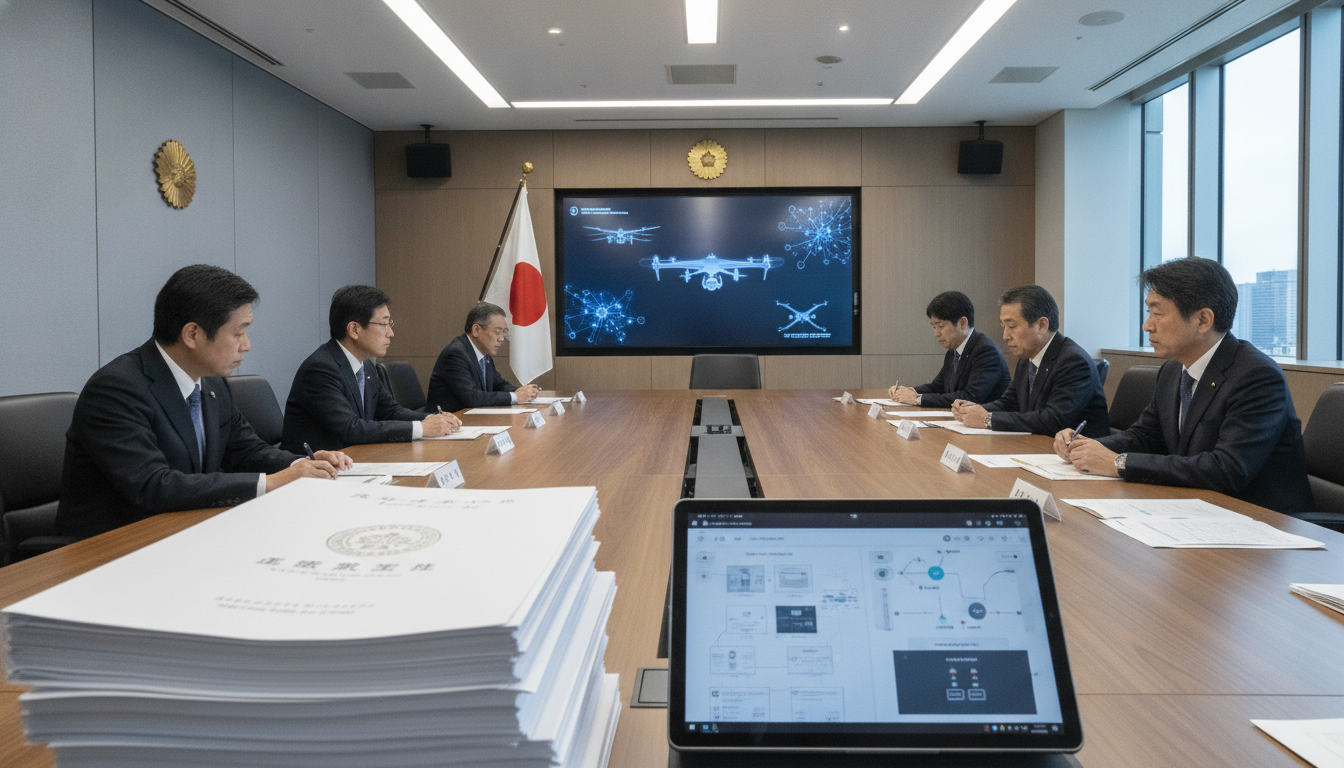
Among the principal items the ministry has flagged are investments in artificial intelligence to support command-and-control decision-making and the procurement of interceptor-type unmanned aerial vehicles. The ministry describes these systems as part of adapting to “new ways of warfare,” where rapid sensor-to-shooter loops and autonomous support tools are increasingly central. Defense planners say the investments are aimed at strengthening deterrence and survivability across air, maritime and joint operations.
Budget Process Places Scrutiny on Ministry of Finance
The preliminary request is the first stage of Japan’s budget process, in which ministries submit figures to the Finance Ministry for review and consolidation into the government’s draft budget. The Finance Ministry will scrutinize the Defense Ministry’s priorities alongside other ministries’ demands, weighing fiscal constraints, economic conditions and political direction. Observers note that the final allocation for defense will reflect that interministerial negotiation and could be adjusted downward or upward before the cabinet presents the budget to the Diet.
Industry and Procurement Timetables May Accelerate
A larger preliminary request and the inclusion of emerging-technology programs are likely to accelerate procurement timetables for defense contractors and allied suppliers. Firms involved in AI, unmanned systems and command-and-control platforms are preparing for intensified tender activity and detailed technical requirements. The Defense Ministry faces pressure to balance rapid capability delivery with rigorous testing and acquisition rules to avoid cost overruns or capability gaps.
Political and Regional Context for the Request
Japan’s push for expanded defense spending comes amid heightened regional security concerns and ongoing revisions to its defense posture, which have drawn domestic debate. Lawmakers and party leaders will review the ministry’s priorities as the budget moves through executive and legislative stages, and opposition voices are expected to scrutinize both the scale and the focus of spending. Diplomats and analysts will also watch how Japan’s procurement choices affect defense industrial cooperation with partners.
The Defense Ministry frames the 8.9 trillion yen defense budget request as a measured implementation of agreed policy priorities while reserving room for adjustments during the year’s security-policy review. As the Finance Ministry evaluates the preliminary demands and as the government finalizes revisions to core security documents, the precise size and composition of next year’s defense appropriation will become clearer.

