
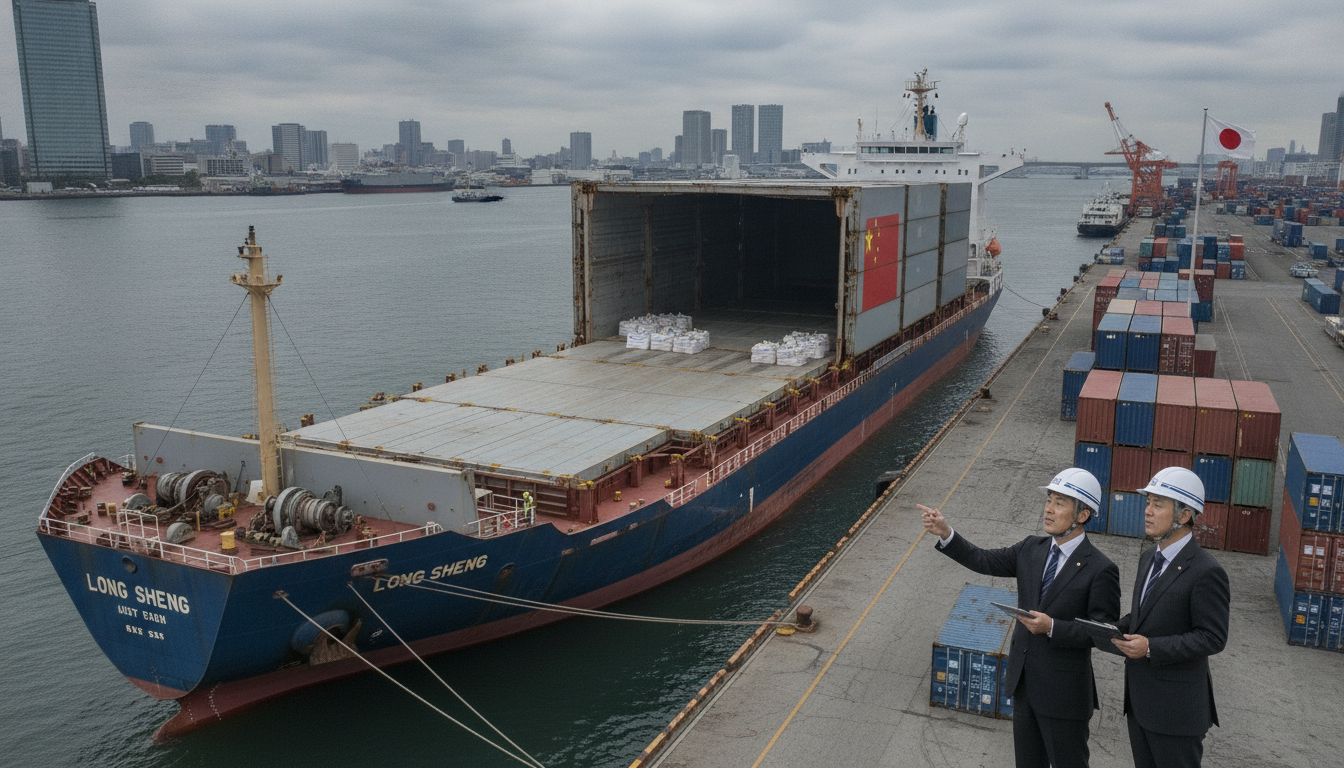
China’s rare earths exports to Japan halve in Jan–Jun as U.S. shipments drop nearly 30%
China’s rare earths exports to Japan fell by about half in January–June, while shipments to the United States declined nearly 30%, according to trade data. The rare earths decline underlines Beijing’s leverage over critical minerals used in high‑tech and defense supply chains. Analysts say the shifts are prompting accelerated efforts to diversify sources and bolster domestic processing outside China.
Exports to Japan Plunge
Trade figures for the January–June period show exports of restricted rare earth elements to Japan roughly halved year‑on‑year. The sharp contraction reflects both lower volumes and tighter controls on certain high‑value grades of rare earths used in magnets and electronics.
Japanese manufacturers that depend on specialized permanent magnets and sophisticated electronics have flagged increased lead times and higher procurement costs. The sudden scale of the drop has intensified government and industry conversations about stockpiling and alternative sourcing.
U.S. Shipments Weaken
Shipments to the United States fell by nearly 30% in the same six‑month window, according to the trade data. While the U.S. decline was less severe than Japan’s, it still signals pressure on North American supply chains for electric vehicles, wind turbines, and defense components.
U.S. industry groups have emphasized the need to accelerate domestic refining and processing capacity for rare earths, not just mining. The gap between ore production and downstream processing outside China remains a chokepoint for many manufacturers.
China Controls Majority of Global Output
China continues to account for roughly 70% of global rare earth production, concentrating both raw materials and much of the refining capability. That dominant position allows policymakers and state actors to influence global availability and prices through export restrictions or tighter regulatory oversight.
This industrial concentration emerged over decades as China invested heavily in mining, separation and magnet manufacturing capacity. The result is a supply chain where extraction and value‑added processing are closely integrated within China’s industrial ecosystem.
Supply Chain Strain for High‑Tech Industries
Rare earths are essential inputs for high‑performance permanent magnets, lithium‑ion battery additives and a range of specialty alloys used in consumer electronics, automotive and aerospace sectors. Disruptions in supply or higher costs can ripple quickly through production schedules and product roadmaps.
Manufacturers reported seeking substitutes, redesigning components to use fewer critical elements, and expanding recycling programs. Nonetheless, technical and economic barriers mean such adjustments take time, leaving firms vulnerable in the near term.
Beijing’s Strategic Use of Minerals
Observers caution that constraining exports of rare earths can be part of a broader strategy to gain diplomatic leverage or protect domestic industries. Policymakers in capitals around the world are reassessing the strategic importance of mineral supply chains in national security planning.
While explicit export bans are politically sensitive and can invite international backlash, more subtle tools—such as export licensing, environmental inspections or tightened customs procedures—can produce similar effects on outward flows. These tactics complicate predictability for buyers abroad.
Responses from Industry and Governments
In response to the tightening flows, governments and companies are accelerating diversification plans that were already under way. Initiatives include expanding mining and processing projects in Australia, North America and parts of Africa, and investing in recycling technologies to reclaim rare earths from end‑of‑life products.
Japan and the United States have also stepped up bilateral and multilateral cooperation to secure alternative supply chains, build joint refining capacity and support research into material substitution. Industry players are weighing near‑term mitigation—such as strategic reserves—alongside longer‑term investments in resilient processing networks.
Global markets will be watching for policy moves, new investments and any shifts in Chinese export guidance in the months ahead. Traders and manufacturers alike are adjusting procurement strategies to reduce exposure to a single dominant supplier, but practical diversification of refining capacity will take years to complete.
The decline in shipments during January–June has crystallized a broader realization: access to rare earths is not merely a commercial issue but a strategic one that influences industrial policy, defense readiness and international relations.

