
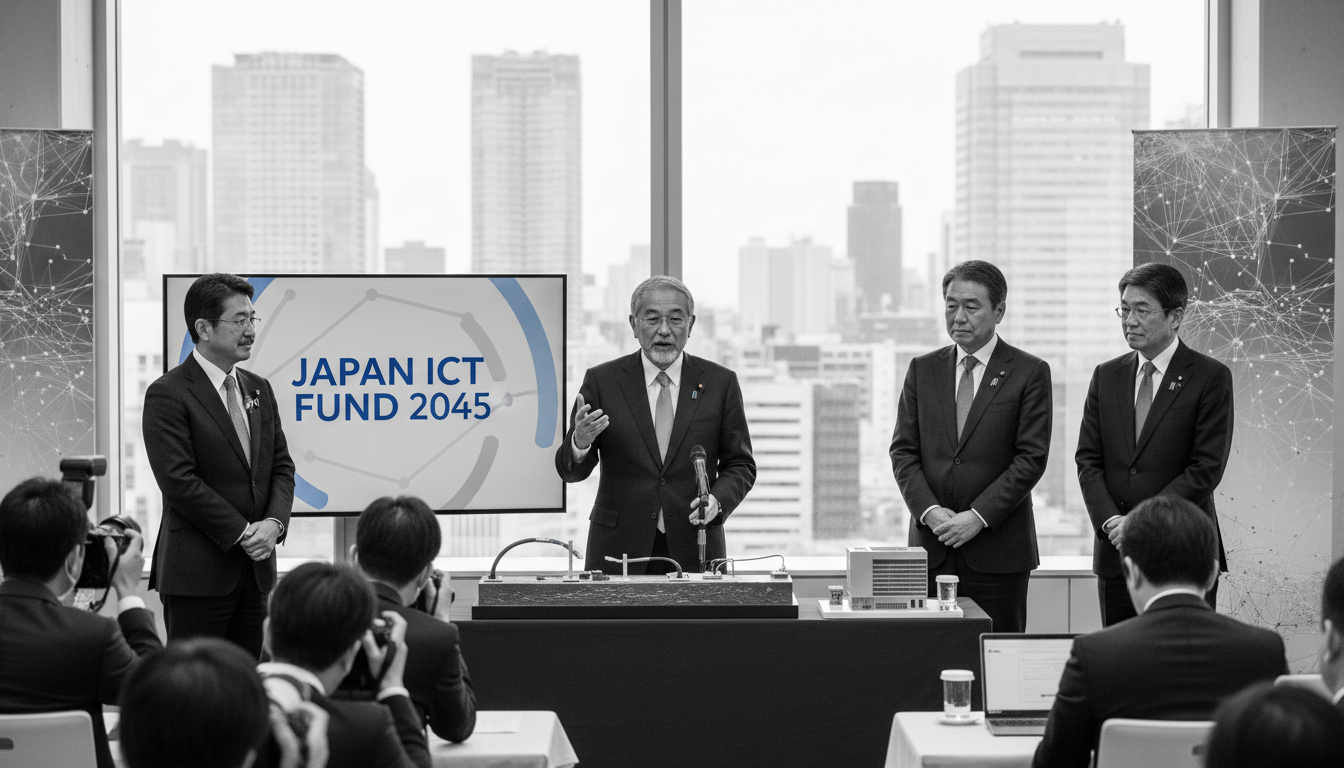
Japan Extends Japan ICT Fund to Fiscal 2045 to Back Subsea Cables and Overseas Data Centers
Japan extends the Japan ICT Fund to fiscal 2045, enabling long-term public risk capital for subsea cables and overseas data center investments regionally.
TOKYO — Japan’s parliament approved a revision to the law governing the Japan ICT Fund (JICT), pushing the fund’s sunset clause back by 10 years to fiscal 2045 after the upper house passed the measure on Thursday. The extension explicitly aims to allow the fund to make long-term investments in infrastructure such as subsea cables and data centers in Southeast Asia and other overseas markets. Officials said the move will give Japan greater capacity to support strategic digital infrastructure that private investors often view as too long-term or risky.
Parliament Approves Extension
The upper house passed the revised law on Thursday, extending the JICT’s operational horizon by another decade. Lawmakers in both chambers framed the change as a necessary adjustment to match the long-term nature of digital infrastructure projects.
Supporters argued the extension will align Japan’s public financing tools with the timelines required for cross-border undersea cable projects and large-scale data center construction. Critics urged enhanced transparency and periodic reviews to ensure public capital serves the national interest.
Scope and Purpose of New Mandate
The revised statute broadens the fund’s mandate to prioritize investments that strengthen regional connectivity and data resilience. Officials emphasized that the fund will target projects that are difficult for private capital to finance without public backing.
Subsea cables and overseas data centers were singled out as immediate priorities because they underpin cloud services, global trade data flows, and national digital security. The legislation indicates a focus on Southeast Asia as a key geographic area for early investments.
Why Subsea Cables and Data Centers Matter
Subsea cables carry the bulk of international internet traffic and are critical for economic and security interests, while data centers host the computing power that modern economies rely on. Gaps in these networks can leave countries vulnerable to outages and constrain digital growth.
Japan’s decision reflects wider regional demand for additional capacity and resilient routing options as cloud adoption and data consumption continue to expand. Public financing of such projects is intended to lower risk perceptions and attract private co-investors.
Public Risk Capital: How JICT Will Operate
The Japan ICT Fund provides public risk capital designed to make projects bankable when private investors are unwilling to shoulder early-stage or long-duration risks alone. The fund’s role is to underwrite part of that risk to catalyze additional private-sector financing.
Under the updated law, JICT is expected to use a mixture of equity stakes, subordinated financing, and co-investment arrangements to support projects. Officials say the approach will be calibrated to limit fiscal exposure while maximizing leverage of private capital.
Industry and Regional Reactions
Telecommunications and infrastructure firms have responded cautiously but positively, welcoming a framework that could unlock projects otherwise stalled by financing gaps. Regional partners are likely to view Japanese-backed projects as a source of stable investment and technical expertise.
At the same time, some opposition politicians and civil society groups have called for stricter oversight provisions and clearer disclosure about investment terms. Observers note that balancing strategic ambition with public accountability will be key to sustaining political and market support.
Governance, Oversight and Sunset Review
The revised law includes provisions for oversight and reporting to the Diet, although the specifics of review mechanisms were not detailed in the legislative summary. Lawmakers signaled they expect regular disclosures on investment performance and risk exposure.
Analysts say that implementing rigorous governance standards will be important to reassure taxpayers and prospective private partners. Periodic sunset reviews before fiscal 2045 could provide checkpoints to assess whether the fund is meeting its objectives.
Japan’s extended ICT fund is intended to strengthen the country’s ability to back essential digital infrastructure overseas, particularly in regions where connectivity investments have strategic and economic value. The success of the extension will depend on how effectively public risk capital is deployed to attract private funding, the transparency of decision-making, and the fund’s ability to deliver resilient, commercially viable projects across the region.

