
EU Raises Steel Tariffs on Chinese Imports as Probes Target Goldwind and CRRC
European Union tightens steel import rules and doubles duties above new quotas while opening in-depth foreign-subsidy investigations into Goldwind and Chinese rail suppliers. (150–160 characters)
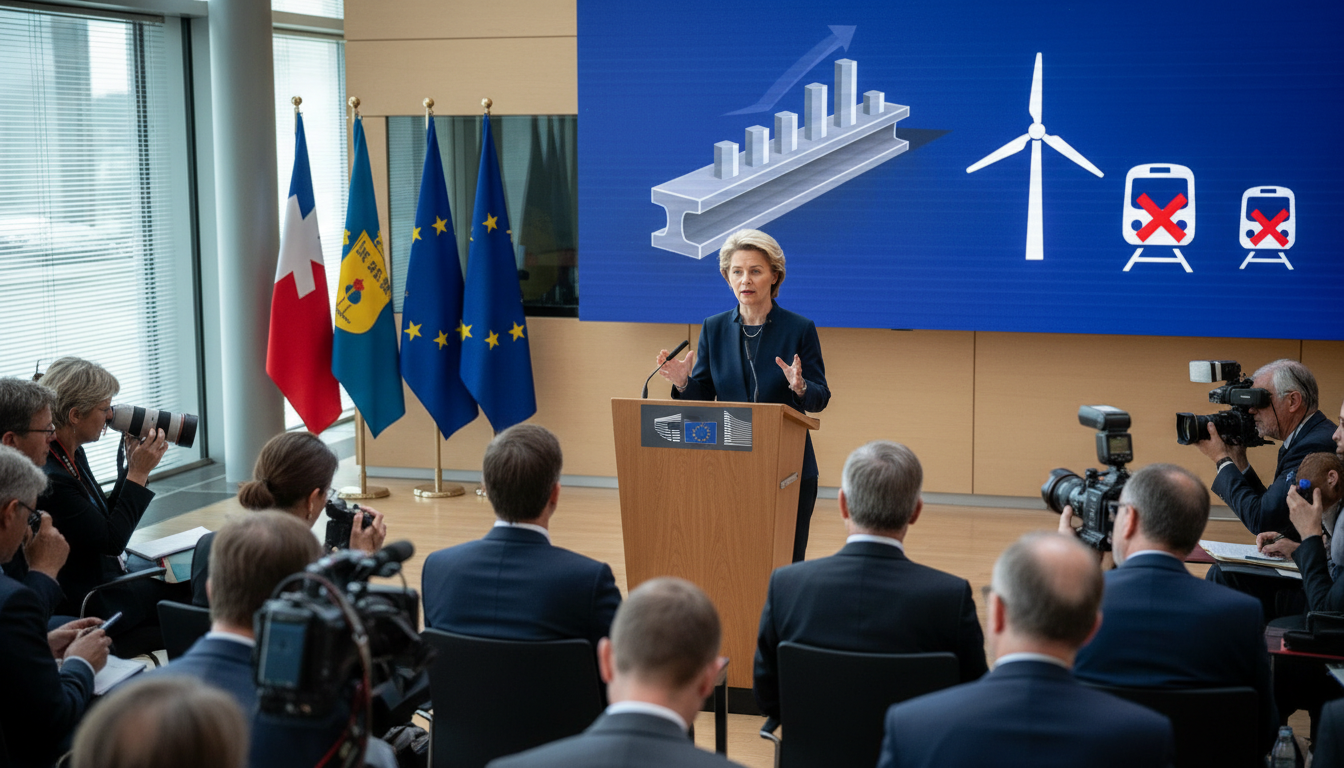
The European Union has moved to tighten trade defenses, raising the profile of EU steel tariffs and launching fresh probes into Chinese firms in the wind and rail sectors in an effort to curb dumping and market distortion. The measures cut tariff-free import quotas and increase duties on volumes above the new thresholds, while the European Commission has opened in-depth foreign-subsidies investigations into Goldwind and pursued separate inquiries related to Chinese rolling-stock bids. (consilium.europa.eu)
EU Agrees New Framework to Protect Steel Sector
The EU’s institutions reached political agreement in April to replace the expiring safeguard measures with a new regulatory framework aimed at addressing global steel overcapacity. The package narrows tariff-free quotas and allows for higher duties when imports exceed those quotas, a shift Brussels says is needed to prevent trade diversion and injury to domestic producers. (consilium.europa.eu)
The regulation is framed as a WTO-compatible response that retains flexibility for downstream industries while prioritizing the resilience of Europe’s steel supply chain. Lawmakers and member states argued the step is necessary after years of market disruption attributed in part to expanded capacity in third countries. (europarl.europa.eu)
Tariff-Rate Quotas Cut, Duties Stepped Up
Under the new scheme, the EU will reduce the tariff-free import quota to levels that correspond to market shares before the surge in cheap imports — a figure often cited as equivalent to 2013 volumes. Imports above those limits will face substantially higher duties, effectively doubling tariffs for many steel products according to draft implementing provisions discussed by policymakers. (brusselstimes.com)
Officials have signalled the measures will take effect in stages, with formal application beginning in the summer of 2026 once the regulation is adopted, and that implementing acts will determine product-by-product quotas and tariff bands. The Commission says the approach aims to strike a balance between protecting producers and avoiding disruption to the broader industrial base that uses steel. (consilium.europa.eu)
Commission Opens In-Depth Probe into Goldwind
Brussels has initiated an in-depth investigation under the Foreign Subsidies Regulation into Goldwind, a major Chinese wind-turbine manufacturer, to assess whether foreign financial support has distorted competition in the EU wind market. The probe follows evidence-gathering that began in 2024 and represents a more assertive use of the FSR to scrutinise non‑EU subsidies affecting strategic green technologies. (scmp.com)
Goldwind and industry observers have warned that such enforcement risks chilling investment and slowing deployment of renewable capacity, while the Commission maintains the inquiry is about preserving a level playing field and ensuring public procurement and market contests are not skewed by undue state support. (china.org.cn)
Railway Bids Face Scrutiny over Possible State Support
Separately, the Commission has used the FSR to open in-depth examinations linked to rolling-stock tenders in EU member states, focusing on subsidiaries of Chinese railmakers such as CRRC. Investigations launched over the past 18 months examine whether inbound offers benefited from foreign subsidies that could give them an unfair advantage in public procurement. (single-market-economy.ec.europa.eu)
The inquiries have sparked diplomatic pushback from Beijing and raised questions among EU procurement authorities about how to weigh industrial security, value-for-money and the bloc’s commitment to open markets. Depending on findings, Brussels can accept remedies, block contract awards or impose other corrective measures. (scmp.com)
Industry and Trade Groups React with Mixed Views
Europe’s steel unions and industry groups welcomed the tougher border measures as overdue protection against cheap, subsidised imports that have depressed prices and capacity utilisation. They say the reformed tariff-rate quota system and steeper duties are essential to safeguard jobs and the green transition for European producers. (spglobal.com)
By contrast, some economists and downstream manufacturers warn that higher steel costs will feed through to construction, automotive and machinery sectors, complicating efforts to decarbonise and keep supply chains competitive. Critics also argue the measures may not fully address the structural trade imbalance with China and could invite retaliation. (link.springer.com)
Political Stakes and Global Trade Risks
The moves come amid a broader EU push to defend strategic industries while pursuing industrial policy tools — from critical‑raw‑materials rules to subsidy screening — designed to support reshoring and resilience. Brussels says the combination of trade remedies and the Foreign Subsidies Regulation is part of a calibrated toolkit to preserve fair competition without closing markets. (eur-lex.europa.eu)
Yet the policy mix carries diplomatic risk, with Chinese authorities publicly condemning probes as discriminatory and warning of potential countermeasures. Market participants caution that protracted disputes and tit‑for‑tat duties would raise costs and uncertainty for businesses that operate across Eurasia. (scmp.com)
Despite the assertive tone from Brussels, analysts stress that the measures’ ultimate success will depend on rigorous enforcement, swift implementation of quota and duty schedules, and parallel cooperation with international partners to avoid trade diversion. Observers expect legal challenges and appeals, underscoring that these are the opening chapters in a longer policy debate. (europarl.europa.eu)
The EU’s recalibrated trade tools aim to shield critical industrial capacity while preserving access to foreign technology and investment, but policymakers face a delicate task in aligning short‑term protections with long‑term competitiveness and the bloc’s climate goals.

