
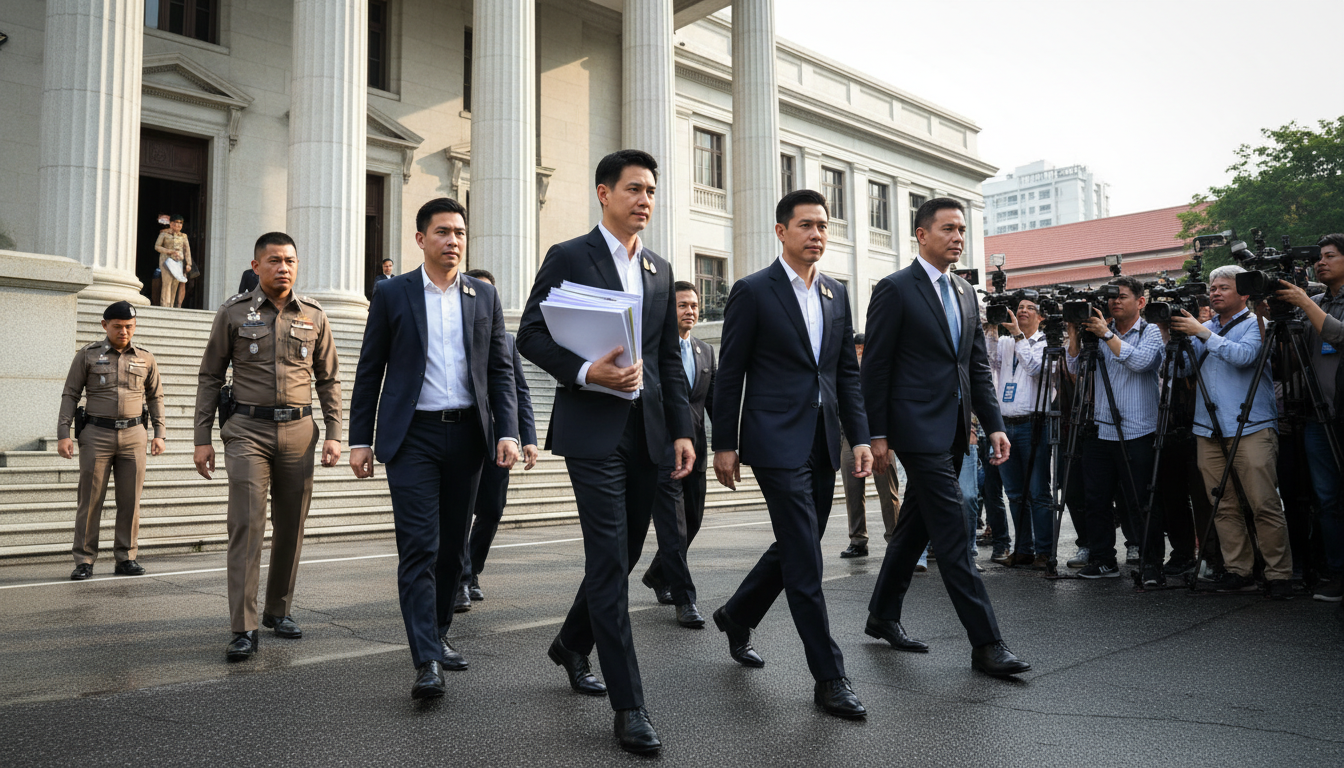
Supreme Court Accepts Petition Over Attempted Lese-Majeste Law Amendment Targeting Opposition Leader
Thailand’s Supreme Court on April 24, 2026 accepted a petition against People’s Party leader Nattaphong Ruengpanyawut and 43 other current and former MPs over their efforts to amend the lese-majeste law, a move that could lead to political bans.
Supreme Court Accepts Petition
The Supreme Court accepted the petition on April 24, 2026, initiating formal judicial consideration of allegations tied to an effort to change Thailand’s lese-majeste law. The case names Nattaphong Ruengpanyawut, leader of the main opposition People’s Party, and 43 other incumbent and former members of parliament. Court acceptance means the matter will proceed into a legal process that could result in disqualifications or other sanctions if the petitioners prevail.
The petition alleges that the lawmakers’ actions in seeking amendments crossed legal or constitutional lines, though the precise legal grounds and the petitioners’ full claims were not released by the court at the time of acceptance. Legal scholars and observers say acceptance itself is a significant procedural step because it moves the dispute from political debate into a formal judicial arena. The court’s timetable for hearings or rulings has not been announced publicly.
Nature of the Allegations Over the Lese-Majeste Law
The complaint focuses on a drive to amend the lese‑majeste law, a highly sensitive statute that criminalizes insults to the monarchy and has long shaped Thailand’s political boundaries. Petitioners contend that the campaign to revise the law amounted to actions that breached legal limits on conduct by elected officials. The accused group includes both sitting legislators and former members, some of whom were previously affiliated with the Move Forward Party.
Supporters of reform have argued that changes to the law are part of broader democratic and human rights reforms, while critics view such moves as threatening the constitutional order. The Supreme Court’s decision to accept the petition does not determine guilt or innocence, but it elevates the dispute into a courtroom where legal standards and evidentiary rules will govern the outcome.
Possible Political Bans and Legal Consequences
If the court eventually finds the defendants liable under the petition’s claims, the consequences could include removal from office and prohibitions on holding public office, which are common outcomes in Thai legal-political disputes. Observers say such bans would reshape parliamentary arithmetic and could sideline prominent reformist figures from competitive politics. The legal pathway to disqualification typically requires further findings and, in some cases, parallel actions by other agencies or tribunals.
The specter of bans has heightened concern among supporters of the accused, who argue that judicial measures may be used to blunt political momentum. Conversely, those who brought the petition contend that the rule of law must apply equally to lawmakers and that accountability is essential when elected officials pursue changes perceived to violate core statutes. The pace and scope of any sanction will depend on the court’s factual findings and legal interpretations.
Responses from the People’s Party and Political Allies
As of the court’s acceptance, the People’s Party had not issued a detailed public response outlining its legal strategy, though party officials have in the past framed efforts to amend the law as part of a democratic reform agenda. Members of the accused cohort have maintained that their advocacy was within constitutional bounds and rooted in policy debate, rather than criminal intent. Party spokespeople and allied legislators have previously said they will defend members vigorously in court if required.
Political allies and civil society groups have reacted with a mixture of concern and defiance, with some calling for legal transparency and procedural fairness. Human rights organizations and international observers who follow Thailand’s political cases have urged that any proceedings respect due process and avoid the politicization of the judiciary. How the court manages public hearings, evidence disclosure, and timelines will shape perceptions of fairness.
Wider Impact on Thailand’s Political Landscape
Analysts warn that the case could reverberate beyond the immediate defendants, affecting coalition dynamics, opposition strategy, and public debate over the monarchy and reform. If prominent opposition figures are banned or face protracted legal uncertainty, parliamentary negotiations and party coalitions may be altered. The issue of lese‑majeste reform has already been a focal point of political activism, and the court’s involvement is likely to intensify public attention.
The legal action also risks sharpening polarization between pro‑reform constituencies and conservative segments of Thai society that oppose changes to statutes protecting the monarchy. Political commentators note that judicial interventions in politically charged disputes tend to produce both short‑term shocks and longer‑term strategic recalibration by parties seeking stability or advantage. How other state institutions respond will be closely watched domestically and by diplomatic observers.
Final court procedures and any potential appeals could take months, and the ultimate legal and political outcomes remain uncertain. The acceptance of the petition marks a new chapter in an already contentious national debate over the lese‑majeste law, and it places prominent opposition figures at the center of a legal contest that may redefine their political future.

