
Japan’s Record Yen Intervention: Ministry of Finance Spends ¥11.7 Trillion in One-Month Rescue
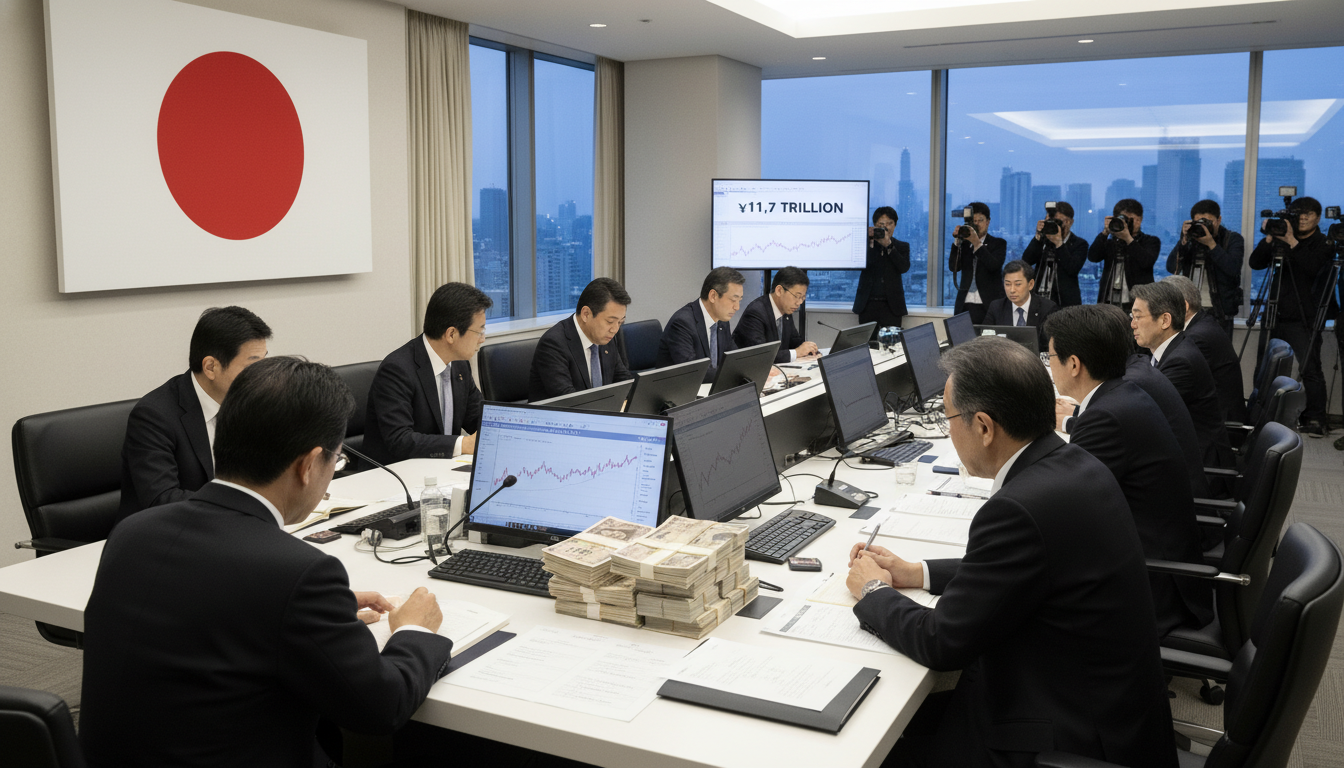
Yen intervention: Japan spent a record ¥11.7 trillion from April 28 to May 27 to counter selling pressure and stabilize the currency in global markets.
Japan’s Ministry of Finance reported on Friday that authorities deployed a record ¥11.7 trillion between April 28 and May 27 in an effort to support the yen, marking the largest single intervention round on record. The yen intervention was aimed at curbing intense selling pressure that had driven the currency lower against major peers. Despite the scale of the intervention, market participants said the yen shed most of its earlier gains as global flows and interest-rate differentials continued to weigh on the currency.
Ministry of Finance Confirms Scale and Timing
The Ministry of Finance released data specifying that the extraordinary operations took place over the four-week period ending May 27. Officials described the moves as direct support for the currency amid unusually strong selling in global markets. The disclosure underlines the government’s willingness to act decisively when market moves threaten financial stability.
Market officials and government sources emphasized the significance of the timing, saying the concentrated effort reflected both the speed and scale of recent speculative flows. The ministry’s statement framed the intervention as a targeted response to disorderly market conditions rather than a long-term policy shift.
Finance Minister’s Diplomatic Outreach Noted
Finance Minister Satsuki Katayama told reporters this month that she had secured “full understanding” from U.S. Treasury Secretary Scott Bessent regarding Tokyo’s actions, according to officials. The outreach to Washington is intended to manage spillovers and to explain that the intervention was a stabilizing measure, not a change in macroeconomic policy settings. Tokyo has traditionally sought to coordinate or, at minimum, inform major partners when taking large FX actions.
Analysts said the minister’s engagement with international counterparts aimed to prevent a diplomatic or market backlash and to underscore that the interventions were reactive. Such consultations are closely watched by markets because they signal whether interventions are viewed as isolated episodes or part of a broader, cooperative effort.
Market Reaction and Currency Moves
Initial market reaction was volatile: the yen briefly strengthened following reports of the intervention, but selling pressure resumed and the currency gave up much of its gains. Foreign-exchange desks noted that large-scale sales of yen-funded positions and divergent monetary policies abroad have continued to push downward pressure on the currency. Investors cited persistent interest-rate differentials as a key driver behind the flows that necessitated the intervention.
Traders also highlighted that verbal interventions and one-off market operations often have only short-lived effects if underlying fundamentals remain unchanged. The yen’s response in the days after the intervention suggested that while the operation temporarily reduced volatility, structural forces in global markets remained dominant.
Implications for Monetary Policy and Markets
The intervention places renewed attention on the interplay between fiscal and monetary policy in Japan. While the Ministry of Finance conducts market operations to limit disorderly moves, the Bank of Japan sets interest rates and broader monetary policy. Analysts said interventions of this size could complicate the central bank’s communications if markets interpret government action as signaling future policy adjustments.
Investors and economists will now watch whether the Bank of Japan alters its posture or allows market forces to continue reshaping currency levels. Some strategists argued that repeated, large-scale interventions without corresponding changes in monetary policy may be insufficient to counterbalance persistent capital flows.
Costs, Transparency and Future Options
The disclosure of the ¥11.7 trillion figure provides rare transparency about the scale of Tokyo’s response, a move some market participants welcomed. However, the sizable intervention also raises questions about potential costs and the criteria for future action. Officials have historically framed interventions as exceptional tools to be used when disorderly market conditions threaten economic stability.
Policy-makers retain a range of options, from fresh market operations to enhanced coordination with international partners. Observers noted that the threshold for another intervention will depend on the intensity of yen selling and the broader stability of Japan’s financial markets.
Analyst Assessments and Investor Outlook
International banks and currency strategists offered mixed assessments, with many highlighting that interventions can restore order only if accompanied by shifts in underlying drivers such as yield differentials. Several analysts suggested Tokyo’s operation may have bought time, but not resolved the factors prompting sustained yen weakness. Investors said attention will now turn to economic data, BOJ commentary, and any further government statements for clues about the likely path of the currency.
Currency desks cautioned that the balance between intervention effectiveness and market persistence will determine investor behavior in coming weeks. The consensus view among many strategists was that while the intervention was unusually large, future outcomes will hinge on global monetary trends and Japan’s domestic economic signals.
The Ministry of Finance’s confirmation of a record ¥11.7 trillion in one intervention round underscores Tokyo’s readiness to act when currency moves threaten market stability, but it also highlights the limits of interventions in the face of powerful global forces driving capital flows.

