
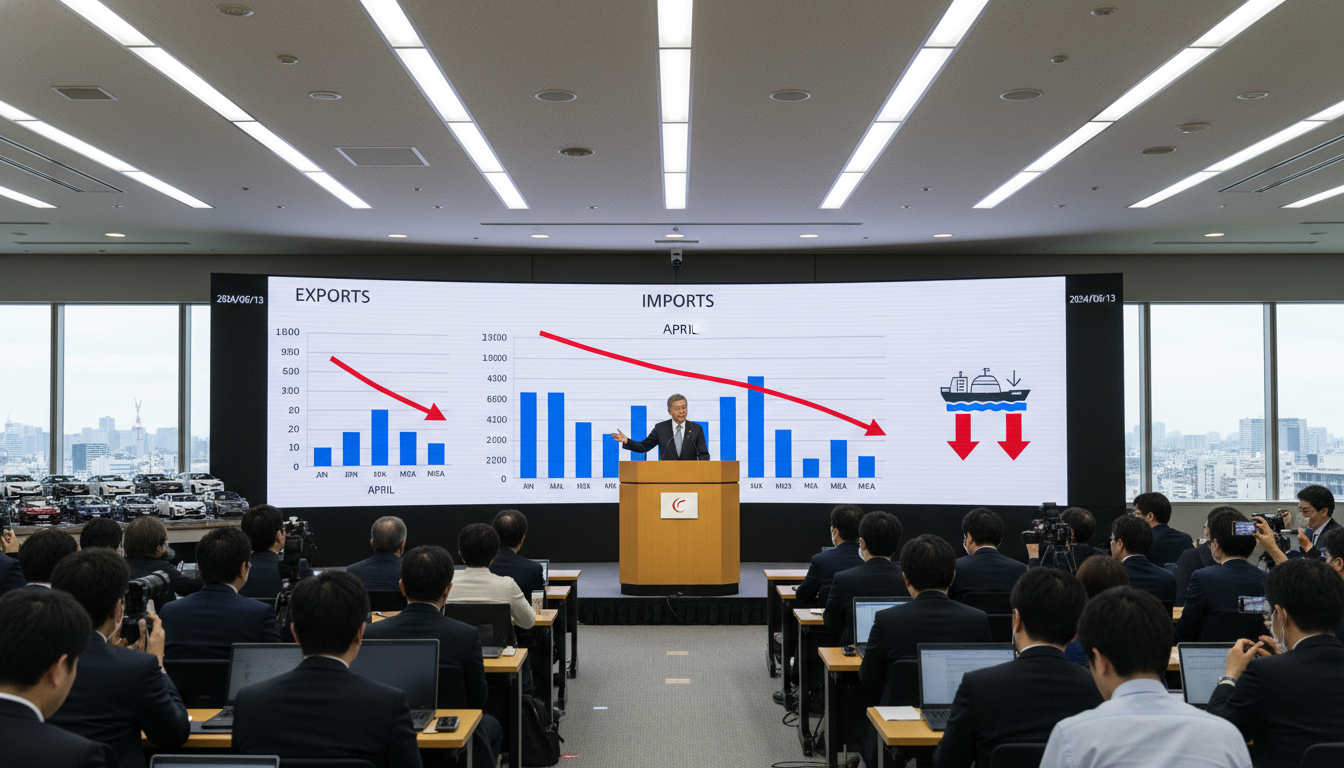
Japan exports to Middle East plunge in April as naphtha imports fall sharply
Japan’s April trade shows exports to the war-hit Middle East, including cars and steel pipes, fell sharply, while naphtha imports dropped and some imports from India trebled.
Japan’s exports to the Middle East fell sharply in April, with vehicles and industrial pipe shipments among the largest declines, the finance ministry said Thursday. The trade data also showed imports of naphtha and other petroleum products contracted in the same month, even as certain imports from India rose by roughly threefold. The figures highlight how regional conflict and shifting supply chains are reshaping Japan’s trade flows in Asia and beyond.
April trade snapshot
Japan’s finance ministry released preliminary trade data on Thursday showing a pronounced downturn in shipments to the Middle East for April. The report singled out major categories — notably passenger vehicles and steel pipe products — as key contributors to the decline. Officials cited the continued disruption from conflict in parts of the Middle East and softer demand among trading partners as factors weighing on exports.
The same release flagged a notable pullback in petroleum-related imports, with naphtha volumes contracting sharply month-on-month. At the same time, the ministry recorded a sharp increase in some imports from India, suggesting buyers are adjusting sourcing strategies amid wider market disruptions. Analysts said the mixed signals reflect how Japan’s trade is being nudged by both short-term shocks and longer-term supply-chain adjustments.
Automotive shipments to Middle East weakened
Automakers were among the hardest hit in April, with exports of passenger vehicles to the Middle East dropping off markedly. Japan’s car shipments to the region represent a meaningful portion of overseas deliveries by value; recent industry data show the Middle East accounts for roughly 13% of Japan’s vehicle export value. Dealers and logistics firms reported fewer orders and delayed bookings as regional economic activity cooled.
Manufacturers are now watching order books and shipping schedules closely, seeking to determine whether the April decline represents a temporary disruption or the start of a deeper trend. Some companies are accelerating diversification of markets and adjusting production allocations to mitigate concentrated exposure to any single region. The move comes as global auto demand shifts, with electrification and new mobility patterns also reshaping traditional export flows.
Steel pipe and industrial goods shipments fall
Industrial goods, particularly steel pipes that are widely used in energy and construction projects, also saw a steep drop in exports to the Middle East. Projects in the region that had underpinned demand for Japanese pipe manufacturers have slowed or been postponed, reducing immediate overseas orders. Suppliers reported that delayed contracts and tighter project financing contributed to weaker shipment volumes in April.
Domestic manufacturers are exploring alternative markets and seeking to capitalize on domestic infrastructure demand to offset overseas weakness. However, the reorientation will take time, and some firms have warned of pressure on margins if export volumes remain depressed for an extended period. Trade analysts note that the composition of industrial exports will be an important indicator for Tokyo’s broader trade recovery.
Naphtha imports fall while some Indian shipments surge
Notable on the import side was a sharp decline in naphtha arrivals, a key feedstock for Japan’s petrochemical industry. The finance ministry’s figures show a marked reduction in naphtha imports in April, reflecting both lower global refinery output and adjustments in corporate procurement. Lower feedstock deliveries can ripple through downstream chemical production and feed into shorter-term inventory tightening.
In contrast, the data indicated that certain imports from India rose significantly, with volumes in some categories roughly trebling year-on-year. Market participants attributed the surge to greater buying from Indian suppliers and the rerouting of some cargoes amid tightness elsewhere. This divergence underscores how multiple, overlapping factors — from geopolitics to commercial sourcing decisions — are reshaping Japan’s import mix.
Market and policy implications
Tokyo’s trade ministry and private-sector analysts say the April readings warrant attention but caution against drawing definitive conclusions from a single month. The finance ministry described the statistics as preliminary and subject to revision, and officials emphasized the need to monitor subsequent months for confirmation of trends. Still, both government and industry sources signaled readiness to respond with policy and business adjustments if the downturn persists.
Economists noted that sustained declines in exports to a major region could weigh on Japan’s industrial output and corporate earnings, particularly in sectors heavily dependent on overseas orders. Policymakers are watching foreign demand conditions closely as they assess the outlook for growth and inflation. For exporters, the immediate task is to shore up supply chains and seek alternative markets to stabilize revenue streams.
Japan’s exporters now face a complex outlook in which geopolitical shocks and evolving global sourcing patterns interact. The April data, while preliminary, reflect the sensitivity of trade flows to regional instability and the speed with which companies can reconfigure procurement and market strategies.
The coming months will be crucial in determining whether the April drop proves transitory or the start of a prolonged adjustment in Japan’s trade with the Middle East and beyond.

