
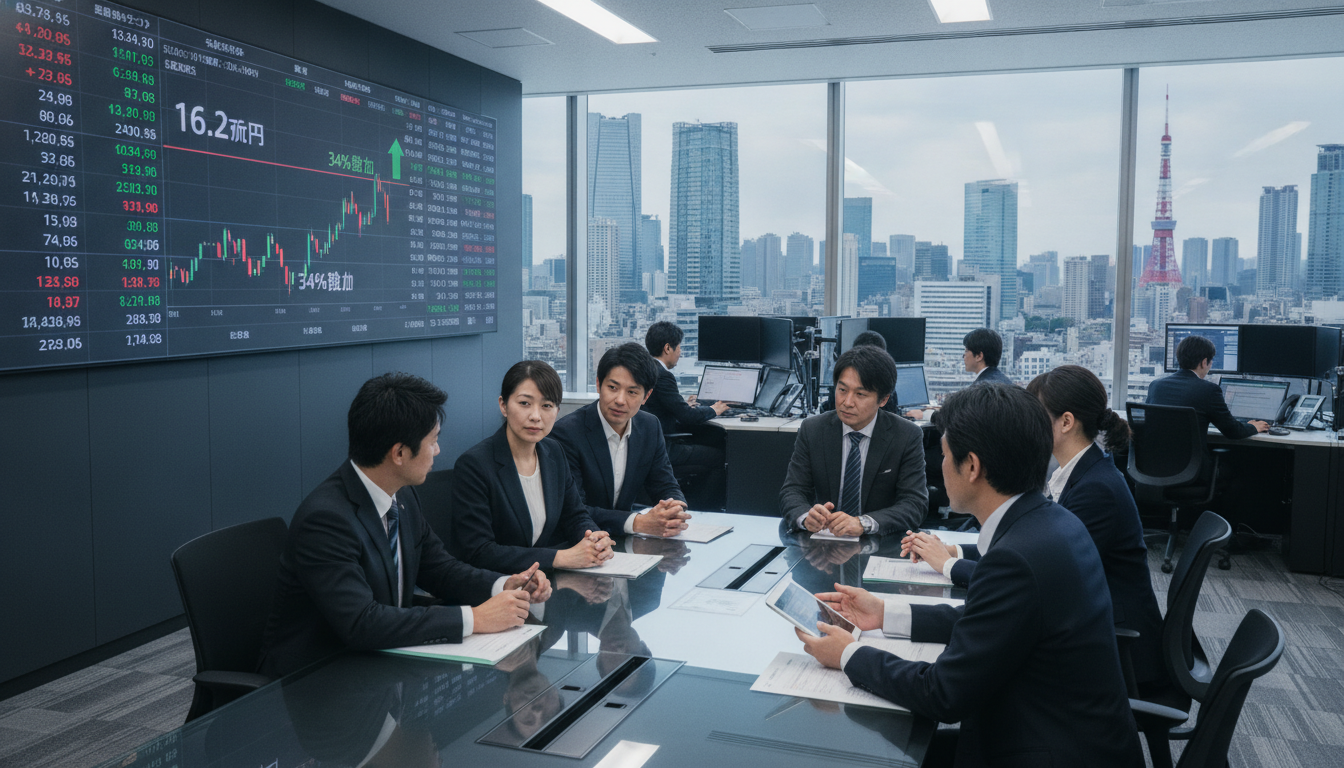
Japan share buybacks surge 34% to ¥16.2tn as firms unwind cross-shareholdings
Japan share buybacks jumped 34% to ¥16.2 trillion in Jan–May, a record for the period as companies repurchase cross-held stock and respond to investor pressure.
Japan share buybacks accelerated sharply in the first five months of 2026, with listed firms announcing ¥16.2 trillion of repurchases, up 34% year‑on‑year and approaching the total announced for all of 2025. The surge reflects a concerted effort by companies to reduce cross‑shareholdings and to improve capital efficiency as investors press firms holding large cash piles to return capital. Market participants say the wave of repurchases is reshaping corporate balance sheets and changing how Japanese firms allocate cash.
Record buybacks in January–May
The ¥16.2 trillion figure for January through May set a new high for that period and marked a notable acceleration in share buyback activity. Corporations cited both strategic capital redeployment and the need to address legacy cross‑shareholding structures when unveiling repurchase plans.
Analysts observe that the scale of these buybacks is material relative to prior years and has lifted expectations for further cash returns from firms with large cash reserves. The increase has also drawn attention from investors tracking corporate governance and returns on equity.
Cross‑shareholdings targeted by repurchases
A key driver behind the buyback surge is the unwinding of cross‑shareholdings, where firms held stakes in trading partners and financial institutions as strategic or reciprocal investments. Companies are increasingly using buybacks to purchase those cross‑held shares and simplify ownership structures.
Reducing cross‑holdings can free up capital and reduce the circular share ownership that has historically muted activism and market-driven accountability. Executives and boards are framing repurchases as a step toward clearer capital allocation and more flexible balance sheets.
Investor pressure and governance push
Institutional investors have intensified pressure on Japanese corporations to return excess cash and boost shareholder value, citing low returns on idle capital. The push has come from domestic and foreign funds seeking higher payouts or buybacks from companies with abundant liquidity.
In response, boards have been more willing to approve repurchase programs and to explain capital plans in investor communications. This shift underscores a broader governance trend where capital efficiency and shareholder returns are climbing corporate agendas.
Corporate choices: buybacks, dividends and capital use
While buybacks have been the predominant vehicle for returning cash, some firms are balancing repurchases with higher dividends and targeted reinvestment. Management teams say they are weighing near‑term shareholder returns against long‑term strategic investments in technology, facilities and M&A.
Companies that opt for buybacks argue repurchases can be executed swiftly and enhance earnings per share, while dividend increases are often viewed as more permanent commitments. Boards are increasingly publishing explicit capital allocation frameworks to clarify when they will repurchase shares versus reinvesting in operations.
Market reaction and stock implications
The uptick in buybacks has had discernible effects on trading dynamics, with repurchase announcements often supporting share prices and signaling management confidence. Reduced free float from buybacks can amplify stock moves and alter liquidity patterns for certain names.
However, investors remain attentive to execution details, timing and whether repurchases are accompanied by robust business performance. Market participants caution that buybacks are not a substitute for sustainable profit growth and that long‑term returns depend on operational improvement as well as capital returns.
Outlook through the rest of 2026
Looking ahead, Japan share buybacks are likely to remain a salient feature of corporate finance if investor pressure and calls for improved capital efficiency persist. Companies with significant cross‑holdings and large cash balances will be prime candidates for further repurchase programs.
That said, the trajectory of buybacks will hinge on macroeconomic conditions, corporate earnings and board appetite for deploying cash versus preserving liquidity. Observers will be watching second‑half earnings seasons and board statements for signals on whether the pace of repurchases will be sustained.
The rapid rise in repurchases in the first five months of the year has already changed the capital allocation conversation in Tokyo, prompting both scrutiny and cautious optimism among investors and corporate managers alike.

