
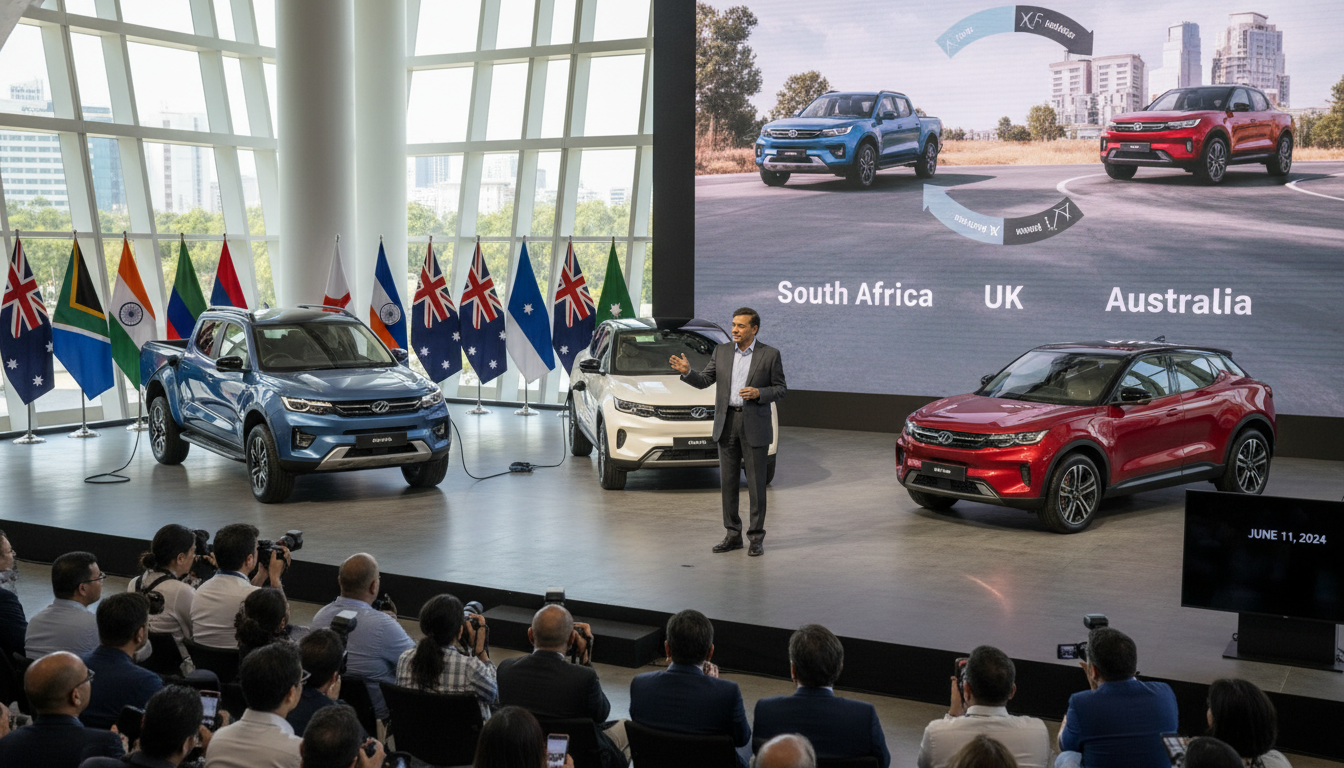
Mahindra electric vehicles and pickups to reach South Africa, Australia, New Zealand and the U.K. within two years
Mahindra expands overseas push with new electric vehicles and pickups, targeting exports to South Africa, Australia, New Zealand and the U.K. within two years, driven by strong domestic sales and a global product rollout.
India’s Mahindra & Mahindra is moving to export a new line of electric vehicles and pickup trucks to markets including South Africa, Australia, New Zealand and the United Kingdom, the company’s autos chief said in a recent interview. The announcement frames Mahindra electric vehicles as central to the automaker’s international growth plans, with shipments expected to begin in roughly two years. Rajesh Jejurikar, executive director and CEO of Mahindra’s auto and farm segments, told Nikkei Asia that improved domestic performance has emboldened the company’s overseas ambitions. The plan combines battery-electric models with a dedicated range of pickups intended to broaden Mahindra’s global footprint.
Mahindra projects exports to South Africa, Australia, New Zealand and the U.K.
Mahindra plans to stage staged market entries in countries that use similar vehicle specifications and where demand for rugged, value-priced vehicles is rising. Company officials expect initial shipments to reach Southern Africa and select Commonwealth markets first, followed by the U.K., leveraging existing dealer relationships and regional distribution partners. The timeline of about two years aligns with vehicle homologation, testing, and local regulatory approvals required in each jurisdiction. Executives say the rollout will be phased to manage risk and ensure after-sales support is established before broader expansion.
New electric vehicle and pickup models unveiled for export push
The export program will include battery-electric models alongside a new generation of pickups designed to meet export-market expectations for durability and payload. Mahindra has been developing electric powertrains and modular vehicle architectures that can be adapted for both passenger and light-commercial applications. These platforms aim to balance cost, range and payload to address the specific needs of buyers in target countries. According to company representatives, the pickup lineup will be a keystone product for both fleet and retail customers overseas.
Domestic sales strength underpins international strategy
Strong sales performance in India, despite intense competition, has given Mahindra confidence to scale exports, executives said. Robust demand at home has allowed the company to accelerate investment in manufacturing capacity and product development without jeopardizing local market leadership. Domestic profitability and cash flow are being reinvested into electric vehicle technology and export-focused variants. Company leaders argue that a healthy home market provides a base from which to pursue riskier, higher-cost international entries.
Manufacturing, engineering and supply chain adjustments
Mahindra’s plan anticipates manufacturing adjustments and supply-chain changes to support right-hand-drive markets and export certifications. The company is investing in engineering resources to meet varied safety and emissions standards, and to adapt electrified powertrains for different climates and duty cycles. Local-content strategies and sourcing partnerships will be evaluated to manage costs and comply with import rules in each market. Mahindra has also indicated it will prioritize reliable service networks and parts availability to minimize customer friction when models arrive overseas.
Regulatory, safety and market hurdles ahead
Entering markets such as the U.K. and Australia brings regulatory and competitive challenges, including stringent safety tests, homologation costs and dealer network expectations. Mahindra will need to secure type approvals, crash-test certifications and compliance with regional EV charging and battery storage regulations. Market acceptance will depend on pricing, perceived quality and after-sales service, all areas where global incumbents currently hold advantages. Executives acknowledged these hurdles but said careful market selection and phased investment can mitigate the most significant risks.
Sales targets, pricing strategy and timeline to entry
While Mahindra has not publicly disclosed detailed sales targets for each market, company statements indicate conservative initial volumes to establish brand presence and service capability. Pricing strategy will seek to undercut premium rivals while offering competitive total cost of ownership for fleet buyers and private customers. The roughly two-year timeline provided by the autos chief suggests first exports could begin as early as 2028, pending testing and regulatory clearance. Observers say that success will hinge on Mahindra’s ability to deliver reliable EVs and pickups that meet local expectations at competitive prices.
Mahindra’s overseas push reflects a broader trend among Indian manufacturers aiming to convert strong domestic performance into global market share. By combining battery-electric models with work-focused pickups, the company is targeting both urban EV demand and traditional light-commercial niches abroad. The coming months will reveal how quickly Mahindra can translate product readiness into certified exports and whether initial market responses justify further international expansion.

