
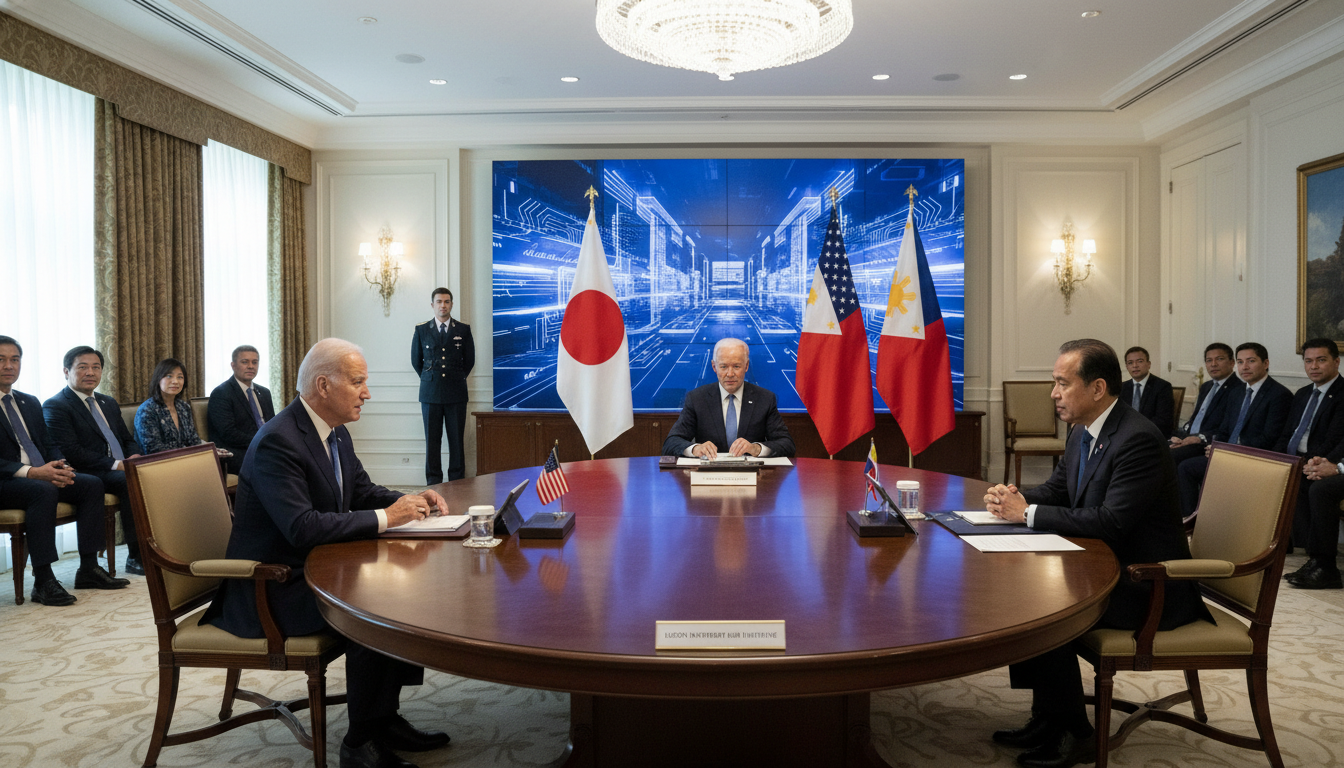
Japan, US and Philippines to strengthen AI supply chains with Luzon investment forum
Japan, the US and the Philippines will deepen cooperation to bolster AI supply chains and semiconductor resilience, hosting a September investment forum on Luzon.
Tokyo, Washington and Manila announced plans to step up collaboration to strengthen AI supply chains and semiconductor production while developing energy infrastructure on the Philippines’ Luzon Island.
The initiative will centre on a planned industrial hub that officials say will link investment in semiconductors, data centre capacity and liquefied natural gas to support advanced computing needs.
A September investment forum on Luzon is expected to showcase opportunities for companies working on AI hardware, software and related services as governments pursue more resilient technology supply chains.
Trilateral agreement aims to secure critical technology supply chains
Japan, the United States and the Philippines have framed the initiative as a strategic move to shore up supply chains for AI and semiconductors amid global disruptions.
Officials described the effort as a combination of public-sector cooperation and private investment aimed at diversifying sources of chips and other AI-critical components.
The three governments said they will coordinate on regulatory steps, infrastructure planning and investment facilitation to make manufacturing and supply lines less vulnerable to single-country shocks.
September investment forum on Luzon to attract AI companies
A planned investment forum in September on Luzon will serve as the public launchpad for the hub, offering sessions on investment incentives, land and power availability, and partnership opportunities.
Organisers expect the forum to attract manufacturers of semiconductor components, developers of AI chips, cloud operators and investors focused on data centre and logistics projects.
The event is being positioned to highlight how the hub could integrate semiconductor fabrication, AI training centres and supporting services within an accessible location for East Asian and US firms.
Semiconductor and AI hardware development at the hub
A central objective is to boost semiconductor-related activity that supports AI, including chip design, packaging, testing and possibly fabrication tied to regional supply chains.
Planners are emphasising modular, scalable facilities to accommodate a range of companies from specialised chip designers to contract manufacturers and equipment suppliers.
Analysts note that bringing several stages of the semiconductor value chain closer to AI workloads could reduce latency, lower transport risks and make supply chains more transparent.
Energy infrastructure and LNG as enabler for computing growth
Energy was described by officials as a key pillar of the Luzon hub, with liquefied natural gas and grid upgrades targeted to meet the heavy power demands of data centres and chip plants.
The Philippines’ energy plans for the hub reportedly include LNG terminals and transmission investments that would provide more reliable and dispatchable power alongside renewables.
Investors and governments see stable, affordable energy as essential to attracting long-term data-centre and semiconductor commitments, which require uninterrupted electricity and cooling capacity.
Economic and strategic implications for the region
For the Philippines, the project presents a chance to capture higher-value industrial activity and create skilled jobs in engineering, fabrication and data operations.
For Japan and the United States, the initiative aims to reduce strategic vulnerabilities by extending supply chain footprints into allied or partner countries while supporting regional economic development.
Observers caution, however, that moving beyond announcements will require concrete financing plans, clear regulatory frameworks and long lead times for construction and talent development.
The countries involved say they will pursue a phased approach that combines immediate investment promotion with longer-term infrastructure and workforce initiatives.
Officials expect early steps after the forum to include site assessments, feasibility studies and coordination on incentives to attract anchor tenants that can catalyse wider industrial participation.
If those early commitments materialise, proponents argue the Luzon hub could become a model for combining energy development with advanced manufacturing and AI infrastructure in the Indo-Pacific region.
Recent geopolitical competition over technology supply chains has heightened urgency for alternatives that balance security, cost and proximity to markets.
By aligning diplomatic outreach, investment promotion and infrastructure planning, Tokyo, Washington and Manila are seeking to present a practical option that addresses both commercial and strategic priorities.
How quickly companies and governments move from planning to execution will determine whether the Luzon initiative reshapes regional AI supply chains or remains an aspirational framework.
The September forum will be an early test of investor appetite and multilateral coordination, and participants will watch for concrete commitments on financing, land access and power guarantees.

