
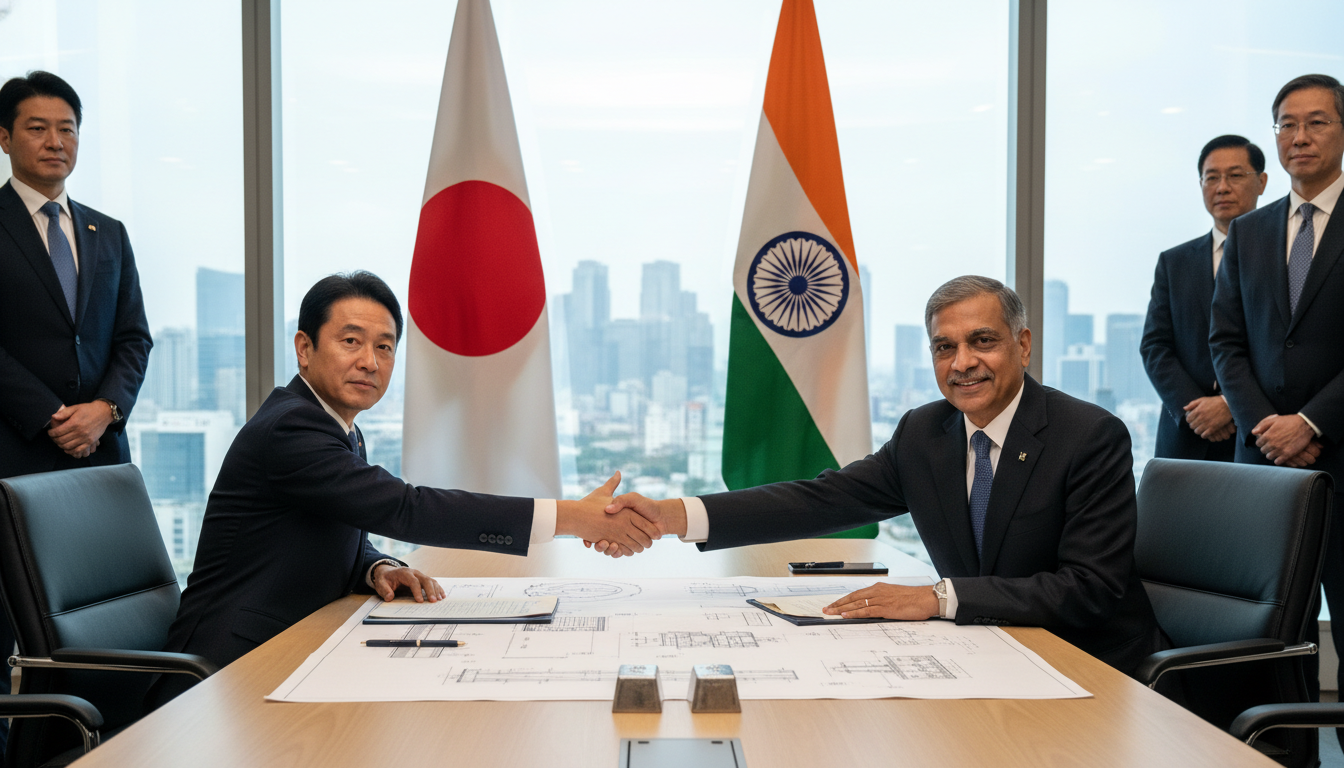
Japanese steelmakers accelerate investments in India to localize high-end production
Japanese steelmakers investing in India are deepening partnerships and expanding local production to supply the country’s booming autos, infrastructure and green-energy sectors, amid efforts to cut import reliance and move up the value chain.
BENGALURU — Japanese steelmakers investing in India are stepping up a wave of cooperation with Indian partners as they seek to localize higher-value steel products for autos, infrastructure and the energy transition. Major producers from Japan are broadening joint projects, technology transfers and supply-chain ties to capture demand in what has become one of the fastest-growing steel markets globally. The move also reflects a strategic push by Indian firms to reduce dependence on imports for high-grade steels and downstream components.
Closer manufacturing and technology ties
Japanese groups are shifting from export-led strategies toward deeper manufacturing ties inside India, forming joint ventures and commercial alliances with local steelmakers and fabricators. These arrangements typically combine Japanese process know-how and quality control with Indian scale and market access. Company executives have signaled intentions to localize production lines for speciality and high-tensile steels to meet domestic demand more efficiently.
Partnerships are also taking shape around downstream capabilities, including finishing, coating and tailored product mixes that align with Indian automakers and infrastructure projects. By producing closer to end users, the companies aim to shorten lead times, reduce logistics costs and improve responsiveness to design changes from vehicle manufacturers and construction firms. The emphasis on joint development has become a central feature of the new relationship.
Demand drivers: autos, infrastructure and energy transition
India’s rising vehicle production, major public works and expanding renewable-energy deployment are creating strong demand for higher-grade steels. Electric vehicles, wind turbines and large-scale bridge and rail projects require specialty alloys and precision processing that were often imported until now. Local production of these grades would reduce import bills and strengthen supply security for critical sectors.
Auto manufacturers, in particular, are increasing demand for advanced high-strength steels that improve safety and vehicle efficiency. Steel suitable for wind-turbine towers and large infrastructure components likewise commands premium specifications. Japanese producers see an opportunity to supply these segments through localized plants and technical collaboration.
Planned capacity moves without headline numbers
While firms have publicly outlined strategic intent rather than exhaustive blueprints, the pattern is clear: investment in localized mills, finishing facilities and research-and-development cooperation. Companies are exploring upgrades to existing Indian facilities and the establishment of new units that combine Japanese metallurgy with Indian labor and raw-material sourcing. These initiatives are intended to produce higher-margin products domestically rather than shipping them from overseas mills.
Separately, some initiatives focus on expanding service networks and technical support to steel-consuming industries, offering quality assurance, certification and training for local workforces. These efforts are designed to accelerate adoption of advanced steels by manufacturers and contractors across the country.
Implications for India’s industrial policy and trade balance
Expanding local production of high-end steel could help India shift from being a large-volume producer of commodity steel to a more diversified, value-added industry. Reducing reliance on imported speciality steels would improve trade resilience and support domestic employment in fabrication and processing. Indian companies have publicly emphasized their desire to capture a greater share of the value chain, from raw steelmaking through finished components.
Challenges remain, including securing a stable supply of quality raw materials, managing costs in a capital-intensive industry, and coordinating logistics and power supply for new plant investments. Policy signals from New Delhi that favor localization and infrastructure spending will materially affect the pace and scale of investments, as will the willingness of private-sector partners to co-invest.
Environmental considerations and low-carbon pathways
A growing part of the strategy is tied to lower-emission steelmaking techniques and greener inputs that align with global decarbonization goals. Japanese firms have been developing processes to reduce carbon intensity and may bring advances such as improved energy efficiency, alternative reductants and process electrification to Indian projects. Localizing these technologies could help India meet stricter emissions expectations in export markets and support its own sustainability objectives.
At the same time, adapting low-carbon processes to India’s resource and power environment will require substantial capital and regulatory alignment. Pilot projects and phased rollouts are likely to precede widespread adoption, with an emphasis on measurable reductions in emissions intensity and lifecycle impacts.
Strategic outlook for suppliers and buyers
For Japanese steelmakers, deeper engagement in India represents both commercial opportunity and strategic diversification amid shifting global trade patterns. For Indian manufacturing, localized access to advanced steels can lower costs, shorten supply chains and stimulate higher-value industrial activity. The alignment of interests between suppliers, automakers and infrastructure developers suggests sustained collaboration, but execution will determine the ultimate scale of transformation.
As these moves progress, stakeholders will watch whether localized high-end steel production can meaningfully reduce imports and enable India to capture more engineering and manufacturing value domestically. The next phase will test the firms’ ability to convert strategic intent into operational capacity, and to do so while meeting quality, cost and environmental expectations.
That outcome will shape not only bilateral industrial ties but also the contested global market for advanced steel products as nations compete to supply the vehicles, grids and structures of the low-carbon economy.

