
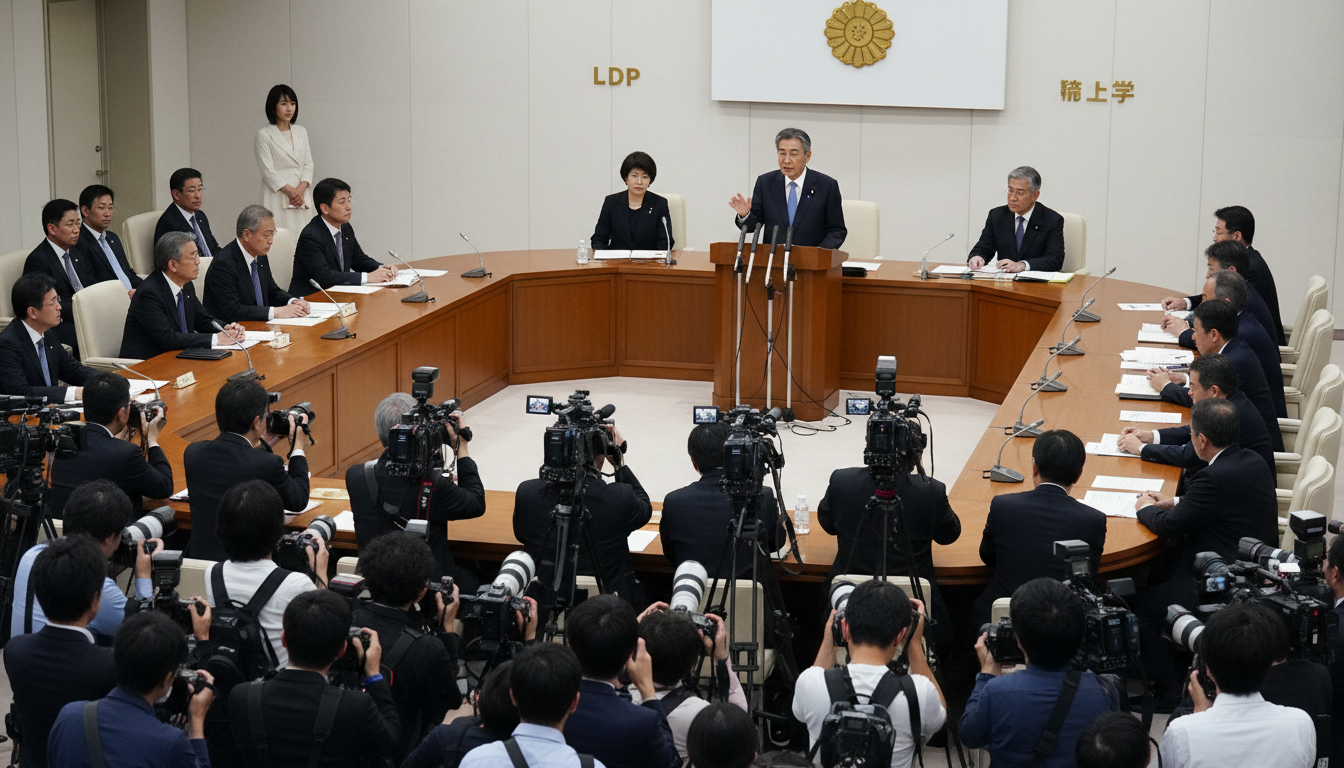
LDP Approves Bill to Bar Prosecutors from Appealing Retrial Orders
Japan’s ruling Liberal Democratic Party on May 13, 2026 approved a government-drafted bill to effectively bar prosecutors from appealing court orders that grant retrials, advancing the measure toward a cabinet decision and Diet submission.
LDP approval at judicial committees
The LDP’s Judicial Affairs Division and its Research Commission on the Judiciary System endorsed the final draft at a joint meeting on May 13. Party leaders described the move as the result of several rounds of revision and internal debate. The coalition partner, the Japan Innovation Party, also signaled its backing at a party meeting the same day.
Government timetable and procedural steps
The government intends to put the bill on the agenda at the cabinet meeting scheduled for May 15, 2026 and to submit it to the ongoing Diet session thereafter. Officials said the measure will move through the usual legislative channels, including committee consideration and plenary debate. The timeline for final passage depends on deliberations by opposition parties and any proposed amendments.
Main legal changes in the draft
Under the draft, a clause in the Code of Criminal Procedure that currently permits prosecutors to appeal retrial orders would be removed. A new provision would bar appeals against retrial orders except where prosecutors can demonstrate sufficient evidence to justify an appeal. The text also requires prosecutors to disclose their reasons when they do seek to appeal a retrial order.
Revisions and contested language
The Justice Ministry submitted a final draft after three rounds of revision, reflecting concerns raised within the party and by outside stakeholders. Earlier drafts placed an appeal ban in a supplementary provision, but LDP lawmakers pressed for the restriction to appear in the main body of the law. During the meeting, members still questioned whether the proposed wording would adequately deter indiscriminate appeals while preserving prosecutors’ ability to act in exceptional cases.
Supporters’ rationale and political context
Senior LDP members framed the change as a step toward strengthening defendants’ rights and improving the retrial process. Proponents argued that reducing prosecutors’ ability to appeal retrials would prevent repeated litigation that can prolong uncertainty for acquitted individuals. Party officials emphasized their intent to explain the bill to opposition parties and to secure broader legislative consensus.
Concerns from critics and legal practitioners
Some lawmakers and legal observers cautioned that an outright ban could limit prosecutors’ capacity to pursue cases where new, compelling evidence emerges after a retrial order. Questions were also raised about how courts would evaluate the “sufficient evidence” threshold the bill proposes. Legal specialists warned that the requirement for prosecutors to disclose appeal reasons would need clear procedural guidelines to protect sensitive investigative material while ensuring transparency.
Voices within the LDP and coalition
Among party figures, there were mixed reactions on whether the bill went far enough. A senior LDP lawmaker who had pressed for a complete ban described the approved draft as a pragmatic compromise, saying the party chose a step forward rather than delay further reforms. The Japan Innovation Party’s concurrence reduced the likelihood of immediate intra-coalition conflict, but the measure still faces scrutiny from opposition groups and civil-society organizations.
Implications for the criminal justice system
If enacted, the bill would reshape a longstanding prosecutorial right and could alter strategies in post-conviction litigation and retrial requests. The transparency requirement for appeals aims to make prosecutorial decisions more accountable, though implementation details will determine how much additional oversight is realized in practice. Observers say the law could prompt revisions in both prosecutorial practice and judicial review standards.
The bill now heads to the cabinet meeting on May 15, 2026, and then into Diet debate, where lawmakers will test the measure’s wording and weigh competing concerns about fairness, public safety, and legal certainty.

