
Crayon Shin-chan tourism sparks 50% rise in foreign visitors to Kasukabe
Crayon Shin-chan tourism drives a 50% rise in foreign visitors to Kasukabe as social media pilgrimages draw fans to anime sites and local businesses adapt.
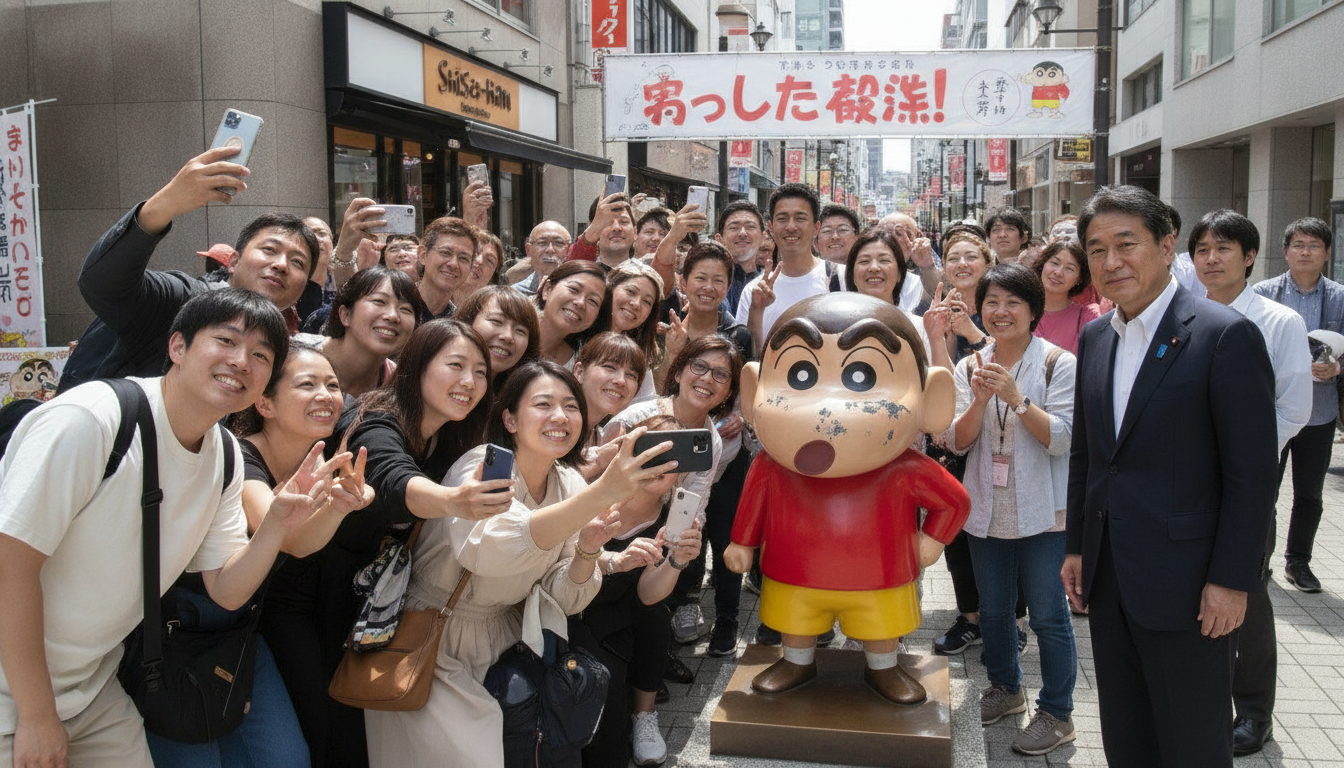
KASUKABE, Saitama — Crayon Shin-chan tourism has sent a wave of international visitors to Kasukabe, with the city’s tourist information center reporting a roughly 50% increase in foreign arrivals in the year through March 2026. The surge is being credited largely to social media posts that encourage "pilgrimages" to locations linked to the long-running anime. Local officials and shopkeepers say the pattern is reshaping visitor flows in this commuter city.
Visitor surge at Kasukabe tourist center
The tourist information center recorded the sharp uptick in inquiries and walk-ins from overseas guests over the 12 months ending March 2026. Staff report more non-Japanese visitors seeking maps, character merchandise and directions to sites associated with the anime. Many arrivals are first-time visitors to Japan drawn specifically by fan-driven itineraries rather than conventional tourist routes.
Anecdotal scenes capture the trend: couples and small groups posing for photos with Shin-chan plush toys outside the center and queuing for themed souvenirs. The rise in demand has pushed the center to extend multilingual support and to stock more character items aimed at collectors and casual fans alike.
Anime landmarks become pilgrimage stops
Specific sites in and around Kasukabe have taken on new significance for visitors tracing locations that appear in episodes or promotional material. Murals, statues and storefronts featured in or associated with the anime have become must-see stops for fans who treat the visits as cultural pilgrimages. The phenomenon mirrors wider "seichi junrei" trends in Japan, where media-related locations attract devoted visitors.
Local walking routes linking multiple Shin-chan–related points are being mapped by fans and tour operators, creating compact itineraries that can be completed in a day. These routes often include photo opportunities and recommended cafés, turning scattered locations into an integrated fan experience.
Social media shapes itineraries and expectations
Short videos, images and itinerary posts on platforms such as Instagram and short-form video apps have amplified interest quickly and organically. Hashtags and geotags allow visitors to discover precise spots, while shared tips help international tourists navigate public transport and local etiquette. Influencers and hobbyist accounts have been particularly effective at converting casual interest into travel plans.
The rapid spread of user-generated content also raises expectations: visitors increasingly arrive with specific photo angles, merchandise lists and schedules drawn from online guides. That has encouraged a form of performative travel, where the act of visiting is as much about recreating scenes as it is about exploring the town.
Local businesses pivot to meet fan demand
Retailers, cafés and specialty shops in Kasukabe are responding by tailoring products and services for Shin-chan fans. Merchants report brisk sales of plush toys, limited-edition goods and themed snacks, while some cafés have added seasonal menu items linked to characters. Smaller operators say the additional revenue has been an unexpected boon after several lean years for domestic tourism.
Service providers have also adapted operations, with some shops offering multilingual signage and digital payment options to ease transactions for foreign customers. A few businesses have collaborated to create bundled experiences — combining dining, merchandise and guided walks — to capture more of the fan market.
City planning and resident concerns
City officials acknowledge the economic benefits but are mindful of managing growth so that residents’ daily lives are not disrupted. Plans under discussion include improved signage, expanded tourist information in multiple languages and coordination with public-transport operators to handle peak visitation. Authorities are also exploring ways to promote off-peak and off-the-beaten-path attractions to spread demand across the wider Saitama region.
Residents have expressed mixed views, welcoming the boost to local shops while urging that crowding, noise and litter be controlled. Officials say they will engage neighborhood groups to refine visitor guidelines and to schedule community events that integrate fans respectfully into local life.
Regional tourism strategies evolve
Tourism officials beyond Kasukabe are watching the trend as an example of media-led visitor growth that can be replicated with other properties and locations. Promotional efforts are being considered that pair anime-related sites with traditional attractions, hoping to lengthen stays and encourage spending at a range of businesses. Collaboration between municipalities could help manage flows and create multi-day routes that benefit several communities.
Transport and hospitality partners are exploring packages aimed at international visitors who want a curated anime pilgrimage experience. These include combined train passes, guided tours and accommodation options tailored to fan groups.
The rise in Crayon Shin-chan tourism in Kasukabe highlights how pop-culture fandom and social media can reshape travel patterns rapidly, turning unassuming neighborhood landmarks into international visitor magnets. City leaders and local businesses face the task of balancing economic opportunity with long-term sustainability as the trend matures.

