
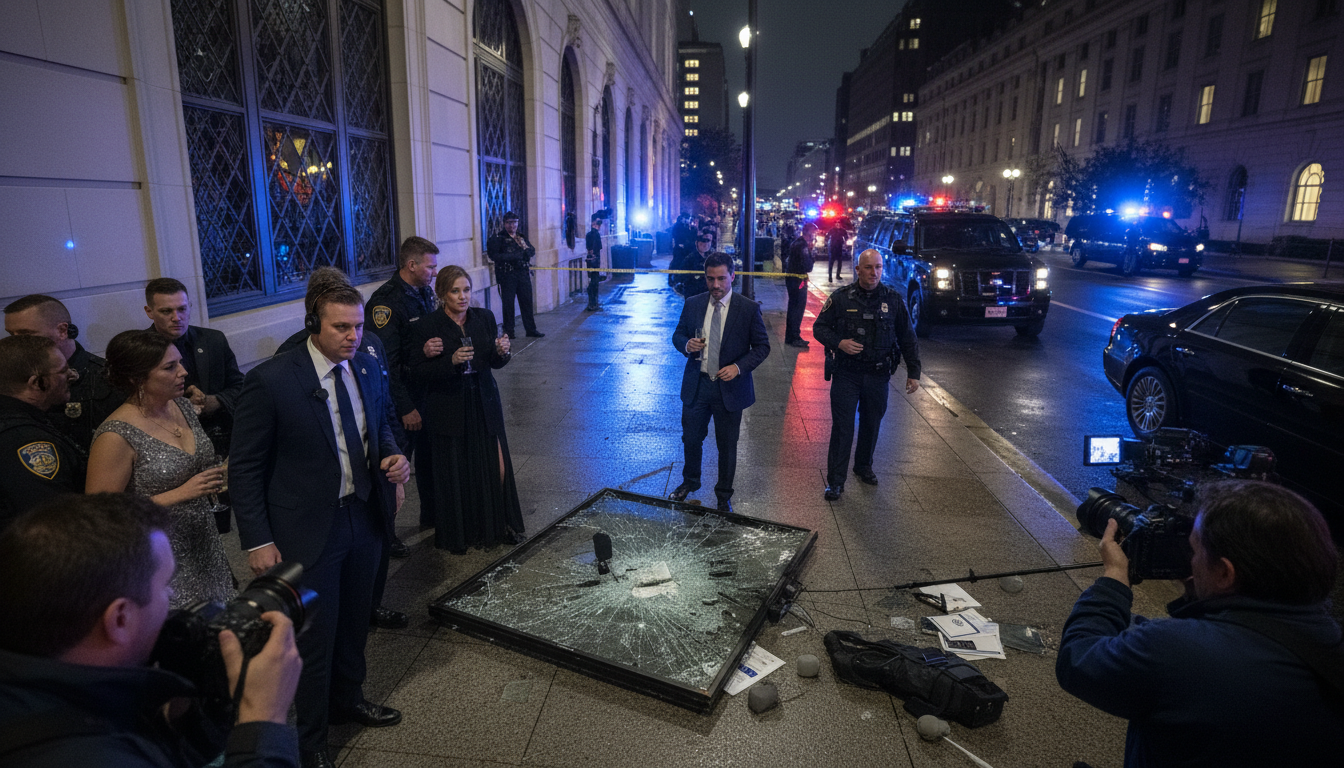
White House Correspondents’ Dinner shooting exposes security gaps as political violence rises
A gunman opened fire at the White House Correspondents’ Dinner in downtown Washington on the evening of April 25, 2026, forcing the President to be escorted from the hall and leaving attendees stunned. The White House Correspondents’ Dinner shooting has intensified debate over protective measures for high‑profile events and the escalation of politically charged violence in the United States.
Gunfire Interrupted the Dinner
Around 8:30 p.m. on a chilly Saturday, guests at a hotel ballroom in central Washington were dining when a series of sounds pierced the room. Several attendees described the noise as gunshots, while the President later characterized it as a dropped tray; the discrepancy underscored the confusion that followed the initial incident.
Security personnel moved quickly to clear the hall, and video footage captured the President being led away from the stage amid hurried movement and concern among guests. Organizers postponed the program as law enforcement secured the venue and began a rapid response operation.
Eyewitness Accounts Describe Panic
Journalists and diplomats at nearby tables recounted moments of chaos as people ducked under tables, shouted and tried to locate exits. One reporter from a British outlet said he heard what he believed were six distinct shots and scrambled to safety beneath his chair as others screamed.
Photographs and clips circulating after the incident showed guests clustered in corridors and stairwells, with several sheltering behind pillars and doorways. The scene highlighted how quickly televised events can become high‑risk situations when the sound of gunfire is reported.
Rapid Evacuation and Questions About Protection
The President was evacuated under the cover of protective security details, but the episode raised immediate questions about the robustness of screening and perimeter controls at a high‑profile, credentialed gathering. Security officials said the venue and many guests were screened, yet the apparent breach or attempted approach to a restricted area prompted scrutiny of procedures.
Critics noted that recent events involving threats to officials have prompted calls for tightened measures, while civil liberties advocates warned against measures that could overly restrict public access to political and press events. The incident has prompted an interagency review of protocols for protecting dignitaries at large indoor gatherings.
Suspect Apprehended Near Security Checkpoint
Law enforcement officials detained a 31‑year‑old man who, according to multiple reports, rushed toward a screening area carrying several firearms and attempted to breach a security checkpoint. Officers subdued and arrested the suspect at or near the entrance to the event, and he is now the subject of a federal investigation.
Authorities said the suspect had multiple weapons and that preliminary checks were ongoing to determine motive, background and any links to extremist groups or political causes. Prosecutors declined immediate comment as investigators worked to gather forensic evidence and witness statements.
Incident Follows Pattern of Threats Around the President
This episode is the latest in a series of violent incidents tied to public events involving the President, marking the third episode in roughly two years reported near the President’s vicinity. Security analysts warn that the combination of highly charged rhetoric, intense political polarization and frequent public appearances raises the risk profile for elected officials and those who cover them.
Observers pointed to the broader climate in which attacks and threats have, at times, been amplified by inflammatory political discourse. The recurrence of incidents has intensified debate in Washington about how to balance visible leadership with adequate safeguards.
Impact on Press Freedom and Public Events
The shooting struck at the heart of a gathering meant to celebrate journalism and spotlight the relationship between the White House and the press corps. For many in the media, the incident raised immediate concerns about the safety of journalists covering high‑risk events and the implications for freedom of the press.
Organizers of the dinner and media organizations emphasized the importance of continuing robust reporting while urging authorities to adopt measures that protect both access and safety. The episode may prompt outlets and associations to reassess security plans for future gatherings that involve political leaders and large numbers of credentialed reporters.
The evening’s events have prompted calls from lawmakers and civil society groups for a sober reassessment of security arrangements and political rhetoric that can inflame tensions. As investigators pursue leads and the detained suspect faces legal processes, there is growing pressure for concrete steps to shore up protections at public events while preserving democratic norms and press freedoms.

