
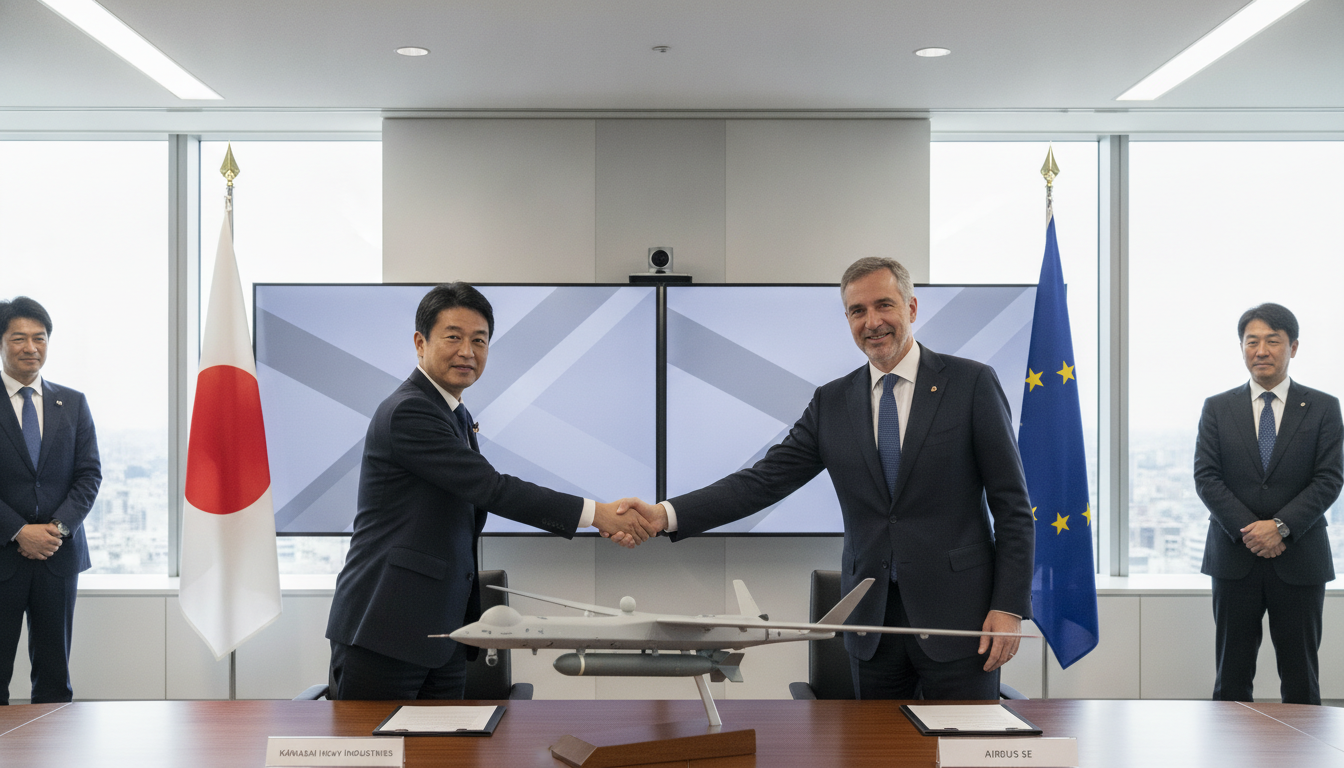
Kawasaki, Airbus to develop anti-submarine drones by adapting Eurodrone for Japan’s defense ministry
Kawasaki Heavy Industries will partner with an Airbus unit to develop anti-submarine drones by adapting the Eurodrone platform with Kawasaki ASW systems, a proposal reportedly to be offered to Japan’s defense ministry.
Japan’s Kawasaki Heavy Industries has formed a partnership with an Airbus unit to develop anti-submarine drones, according to a report by Nikkei. The plan would see Airbus’s Eurodrone — originally designed for intelligence and surveillance — fitted with Kawasaki’s anti-submarine warfare (ASW) systems and presented to Japan’s defense ministry as a candidate capability for maritime patrol and submarine detection.
Kawasaki and Airbus to adapt Eurodrone for maritime roles
The companies intend to begin with the Eurodrone airframe and integrate submarine-hunting sensors and payloads developed by Kawasaki. The Eurodrone’s endurance and payload capacity make it a logical candidate for conversion into a maritime-focused unmanned system. Both firms are aiming to leverage existing technology to shorten development time and present a near-term option to Japanese authorities.
Systems integration and likely ASW capabilities
Kawasaki would adapt its existing ASW equipment for installation on a remotely operated aircraft, focusing on sensor suites, communication links and payload deployment mechanisms. While precise technical configurations have not been disclosed, integration will require airborne-compatible versions of maritime sensors and secure data links to ship and ground stations. The project will also demand rigorous testing to confirm performance in maritime environments and interoperability with Japan Maritime Self-Defense Force systems.
Proposal to Japan’s defense ministry and procurement pathway
According to the report, the joint proposal will be submitted to the defense ministry for evaluation as part of ongoing efforts to modernize maritime surveillance and anti-submarine capabilities. If accepted, the program would likely enter formal trials and assessments before any procurement decision. The ministry’s evaluation will assess operational effectiveness, cost, industrial participation and how the platform fits existing force structures.
Strategic rationale amid rising submarine activity
Japan has been expanding its focus on undersea detection amid concerns about increased submarine activity in the region. A remotely operated anti-submarine drone could provide persistent surveillance over wide maritime areas while reducing risk to crewed assets. Officials and analysts see unmanned solutions as a way to increase coverage and responsiveness, particularly in contested or remote waters where traditional patrol assets are stretched.
Industrial and international implications
A Kawasaki–Airbus collaboration would strengthen industrial links between Japan and European defense manufacturers and could accelerate technology transfer in key areas. For Kawasaki, the partnership provides access to a proven medium-altitude, long-endurance platform, while Airbus gains a partner with expertise in maritime systems and integration. The arrangement could also create export potential if Japan elects to pursue joint production or allows third-party sales, though any exports would be subject to national regulations and allied consultations.
Testing, approvals and potential timeline
Before deployment, the converted Eurodrone would need to clear a sequence of flight tests, maritime trials and safety certifications under both Japanese and European standards as applicable. The integration process and government procurement cycle suggest several years of development and testing before operational use. Decision points will include technical milestones, budgetary approval and strategic requirements set by Japan’s defense planners.
Japan’s reported interest reflects a broader shift toward unmanned systems for maritime security, where endurance and sensor reach are prized. If Kawasaki and Airbus proceed and secure ministry backing, the effort could reshuffle how Tokyo sources ASW capabilities and deepen defense industrial cooperation with European partners.
The proposal underscores a pragmatic approach: adapting an established drone platform to meet urgent maritime needs while drawing on domestic defense suppliers to retain operational control and sustainment capability.

