
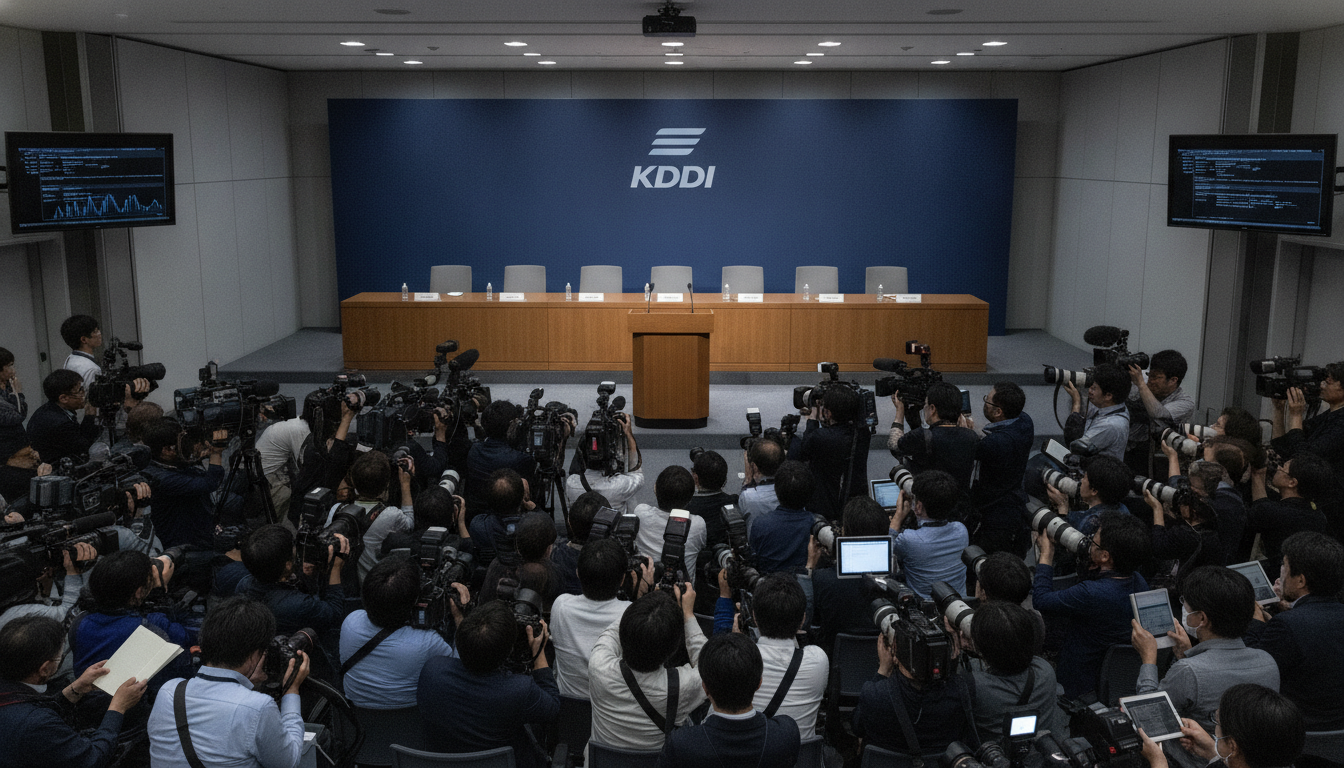
KDDI email system breach potentially exposes up to 14.22 million addresses and passwords
KDDI warns that an unauthorized intrusion into a corporate email system may have leaked up to 14.22 million user email addresses and passwords; users urged to change passwords immediately.
KDDI reports unauthorized access to corporate email system
KDDI announced that an email system it provides to several partner companies was targeted by unauthorized external access. The company said the incident may have resulted in the exposure of users’ email addresses and passwords, affecting a large number of accounts.
KDDI characterized the incident as an intrusion into a system used by business clients and moved quickly to notify affected partners. The company emphasized the possibility of data leakage rather than a confirmed, complete extraction of all records.
Estimated scale of the exposure
KDDI said up to 14.22 million email addresses and passwords could be involved, based on initial logs and system inventories. The figure covers stored account credentials and does not necessarily mean all credentials were misused or distributed publicly.
Officials described the number as an upper-bound estimate while investigations continue, noting that final tallies may change as forensic analysis proceeds. KDDI cautioned that even a partial compromise at this scale poses heightened risk of account takeover and credential-stuffing attacks.
Services and providers affected
The affected email system is supplied by KDDI to six partner service operators: STNet, KDDI Web Communications, JCOM, Chubu Telecommunications, Nifty, and Biglobe. Each provider delivers mail services to their own customer bases using the shared platform, which created a single point of exposure.
KDDI informed the six companies directly and asked them to notify their subscribers. The partners have begun issuing guidance to their users and coordinating with KDDI on mitigation measures and communications.
Immediate guidance and recommended actions
KDDI and the partner providers are urging all users of the affected services to change account passwords without delay. The companies specifically recommended creating unique, strong passwords and avoiding reuse of credentials that are shared with other services.
Security experts typically advise enabling multi-factor authentication where available and monitoring account activity for unauthorized logins. Users were also told to be alert for phishing attempts that could follow the leak, as exposed email addresses and passwords can be used to craft convincing fraudulent messages.
KDDI’s investigative and containment steps
KDDI reported initiating an internal investigation and working with external cybersecurity specialists to determine the intrusion vector and scope. The company said it has taken measures to contain the incident and is reviewing system logs to identify how the attackers obtained access.
Authorities and industry partners may be informed as the probe develops, and KDDI plans to update affected customers as new findings emerge. The company indicated it would evaluate and strengthen controls on the mail system and its operational environment to reduce the chance of recurrence.
Security implications for corporate clients and subscribers
A compromise of this nature can expose users to account takeover, fraud, and targeted phishing, particularly when credentials are reused across services. Corporate clients using the affected platform face reputational risk and possible disruption if business email accounts are manipulated or impersonated.
The shared-service model that centralizes email infrastructure can amplify impact when a single system is breached, underscoring the need for segmentation, stronger authentication, and continuous monitoring. Organizations that rely on third-party platforms should reassess their access controls and incident response plans in light of this event.
KDDI email system breach casts spotlight on credential security and rapid notification practices.
For individual users, the principal immediate step is to change passwords on affected accounts and on any other accounts that use the same credentials. Enabling multi-factor authentication and reviewing recent login history can reduce the risk of successful account takeover.
Those who manage corporate or institutional accounts should coordinate with their IT security teams, review logs for suspicious activity, and consider mandatory password resets and temporary access restrictions. Communication to customers and stakeholders should be prompt and transparent to limit downstream harm.
The ongoing investigation will determine the full technical details and whether data were exfiltrated beyond the system’s boundaries. KDDI and its partner providers have announced they will continue to provide updates to users as more information becomes available.
Users impacted by the incident are advised to follow official instructions from their service provider and to treat unsolicited messages with caution while the situation remains under review.

