
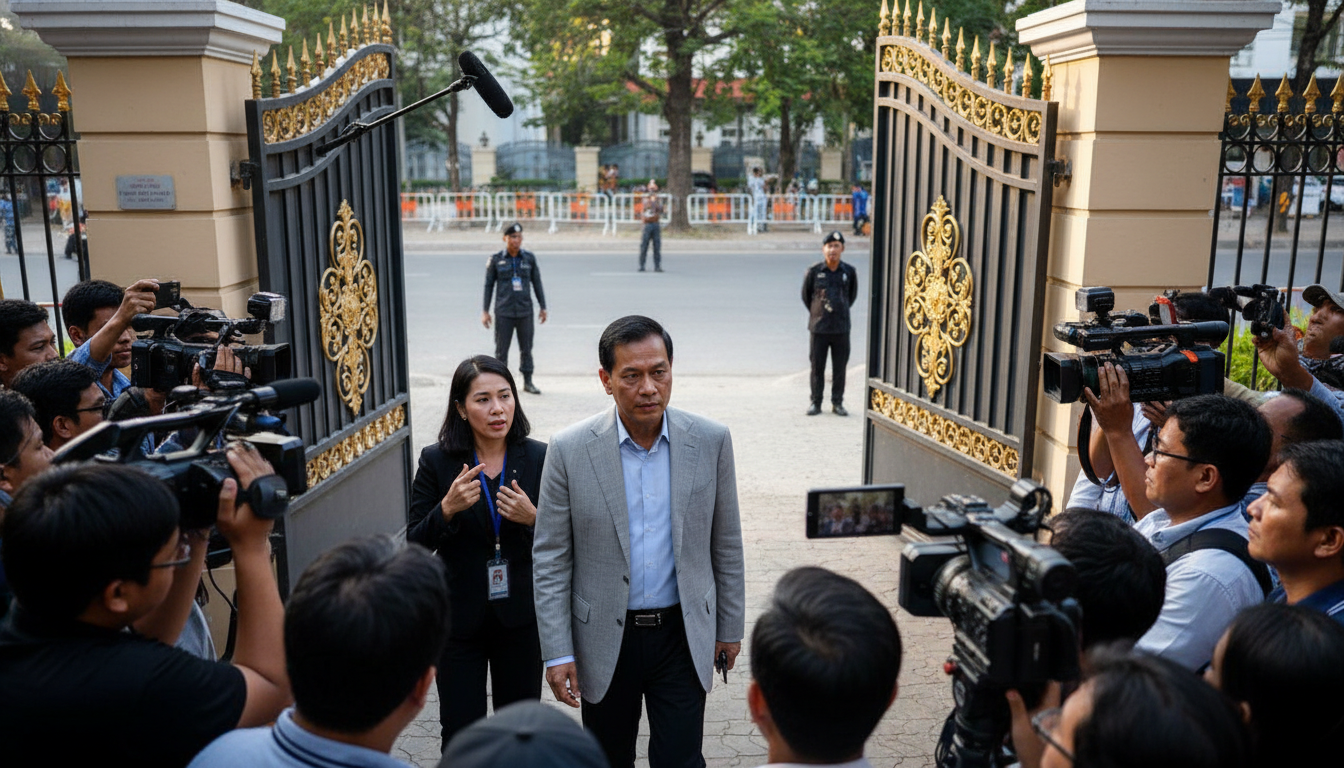
Kem Sokha release draws cautious welcome as legal and political restrictions remain
Kem Sokha release: royal pardon freed the former opposition leader from house arrest but five-year travel ban and political prohibitions persist, lawyers warn.
PHNOM PENH — The Kem Sokha release on May 25, 2026, came after a royal pardon that ended his de-facto house arrest, but legal limits and political restrictions stayed firmly in place, his legal team and former colleagues said. The move surprised supporters who had campaigned for his freedom, yet lawyers cautioned that the pardon did not remove the longer-term constraints attached to his conviction. (apnews.com)
Royal pardon ends house arrest
The royal decree signed on May 25, 2026, lifted the immediate requirement that Kem Sokha remain confined to his home, allowing him to leave his residence for the first time since the latest sentence was imposed. The pardon was issued by the Senate president acting as head of state while King Norodom Sihamoni remains abroad for medical treatment. Prime Minister Hun Manet characterized the step as a gesture toward national unity in a brief public message. (washingtonpost.com)
Court upheld conviction and additional sanctions
Kem Sokha was originally convicted of treason in March 2023 and sentenced to 27 years in prison, a verdict that included a lifetime ban on engaging in political activities. On April 30, 2026, the Phnom Penh Court of Appeal upheld that conviction and added a prohibition preventing him from leaving Cambodia for five years after his sentence’s completion. Human rights groups had condemned the trial and the penalties as politically motivated. (hrw.org)
Lawyers and colleagues say restrictions are intact
Sokha’s lawyers immediately warned that the Kem Sokha release did not amount to a restoration of his civic or political rights, noting the formal bans on political participation and the travel restriction remain enforceable. A former CNRP colleague said supporters welcomed the end of house arrest but were realistic about the limits the pardon left in place. Legal advisers emphasized that any attempt to participate in public political activity could trigger renewed legal action under existing court orders. (english.cambodiadaily.com)
Human rights groups and local monitors respond
Rights organizations highlighted that the pardon resolves Sokha’s immediate confinement but leaves intact a suite of measures that continue to narrow civic space. Local monitors and international NGOs flagged the appeal court’s April 30 decision, reiterating calls for Cambodia to quash politically charged convictions and lift ancillary bans that curb freedom of movement and association. Observers stressed that the decision to pardon, rather than to overturn the ruling, does little to address systemic concerns about the independence of the judiciary. (licadho-cambodia.org)
Diplomatic and political fallout ahead of elections
Analysts say the timing of the Kem Sokha release has potential diplomatic dimensions, coming amid ongoing scrutiny from Western governments over political freedoms in Cambodia. Although the government framed the pardon as a unifying act, opposition figures remain fragmented, with many leaders living abroad and the Cambodia National Rescue Party dissolved. The persistence of legal prohibitions on Sokha and other critics is likely to limit any near-term revival of an organized domestic opposition ahead of national elections. (hrw.org)
Domestic political reaction and public sentiment
Public reaction in Phnom Penh was mixed: supporters celebrated the immediate end of house arrest, while activists and rights defenders lamented that structural barriers to political participation remain. State statements emphasized reconciliation and stability, but civil society groups warned that substantive political reform would require undoing convictions and restoring rights, not only issuing pardons. The government has not signaled plans to repeal the court rulings or the bans attached to Sokha’s sentence. (apnews.com)
The Kem Sokha release has relieved a personal restriction on one of Cambodia’s most prominent critics, but it leaves in place legal penalties and prohibitions that continue to shape the country’s political terrain. Observers say that true change will depend on whether authorities move to rescind the underlying convictions and broader measures that observers say have narrowed democratic space.

