
KOSPI rally lifts South Korean stocks as investors bet on Middle East easing
South Korean stocks surged as the KOSPI rally pushed major indices higher, driven by an overnight U.S. advance and hopes of a settlement in the Middle East that revived risk appetite among global investors.
The KOSPI rose more than 8% at one point on Friday morning, reflecting a sharp swing after a seesaw week for the bourse. Market participants said the move was linked to the U.S. market’s gains overnight and renewed optimism about geopolitical stability, alongside broad-based buying across technology and export-oriented firms.
KOSPI rally accelerates after U.S. session
The KOSPI rally gathered momentum following gains on Wall Street, where investors reacted to signals that tensions in the Middle East might ease. Trading floors reported a swift shift from caution to aggressive buying as market sentiment turned risk-on.
Analysts noted that the rebound followed a volatile week in which investor positioning had been tentative, and the sudden uptick underscored how closely the Seoul market is tied to global risk sentiment. The rapid advance trimmed earlier weekly losses and left benchmark indices considerably higher by midday.
Technology and exporters lead the advance
Technology stocks and exporters were among the standout contributors to the KOSPI rally, with chip-related names and manufacturers drawing particular interest. The surge in global demand expectations helped lift commodity-linked and industrial shares as well.
Investors cited expectations of a recovery in trade activity and renewed demand for semiconductors as key factors supporting the rotation into these sectors. The breadth of the rally suggested that buying was not limited to a handful of megacaps but extended across multiple industries.
Foreign investor flows and domestic trading dynamics
Foreign buying played a notable role in amplifying the KOSPI rally, with overseas investors returning to the market after a period of net selling. Dealers said inflows were spurred by improved risk sentiment and repositioning ahead of anticipated macroeconomic data.
Domestic retail participation also climbed as momentum attracted short-term traders, while institutional managers adjusted portfolios to reflect a more optimistic outlook. The combination of foreign demand and local activity helped sustain the upward move through the morning session.
Currency and fixed-income markets respond
The won strengthened against the dollar as the KOSPI rally gained traction, reflecting a broader pullback in safe-haven demand. Currency markets showed heightened sensitivity to equity flows, with the exchange rate moving in tandem with risk sentiment shifts.
Korean government bond yields eased modestly as investors rotated into risk assets, although volatility remained elevated given the still-fragile geopolitical backdrop. Market participants cautioned that fixed-income moves could reverse quickly if new developments altered the risk landscape.
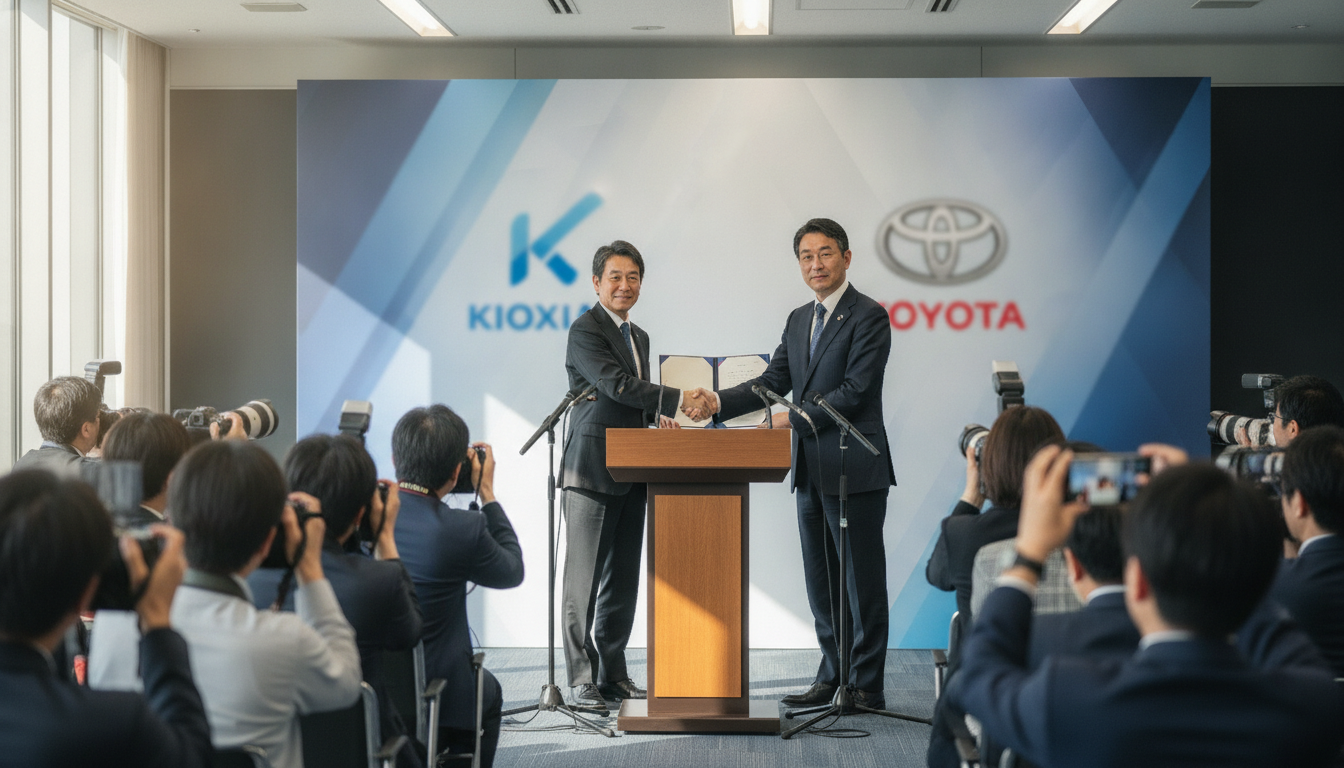
Tokyo snapshot: Kioxia eclipses Toyota in market value
In Tokyo, chipmaker Kioxia briefly surpassed Toyota Motor to become the most valuable listed company in Japan, reflecting the broader tech-driven market rotation. The shift highlighted investor enthusiasm for memory-chip makers amid hopes of rising demand and improving margins.
The change in market capitalization rankings underscored how global themes—semiconductor demand and geopolitical risk sentiment—are reshaping equity market leadership across Asia. Market watchers said the move also pointed to growing investor attention on companies tied to advanced technology supply chains.
Analysts warn gains may be fragile amid lingering risks
Despite the upbeat start to trading, analysts urged caution, noting that gains tied to geopolitical developments can be short-lived. They pointed to the potential for renewed volatility if diplomatic efforts stall or new incidents emerge in the Middle East.
Traders also flagged upcoming economic releases and corporate earnings as possible catalysts that could either reinforce the KOSPI rally or trigger profit-taking. For now, the market’s sharp rebound has provided relief to investors, but caution is likely to remain a dominant theme.
The KOSPI rally on Friday illustrated how quickly market sentiment can pivot when geopolitical concerns appear to ease, and it highlighted the continued influence of global cues on Asian bourses.

