
Kumamoto earthquake: Woman in her 70s found dead in car two days after quake amid extreme heat
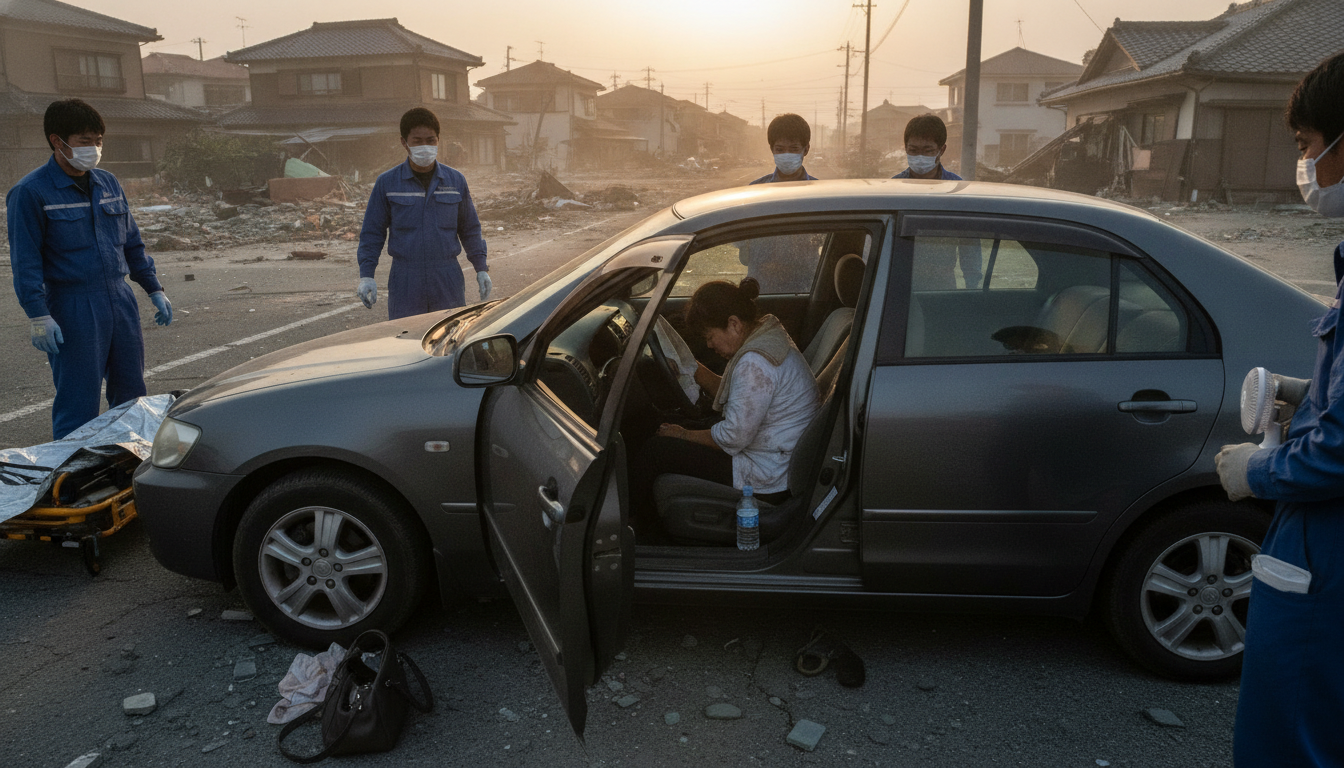
Woman in her 70s found dead in her car in Hikawa, Kumamoto, on July 30, 2026 — two days after a local intensity-7 quake — amid extreme heat and emergency-call problems.
The body of a woman in her 70s was discovered inside her parked car in Hikawa, Kumamoto Prefecture, on the night of July 30, 2026, two days after a quake that registered a local seismic intensity of 7 in the town. The discovery, made as temperatures remained high well into the night, has prompted renewed concern over heat-related risks and barriers to emergency communication in the immediate aftermath of the Kumamoto earthquake. Local residents and first responders described a tense sequence of events as neighbors tried to reach help.
Sequence of events on the night of July 30
A resident in his 60s, who had planned to sleep in his car because of widespread shaking and structural concerns, recalled dozing in the vehicle as evening temperatures remained elevated. He said an outdoor thermometer on his car read 33 degrees Celsius around 8 p.m., and that a neighbor arrived late that night visibly distressed. The neighbor told him she had been unable to reach her older sister by phone and feared the worst, prompting attempts to summon emergency services.
Neighbors who gathered in the garage area reported seeing the woman’s blue kei car parked where she normally left it, with people clustered nearby trying to get information. Several residents attempted to contact emergency services themselves before the 60s man used his phone to place a call to the ambulance service. Despite those efforts, the woman was found unresponsive inside the vehicle.
Emergency-call difficulties reported by residents
Multiple local residents said their own calls to emergency numbers did not connect in the moments leading up to the discovery, sometimes going to voicemail or being met with delays. Those on the scene described confusion and frustration as they tried alternate numbers and knocked on nearby doors seeking help. Officials have acknowledged that systems can become strained after a major quake, but investigators and municipal authorities are expected to examine whether technical issues, congestion, or other factors hindered the timeliness of the emergency response.
Emergency-call access is a critical link in post-quake rescue and medical aid, and delays can increase the risk of secondary deaths. Residents urged authorities to clarify the reasons for any interruptions and to provide guidance for reaching medical assistance when primary lines are overloaded after a disaster.
Heat and health risks during post-quake displacement
Local testimonies highlighted the intense overnight heat as a complicating factor for residents sheltering in cars, community centers and temporary locations. High evening temperatures, especially when people sleep in enclosed spaces such as vehicles, increase the risk of heatstroke and exacerbate health vulnerabilities for elderly residents. Medical professionals and disaster experts note that older adults are particularly susceptible to rapid heat-related deterioration when exposed to sustained high temperatures and reduced mobility.
Public-health officials have emphasized the need for active cooling measures, hydration, and monitoring of at-risk individuals during evacuation and temporary displacement. In the days following the quake, some evacuation sites and local volunteers reported difficulties maintaining cool, supervised spaces for vulnerable residents, a condition that can compound the danger of prolonged sheltering outside conditioned homes.
Neighbors’ attempts to assist before formal responders arrived
Accounts from people who were at the scene indicate that immediate neighbors played a central role in attempting to check on the woman and to summon help. One resident returned a neighbor’s phone and placed the emergency call after seeing repeated attempts to dial multiple numbers, according to witnesses. Others gathered at the garage where the woman’s car was parked and tried to assess the situation while awaiting professional responders.
This pattern — neighbors providing initial aid and coordination — is common in rural and small-town settings where community ties and proximity often determine the speed of first action. Local leaders say that strengthening community-based response capacities, such as neighbor-led checks and simple first-aid training, can be a vital complement to formal emergency systems.
Municipal and prefectural response under scrutiny
Municipal officials from Hikawa and Kumamoto prefecture are expected to review the circumstances of the death as part of broader post-quake evaluations. Authorities have in recent days been dealing with widespread structural damage, displaced residents and the logistical challenge of providing cooling and medical care to those affected. While formal investigations continue, local governments face pressure to improve emergency-call routing, ensure reliable on-site medical checks, and coordinate heat-mitigation resources during prolonged recovery.
Disaster-management experts point to the need for clearer contingency plans that account for both structural damage and extreme weather events following seismic activity. The convergence of high overnight temperatures with disruptions caused by a large quake underscores the complexity of protecting vulnerable populations in compound-disaster scenarios.
The discovery of the woman’s body in her car has underscored for many residents the fragility of safety nets in the immediate aftermath of a major quake. As authorities complete their inquiries and community groups mobilize to support the elderly and dispersed households, calls are growing for practical steps to prevent similar tragedies in future emergencies.

