
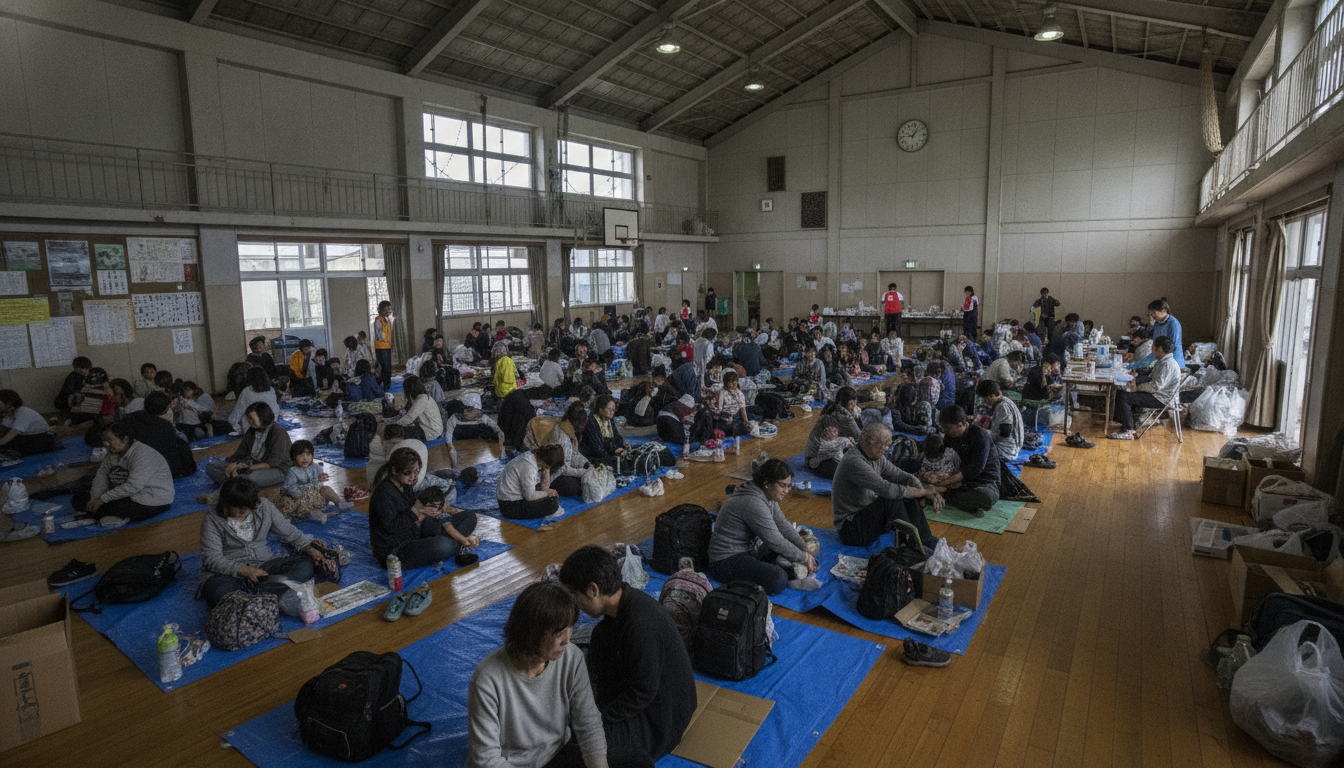
Kumamoto earthquake leaves evacuation centers overcrowded 48 hours after July 28 shocks
Kumamoto earthquake on July 28 left evacuation centers overcrowded and under-resourced; survivors report ‘zako‑ne’ sleeping as officials race to deliver aid.
The Kumamoto earthquake that struck on the evening of July 28, 2026, has left many residents sheltering in crowded evacuation centers as of July 30. Survivors and local officials report that dozens of evacuees are sleeping in close quarters — a condition often described in Japanese as "zako‑ne" — and that basic living spaces remain poorly arranged. The quake, which registered a maximum seismic intensity of 7 near the epicenter, has prompted a fast-moving relief response even as needs outpace supplies in some areas.
Conditions inside emergency shelters
Evacuation centers in affected municipalities have been hastily set up in gymnasiums, community halls and disaster-preparedness centers, with many rooms filled by families laying out blankets or towels on the floor. Photographs from July 30 showed evacuees using towel blankets and sharing narrow spaces, raising concerns about privacy, rest and infection control. Local volunteers and officials say that while food and water are arriving, the setup of individual partitions, bedding and hygiene facilities is uneven from site to site.
Health, sanitation and vulnerable residents
Medical teams dispatched to shelters report that people with chronic conditions, older residents and those injured in the tremors face particular hardship when space and privacy are limited. Officials are prioritizing distribution of medical supplies and arranging visits by health staff, but evacuees say access remains inconsistent in some locations. Public-health experts warn that prolonged crowding without adequate sanitation can increase the risk of heat-related illness, sleep deprivation and infectious disease spread.
Official response and casualty reporting
Kumamoto prefectural authorities confirmed multiple fatalities and significant damage to homes and infrastructure in the days after the quake, and offices have been coordinating with municipal disaster-management teams to register evacuees and prioritize emergency deliveries. Rescue operations and damage assessments continued through July 30 as crews combed affected neighborhoods for survivors and assessed collapsed structures. National agencies and neighboring prefectures mobilized personnel and supplies to relieve the hardest-hit communities.
Transport, infrastructure and visible faulting
The earthquake caused notable disruptions to transport routes across the region, with reports of highways and rail lines temporarily halted while inspections were carried out. In several locations, ground ruptures and fissures were visible, prompting precautionary stops of some train services where tracks crossed affected ground. Utility outages and fallen poles were reported in rural towns, complicating access for emergency crews and slowing restoration of power and communications in the first 48 hours.
Comparisons with 2016 disaster fuel calls for shelter reform
Many evacuees and local officials recalled the 2016 Kumamoto earthquake, which also produced intensity-7 shaking and exposed shortcomings in shelter arrangements. After that quake, some residents avoided crowded public shelters because of supply shortages and privacy concerns; similar patterns emerged again this week, prompting renewed calls for improvements. Community leaders and disaster experts have urged authorities to speed distribution of individual bedding, partitions and mental-health support while reviewing long-term shelter standards.
The coming days will test local coordination as authorities balance immediate life-saving needs with plans to improve shelter conditions and restore essential services. Long-term recovery will depend on orderly logistics, continued national support and community cooperation to ensure evacuees can move from temporary communal sleeping arrangements to safer, more secure accommodations.

