
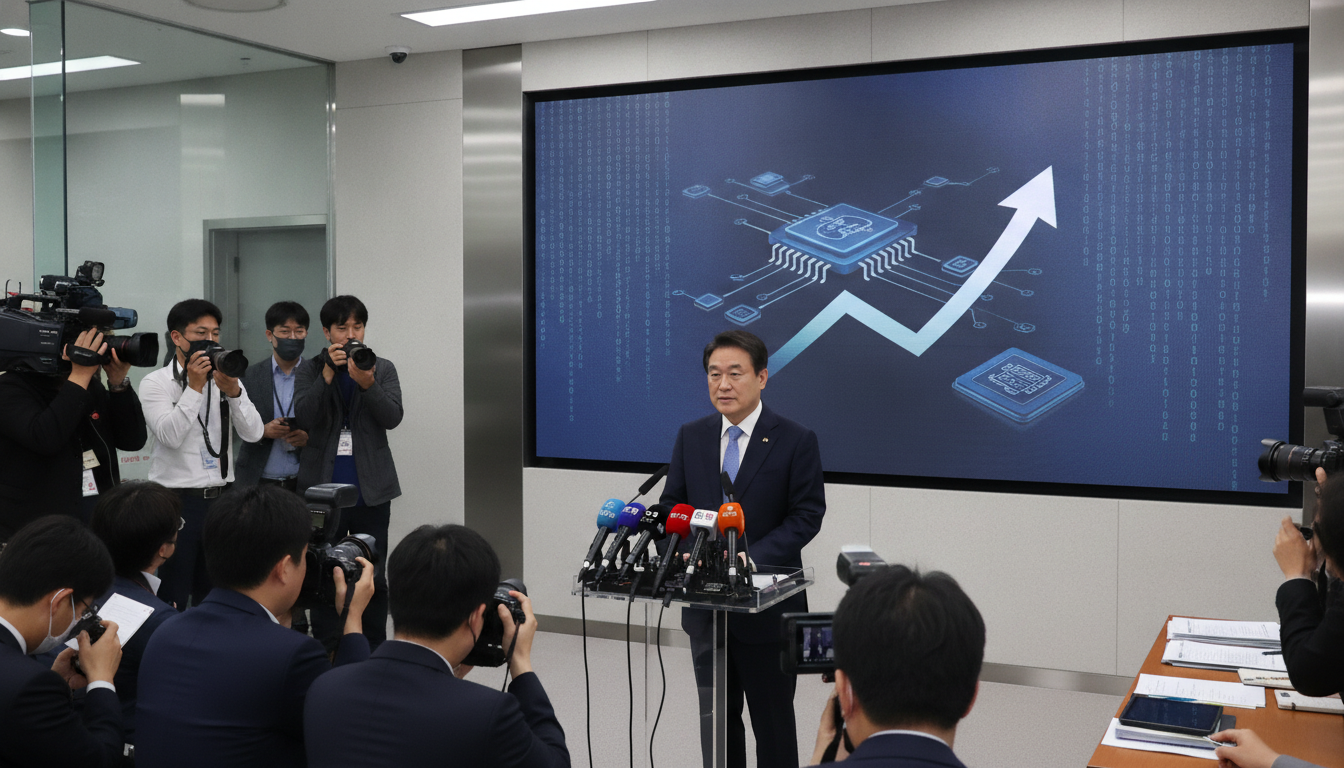
Lee Jae Myung to seek South Korea AI fund in San Francisco talks
President Lee flies to San Francisco July 24 to pitch a permanent South Korea AI fund to share chip-era gains and attract foreign tech investment.
South Korean President Lee Jae Myung will travel to San Francisco on July 24, 2026, to press a plan for a permanent South Korea AI fund that aims to redistribute gains from the global artificial intelligence investment boom. The administration says the fund would channel profits from the chip-driven upswing into broader economic benefits at home while courting major technology investors. Lee will be joined on the trip by the chairmen of Samsung Electronics and SK Hynix for meetings with global tech leaders and venture capitalists.
Lee’s mission and timing
President Lee is making the visit amid surging interest and capital flows into AI worldwide, and at a moment when South Korea’s semiconductor exporters are reporting elevated profits. The trip is designed both to attract new AI-related investment to Korea and to lay the groundwork for a mechanism that shares those gains with the wider public. Officials say the timing reflects concern that rapid corporate earnings have not translated into comparable wage growth or significant new employment in emerging sectors.
Details of the proposed permanent fund
The administration’s proposal centers on a permanent South Korea AI fund to accumulate and deploy revenue tied to the AI and semiconductor boom. While officials have not released full technical specifics, the outline presented by the government indicates the fund would draw from corporate contributions, taxes on extraordinary profits, or public–private partnership investments. The stated objective is to use the fund for long-term national priorities such as workforce retraining, research and development, and infrastructure to support an AI-driven economy.
Industry delegation and San Francisco meetings
Lee will travel with the chairmen of Samsung Electronics and SK Hynix, underscoring the centrality of the semiconductor sector to the plan. The delegation is scheduled to meet with a cross-section of global technology companies, start‑up founders and institutional investors in San Francisco to promote Korea as a hub for AI research and deployment. The administration hopes these conversations will secure commitments for investment, joint ventures, and technology transfers that could amplify the fund’s impact domestically.
Economic context: chip profits versus jobs
South Korea’s chipmakers have reported strong margins in recent quarters, but those gains have not created proportional growth in hiring in AI or adjacent services. Policymakers note that capital-intensive chip manufacturing lifts national export figures and corporate balance sheets without automatically generating large numbers of new, high-quality jobs. The permanent South Korea AI fund is being pitched partly as a corrective: a way to convert concentrated capital gains into broader, more inclusive economic development.
Policy options under consideration
Officials are weighing several mechanisms to feed the fund, including targeted levies on windfall profits, scaled contributions from firms benefiting most from AI demand, and incentives to attract foreign corporate investment directly into the fund. Possible uses discussed publicly include nationwide reskilling programs, grants for start-ups, expanded public cloud and AI testbeds, and co-investments that lower the cost of private R&D. The administration has indicated it will aim to design the fund to be resilient and politically durable, with governance measures to ensure transparency and private-sector participation.
Reactions from business and labor groups
Responses inside South Korea are likely to be mixed. Industry leaders have signaled openness to collaboration on national AI strategy while warning against measures that could dampen competitiveness or deter foreign capital. Labor advocates and some civic groups have welcomed the idea of redistributing gains to support workers and communities affected by automation and industrial shifts. Analysts say the success of the South Korea AI fund will hinge on clear rules, predictable governance, and demonstrable projects that link fund resources to measurable outcomes.
South Korea’s outreach in San Francisco represents both an economic pitch and a policy test. By combining diplomatic engagement with industry leaders and concrete proposals for a permanent fund, the Lee administration is attempting to convert private-sector momentum in AI into public goods and employment pathways. The details that emerge from the meetings on July 24 will determine whether the plan can balance incentives for investors with the redistribution goals the government has articulated.

