
Malaysia rare earth reserves draw global investment as countries race to diversify
Malaysia rare earth reserves draw foreign investment as Japan and Western nations race to diversify supply ahead of Beijing’s planned export curbs this fall.
Malaysia’s rare earth reserves are drawing renewed foreign investment as Japan and Western governments accelerate efforts to diversify supply away from China ahead of Beijing’s planned export controls this fall. Companies and officials are focusing on projects in Malaysia, including processing and refining capacity that could reduce reliance on Chinese sources. The rush reflects growing concern over the security of critical minerals used in electronics, electric vehicles and defense systems.
Foreign investors increase activity around Malaysia rare earths
Foreign mining and processing firms have stepped up exploration and capacity investments targeting Malaysia’s deposits of rare earth elements. Investors cite geology, existing industrial infrastructure and a more receptive regulatory environment as reasons for the shift. Commercial interest has been particularly strong for elements used in permanent magnets and advanced electronics.
Several private-equity and strategic investors are reportedly in advanced talks with Malaysian partners, seeking stakes in extraction and downstream processing projects. While capital is available, investors say timelines depend on permits, community engagement and technology transfer agreements. The movement marks a notable change from previous years when most investment clustered in China and Australia.
Japan and Western governments speed up diversification plans
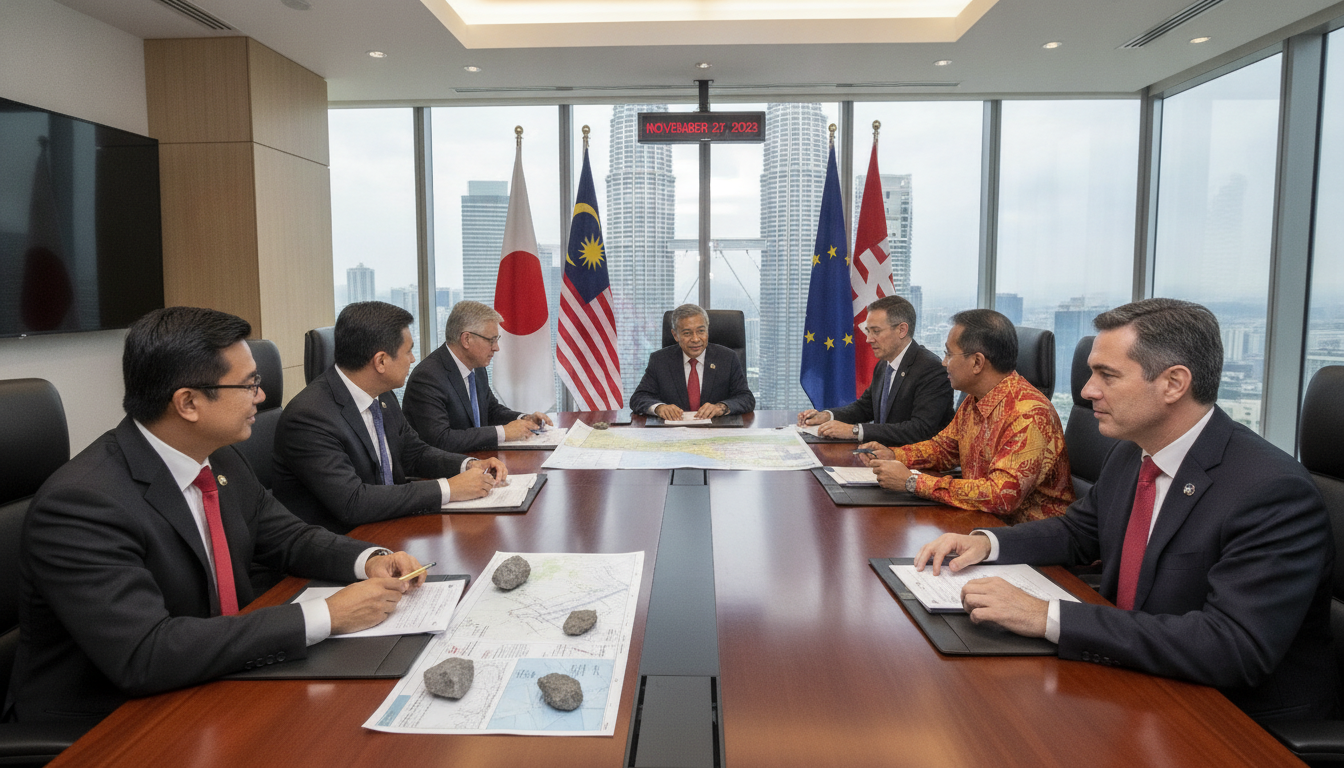
Tokyo and allied Western capitals have intensified diplomatic and commercial outreach to Malaysia as part of broader critical-minerals strategies. Government-backed delegations and industry missions have visited Kuala Lumpur this year to discuss joint ventures and supply-chain partnerships. Officials say the aim is to establish diversified, resilient supply chains for rare earths and other critical minerals.
Policy tools being considered range from investment incentives to technical assistance for processing plants and environmental safeguards. For Japan, securing stable supplies is central to maintaining its electronics and automotive industries. Western countries, particularly those with advanced manufacturing and defense needs, view diversification as a strategic imperative amid rising geopolitical tensions.
Beijing’s planned export curbs heighten urgency
The prospect of Beijing imposing tougher export restrictions on certain critical minerals later this year has added urgency to sourcing alternatives. Market participants expect potential controls to target higher-value processed materials rather than raw ores, complicating downstream supply. The uncertainty has prompted companies to accelerate agreements and contingency planning.
Analysts caution that timing and scope of any Chinese measures remain uncertain, but the mere prospect is reshaping procurement strategies. Firms are weighing whether to build new processing capacity in countries such as Malaysia or to contract capacity in allied jurisdictions. The policy risk is now a central factor in investment and sourcing decisions across the sector.
Lynas and Malaysia’s industrial push in Kuantan
Malaysia already hosts one of the region’s most visible rare earth operations, with processing facilities that have drawn international attention. Operators have signaled plans to expand downstream capabilities at industrial sites such as Kuantan to handle greater volumes and more refined products. Local authorities have promoted the development of critical-minerals clusters to attract suppliers and manufacturers.
Expansion plans emphasize adding refining, separation and value-added manufacturing to move beyond raw material exports. Industry representatives say local capacity growth could shorten supply chains for magnet-makers and tech firms. However, scaling up will require capital, skilled labor and adherence to environmental and safety standards that meet export-market expectations.
Regulatory, environmental and social hurdles remain
Despite rising investor interest, Malaysia faces a range of regulatory and social-licensing challenges that could slow project development. Authorities must balance expedited approvals with environmental oversight and community consultation to prevent opposition and legal delays. Investors also seek clarity on royalties, export rules and incentives that shape project economics.
Environmental safeguards are especially important given the chemical processes involved in rare earth separation and refining. Firms must secure waste-management solutions and demonstrate adherence to international standards to gain market access. Success will depend on effective coordination between federal and state agencies, sustainable investment terms and transparent permitting timelines.
Implications for global technology and defense supply chains
If Malaysia expands processing and refining capacity, it could become a meaningful alternative to China in certain segments of the rare earths market. A diversified supply base would reduce single-country dependency for critical components used in electric vehicles, wind turbines, consumer electronics and defense systems. That shift could reshape trade flows and attract component manufacturers seeking proximity to secure mineral sources.
Yet building a full value chain outside China will take years and substantial investment, analysts warn. Short-term solutions may involve allied countries coordinating purchases and financing to bridge capacity gaps. Over the longer term, diversified production hubs could increase competition, drive innovation in recycling and substitution, and lower strategic vulnerability for importing nations.
The coming months will test whether Malaysia can convert investor interest into operational capacity fast enough to influence global supply dynamics, and whether planned Chinese export measures materialize in a way that accelerates that transition.

