
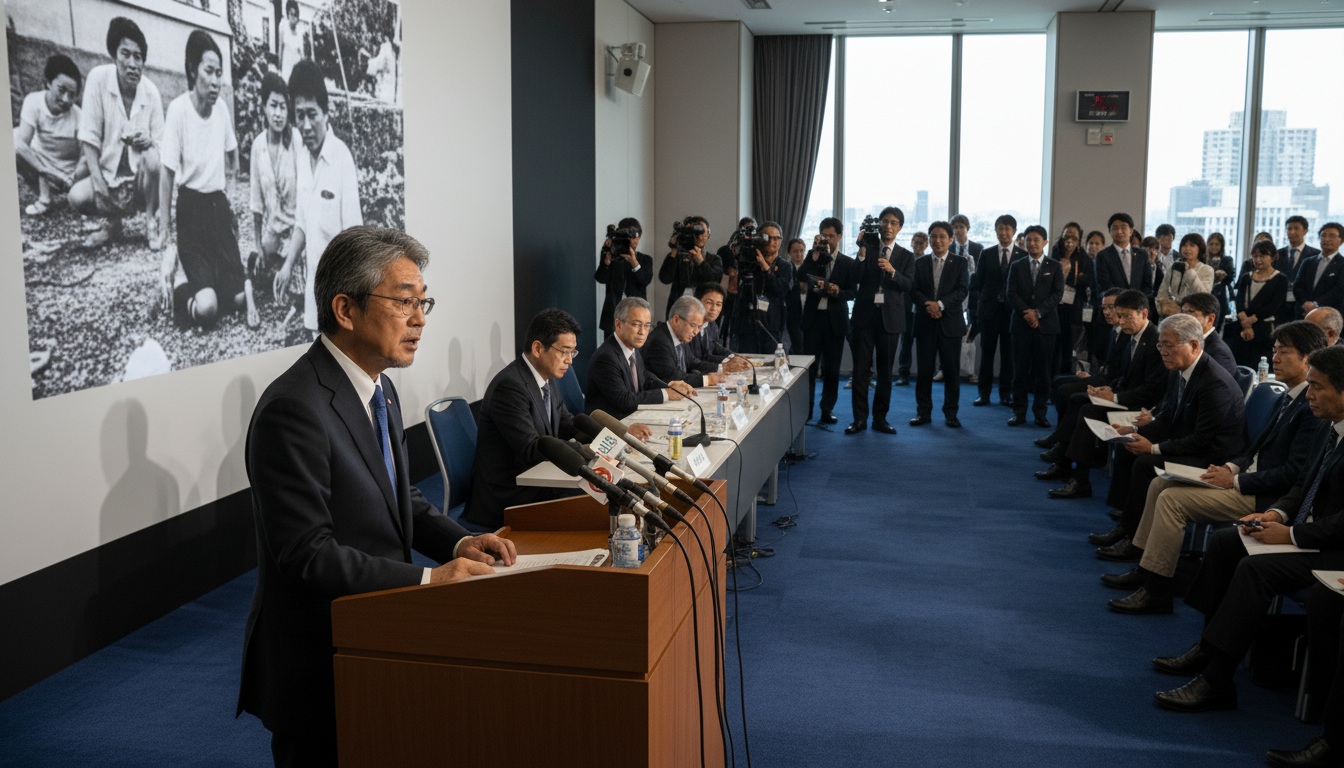
Koreeda Revisits Minamata Disease at 70, Warning of Industrial Collusion’s Enduring Legacy
Koreeda reflects on 70 years since Minamata disease confirmation, examining industrial collusion, local suffering and the role of documentary memory now.
Film director Hirokazu Koreeda marked the 70th anniversary of Minamata disease’s official confirmation by revisiting the contamination’s long shadow and the social structures that allowed it. He linked the episode to his early documentary work and called attention to how industry, government and academia can align to silence victims. Koreeda emphasized the continuing need to study Minamata disease as a model for understanding contemporary environmental and social risks.
Seventy years since official confirmation
Minamata disease was publicly acknowledged in 1956, when residents and researchers identified severe neurological illness caused by methylmercury released into coastal waters. The crisis devastated fishing communities and drew national attention to industrial pollution and public health failures. The formal recognition marked the start of a decades-long struggle for diagnosis, compensation and public accountability.
Documentary origins and personal reckoning
Koreeda said his interest in social issues grew from early documentary projects that examined pollution and its human cost. He described those films as formative to his career and as an ethical spur to confront how cultural production can both reveal and obscure harm. In interviews he has framed his role as not only observer but participant in a broader conversation about responsibility and memory.
Industry, government and academic ties under scrutiny
Koreeda and other observers point to a pattern in which corporate interests, local authorities and institutional experts formed pragmatic alliances that prioritized economic growth. In Minamata, the Chisso chemical company’s production of industrial chemicals that underpinned regional employment became central to local identity and livelihood. That dependency shaped public debate, constrained dissent, and complicated efforts to address the poisoning.
Economic dependence and the cost of silence
Residents living in company towns often faced stark choices between speaking out and preserving community stability. Those who raised concerns risked social ostracism, economic reprisals and legal battles. The dynamic entrenched a culture of silence that delayed broader recognition of victims’ suffering and limited early remedial action.
Parallels drawn with Fukushima nuclear issues
Koreeda drew a direct line between the dynamics of Minamata and those seen after the Fukushima nuclear accident, noting similar tactics used to emphasize the necessity of contested technologies. He referenced public campaigns and arguments that framed industries as indispensable to regional economies and national security. Such comparisons underscore how narratives about risk and necessity can shape policymaking and public perception long after a disaster.
Film as a tool of remembrance and accountability
Documentary filmmakers and journalists have played recurring roles in uncovering facts, amplifying survivors’ testimonies and keeping public attention on unresolved issues. Koreeda credits early documentary work with shaping his approach to storytelling and civic engagement. He argued that visual media can both preserve historical memory and press institutions toward transparency and restitution.
The continuing human and legal cost
Even decades after the initial exposure, survivors and their families continue to face medical, social and economic challenges tied to contamination. Legal disputes over recognition and compensation have stretched over generations, testing the capacity of courts and government programs to provide redress. The Minamata case remains a reference point in debates over environmental justice and corporate liability in Japan and beyond.
Public commemoration of the 70th anniversary has prompted renewed discussion in academic, legal and cultural circles about how to prevent similar tragedies. Advocates emphasize stronger environmental monitoring, clearer corporate accountability mechanisms and support systems that empower affected communities to speak without fear of recrimination. Policymakers are being urged to integrate historical lessons into current regulatory practice.
Koreeda’s reflections invite broader public consideration of how societies weigh economic benefits against health and environmental costs. By linking past and present, he urged journalists, artists and officials to keep documentary evidence and victim testimony central to policy debates. His comments reinforce the idea that memory, when properly preserved and interrogated, can become a tool for prevention as well as redress.

