
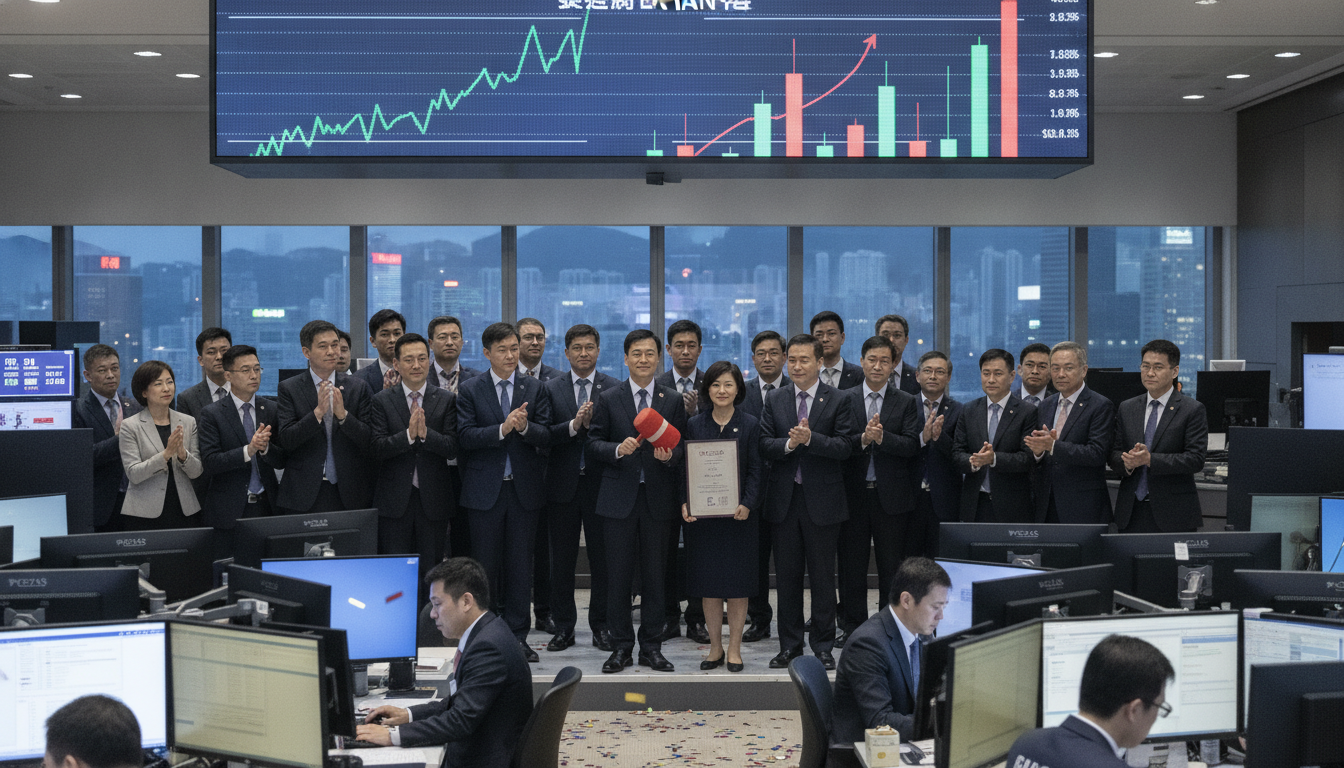
Momenta IPO Opens in Hong Kong, Raises Over $750 Million as Shares Tick Up on Debut
Momenta IPO in Hong Kong raised over $750 million; shares opened nearly 2% higher as investors weigh the startup’s autonomous driving technology against profitability concerns.
Momenta IPO in Hong Kong opened with shares rising nearly 2% on debut, after the Chinese self-driving startup raised more than $750 million in its listing. The company, which counts nine of the world’s top ten carmakers among its clients, drew investor interest for its data-driven approach to autonomy even as questions linger about the path to profit. Market participants said the listing will be watched closely for signs that software-led automotive suppliers can scale commercially while managing heavy research and development costs.
Momenta Shares Rise on Hong Kong Debut
Momenta’s stock popped modestly when trading began in Hong Kong, signaling cautious optimism among investors about its technologies and client roster. The initial uptick reflected interest in companies positioned to supply advanced driver assistance systems and autonomy software to global automakers. Traders noted that a near-2% opening gain represents measured confidence rather than a runaway rally, given the broader market scrutiny of capital-intensive mobility startups.
Automaker Partnerships Underscore Commercial Traction
The company highlighted its alliances with nine of the world’s top ten carmakers, a point market observers say underlines Momenta’s commercial relevance. These partnerships suggest meaningful engagement with established manufacturers that are increasingly outsourcing software and perception stacks. Analysts pointed out that strong OEM ties can speed integration into production vehicles, provide recurring revenue streams, and supply the vast driving data needed to refine autonomous systems.
Profitability Remains a Key Investor Concern
Despite the client list, investors voiced concerns about the timeline to profitability, a familiar theme for firms building autonomy at scale. Developing and validating safe self-driving software demands sustained investment in data collection, simulation, and on-road trials, which can depress near-term earnings. Market participants cautioned that revenue growth will need to outpace ongoing R&D and deployment expenses before wholesale valuation upgrades are justified.
Technology Focus and Public Demonstrations
Momenta has emphasized its data-centric machine learning stack and mapping capabilities as differentiators in a crowded field of autonomy suppliers. Public exhibitions, including a robotaxi displayed at Auto Shanghai in April 2025, showcased the company’s work on both passenger and fleet applications. The demonstrations reinforced Momenta’s position as a developer of underlying software and perception systems rather than a mass-market vehicle manufacturer.
Capital Raised and Strategic Implications
Raising in excess of $750 million provides Momenta with fresh capital to pursue product development, testing and commercial partnerships, according to observers following the IPO. Market commentators said the funds should help accelerate deployment programs and expand collaborations with automakers and fleet operators. At the same time, the scale of capital raised reflects investor recognition of the long time horizons and heavy funding needs inherent in bringing safe, commercially viable autonomous systems to market.
Investor Sentiment in a Competitive Landscape
Momenta’s debut comes amid heightened scrutiny of autonomous-vehicle ventures and a wider reassessment of valuations in technology-led mobility. Competing firms have taken a variety of routes to commercialisation — from ride-hailing pilots to licensing stacks to OEMs — and Momenta will be judged on its ability to convert partnerships into stable, repeatable revenue. Observers said regulatory developments, safety milestones and demonstrable production integrations will influence sentiment in the months ahead.
Overall, the Momenta IPO offers a test case for Chinese autonomy firms seeking public capital while managing investor expectations about profitability and commercial scaling. The modest share gain on debut reflected a balance of optimism about its deep industry ties and caution about near-term financial returns, leaving the company’s next milestones and quarterly results as key triggers for the market’s assessment.

