
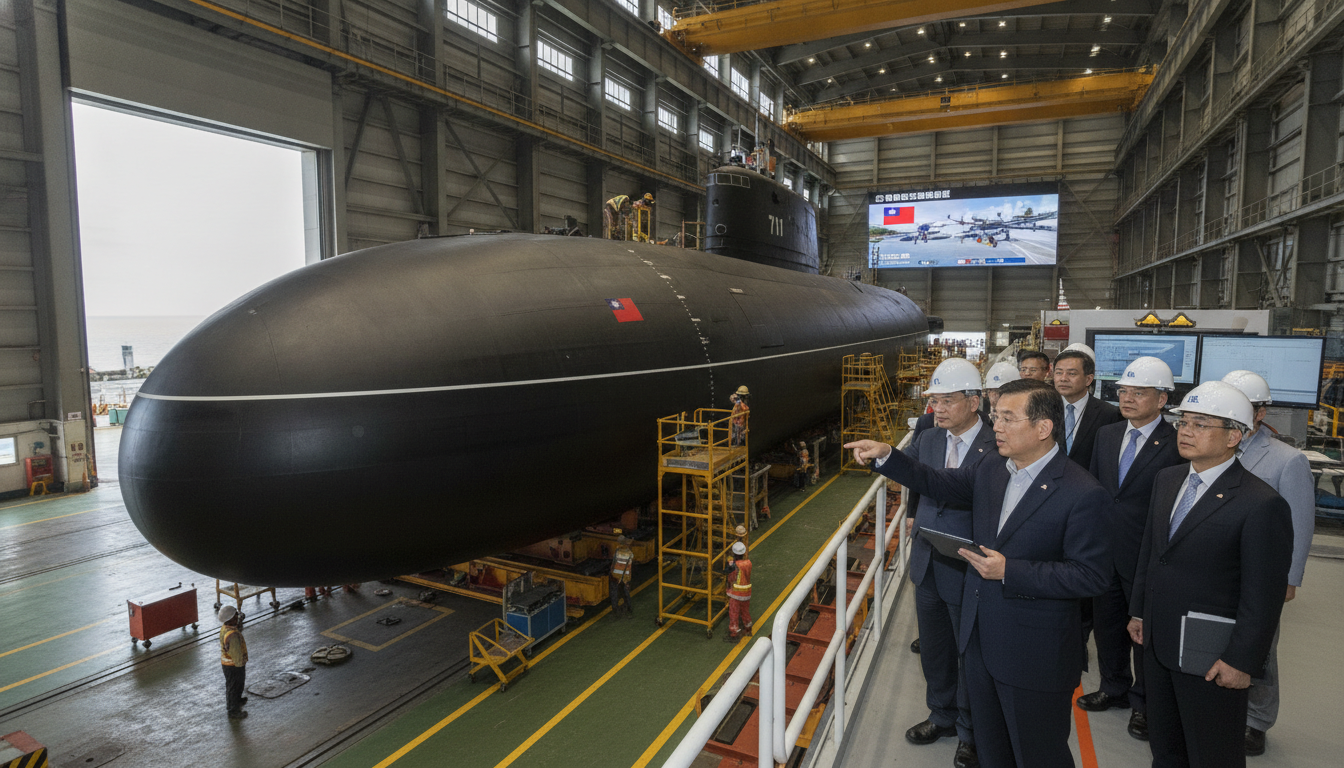
CSBC: First Homegrown Submarine Nears Completion as Chairman Urges Funding for Maritime Drones
CSBC says Taiwan’s first homegrown submarine is nearing completion and calls on the legislature to approve funding for maritime drones to bolster coastal defenses.
The CSBC chairman said the state’s leading shipbuilder has a domestically produced submarine nearing operational readiness, and he urged parliament to back a parallel expansion of maritime drones. The comments came as CSBC seeks to convert recent recovery in shipbuilding orders into accelerated delivery of naval and uncrewed assets. Company officials framed the moves as part of a broader push to strengthen Taiwan’s maritime deterrence against continued activity by Chinese vessels near its waters.
CSBC Reports Indigenous Submarine Nears Completion
The chairman confirmed that CSBC’s first homegrown submarine is in advanced stages of construction and testing and could be ready for delivery soon. He described the program as a landmark for Taiwan’s defense industrial base and said lessons from recent builds have shortened the timeline. CSBC emphasized that completing a domestically designed submarine would reduce reliance on foreign platforms and boost strategic autonomy.
Company engineers have completed major structural work and are now focused on systems integration and sea trials, according to the chairman. He noted that close coordination with Taiwan’s defense ministry is under way to finalize testing schedules and crew training. Officials declined to provide a firm commissioning date but said milestones suggest the submarine will enter service in the near term.
Chairman Calls for Parliamentary Backing for Maritime Drones
Alongside the submarine program, the CSBC chairman pressed lawmakers to approve expanded procurement and development funds for maritime drones and uncrewed surface vessels. He argued that drones can provide cost-effective surveillance, patrol and interdiction capabilities across Taiwan’s extensive coastal zones. The request included accelerated budget approvals to keep production lines and subcontractors operating at scale.
The chairman pointed to existing prototypes and early operational units as proof of concept, saying broader legislative support would enable mass production and integration into naval task forces. He warned that without prompt funding, Taiwan risks delays in deploying systems that can operate persistently in contested waters. The company framed drone investment as complementary to heavier platforms like submarines and corvettes.
Shipyard Recovery and Production Outlook
CSBC has emerged from a difficult period for global shipyards, with a revitalized order book and renewed government contracts for defense-related projects. The chairman credited new military work, along with civilian ship orders, for stabilizing the yard and supporting workforce rehiring. He suggested the improved pipeline would allow CSBC to scale both conventional shipbuilding and new unmanned programs simultaneously.
Management said the firm is investing in modular construction methods and automation to compress assembly time and increase throughput. Suppliers and component makers have been encouraged to expand capacity, the chairman added, noting that a healthy local supply chain is critical for timely deliveries. CSBC also signaled readiness to pursue export opportunities once domestic projects reach maturity.
Endeavor Manta and the Move to Uncrewed Vessels
CSBC’s Endeavor Manta, introduced in 2025, exemplifies the company’s shift into uncrewed surface vessels designed for a range of missions. The vessel is configured for patrol, search-and-rescue, surveillance and offensive tasks, and company representatives say it can operate alongside crewed ships. Defense planners see such platforms as force multipliers that can extend maritime domain awareness with lower risk to personnel.
The chairman described the Manta program as a testbed for integrating sensors, autonomous navigation and remote command systems at scale. Lessons learned from the Manta will inform both future uncrewed designs and how these systems are networked with manned platforms. CSBC aims to offer different variants of uncrewed vessels to meet coast guard and naval requirements.
Regional Pressure Drives Urgency for Naval Modernization
Officials linked CSBC’s ramp-up to a broader strategic environment in which Chinese maritime activity near Taiwan’s waters has increased operational pressure. The chairman said that sustained activity by naval and paramilitary vessels in surrounding seas has highlighted capability gaps that domestic industry must help fill. Strengthening undersea and surface assets, he argued, will improve deterrence and resilience.
Taiwan’s defense planners are balancing investments across submarines, surface combatants, missile systems and uncrewed platforms to create layered defenses. The chairman noted that rapid procurement and local production shorten supply chains and limit vulnerabilities during crises. He urged a coherent, long-term funding plan from legislators to ensure continuity across procurement cycles.
The chairman also stressed workforce development and technical training as essential to sustainment, saying shipbuilders must cultivate engineers and technicians skilled in both traditional ship systems and modern autonomous technologies.
CSBC’s twin push to complete a homegrown submarine and scale maritime drones reflects a strategic bet that domestically produced platforms can fill capability gaps faster and more reliably than off-the-shelf purchases. The company is pressing lawmakers to match that industrial momentum with clear, timely budget decisions to keep shipyards, suppliers and innovation programs on schedule.

