
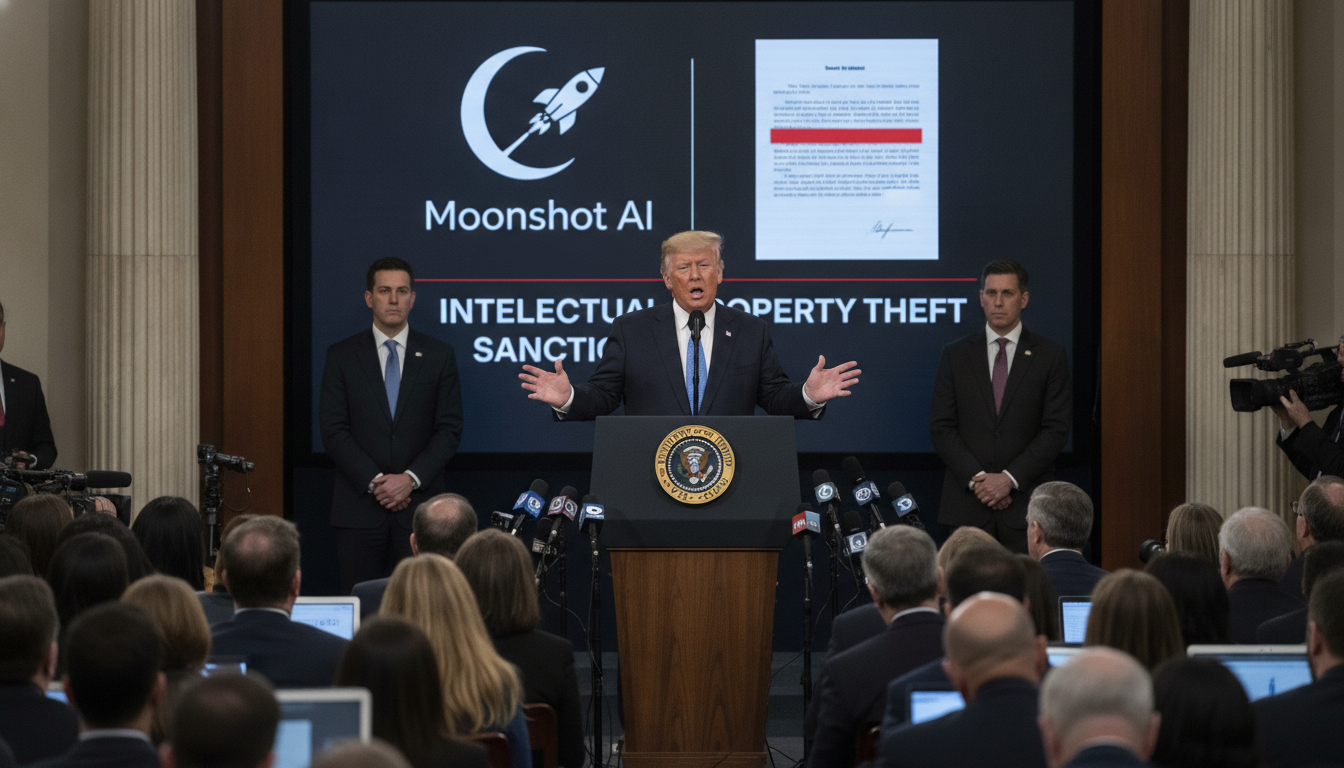
U.S. Threatens Sanctions Over Alleged IP Theft by Moonshot AI and Other Chinese Startups
U.S. officials have warned of sanctions and other measures against Chinese AI startups, naming Moonshot AI and alleging theft of intellectual property from American frontier AI labs.
U.S. officials have signalled that the Trump administration is preparing sanctions and other actions targeting Chinese artificial intelligence startups, including Moonshot AI, amid allegations of intellectual property theft from U.S. frontier AI laboratories. The move reflects growing Washington concern about rapid advances in large language models and the transfer of sensitive training techniques and data. Officials describe the steps as part of broader efforts to protect critical technologies and limit transfers that could erode U.S. competitive advantage in AI.
Scope of the Allegations
U.S. officials allege that several Chinese startups acquired proprietary methods and data from American frontier AI labs, enabling rapid model development and deployment. The accusations focus on technical know‑how used to train and scale large models rather than on consumer applications alone. Washington says the pattern of acquisition and rapid model iteration raises national security and economic concerns that go beyond ordinary commercial competition.
Officials have not publicly released detailed technical evidence tied to specific incidents, and the allegations remain contested in industry circles. The administration’s statements frame the actions as preventive measures intended to safeguard foundational AI research and to curb unauthorized transfers of advanced capabilities.
Targets Named and Industry Context
Among the companies singled out is Moonshot AI, whose latest model Kimi K3 has been cited in industry comparisons as highly competitive with leading Western systems. Observers say the Chinese AI landscape has matured quickly, with several startups producing models that approximate the capabilities of established Western offerings. That rapid progress has heightened scrutiny in Washington and elsewhere about how these capabilities were acquired and accelerated.
U.S. officials have suggested that the list of targets could extend beyond a handful of firms, encompassing startups, researchers and possibly intermediary entities involved in acquiring hardware, data or expertise. The exact scope and legal basis for measures, however, remain to be clarified as policymakers weigh diplomatic and trade implications.
Possible Measures Under Consideration
Administration sources indicate potential responses could range from targeted economic sanctions to tighter export controls and restrictions on investment and personnel flows. Such tools aim to limit access to critical components, advanced compute capacity and specialized talent that enable frontier AI development. Officials argue these measures would be calibrated to address specific risks while minimising disruption to legitimate commercial ties.
Legal and trade advisers within the administration are reportedly assessing the efficacy and risks of different instruments, including whether existing statutes provide clear authority for swift action. Any move toward sanctions or export curbs would also involve coordination with allies and partners to prevent circumvention and to maintain a consistent approach to shared concerns.
Diplomatic and Business Implications
The prospect of U.S. measures raises immediate diplomatic tensions between Washington and Beijing and could complicate global technology cooperation. Beijing has historically resisted foreign constraints on its technology sector and may view punitive measures as politically motivated. The dispute risks spillovers into broader economic and security discussions between the two countries.
For international businesses, tighter controls and elevated scrutiny could disrupt research partnerships, cross‑border investments and supply chains tied to semiconductor equipment and high‑performance computing. Companies in allied economies, including Japan, face the challenge of balancing market opportunities with compliance obligations and geopolitical risk management.
Industry Reaction and Compliance Challenges
Experts say the allegations underscore a growing need for industry governance and clearer norms around cross‑border collaboration in advanced AI research. Companies and labs increasingly rely on global talent and shared infrastructure, making bright‑line boundaries difficult to draw without affecting innovation. Compliance frameworks for data handling, licensing and know‑how transfer will likely be tested as regulators act.
Legal specialists caution that enforcement actions could prompt litigation and calls for transparency about the evidence underpinning punitive steps. At the same time, proponents of stricter measures argue that decisive action is necessary to prevent the unchecked proliferation of technologies with strategic consequences.
The coming days and weeks are likely to see further statements from U.S. policymakers clarifying the intended scope of measures and the legal pathways for enforcement. Observers will also watch for diplomatic engagement with allies and any public responses from the Chinese government or the companies named.

