
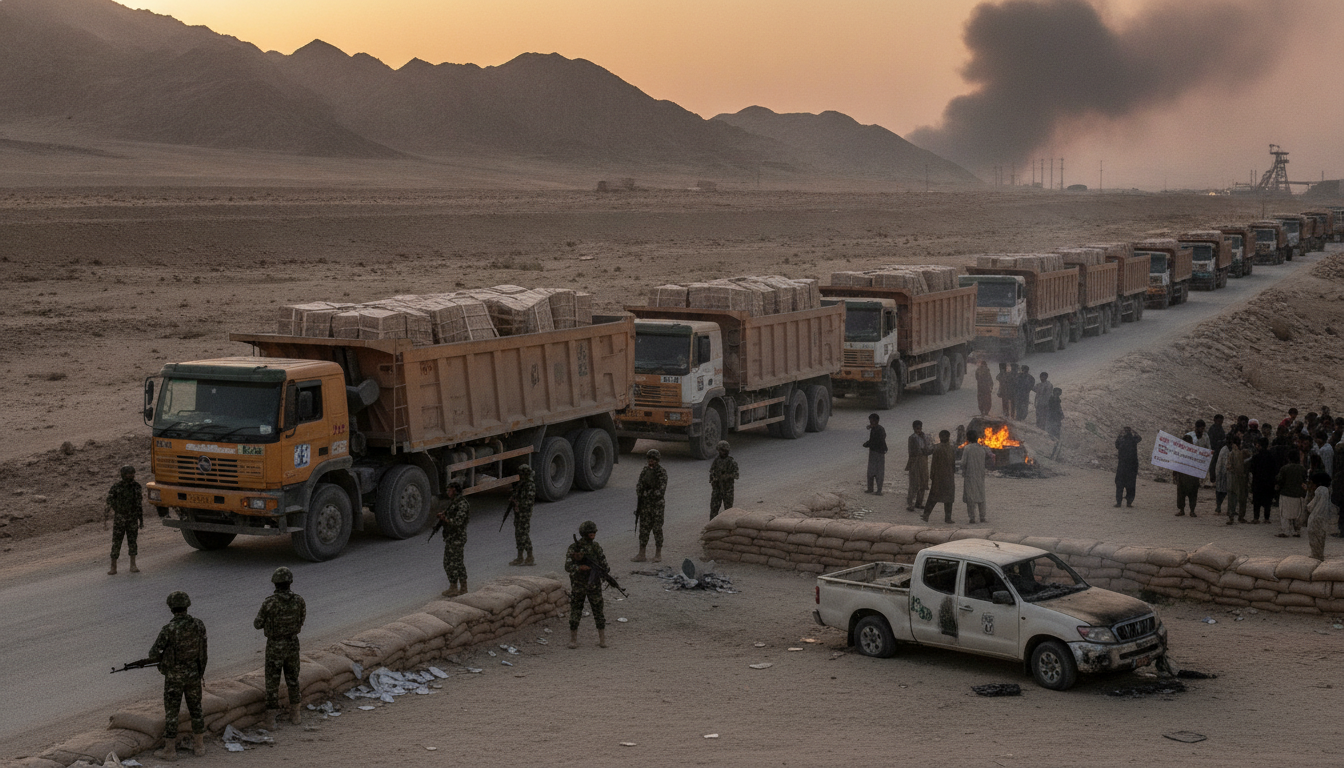
Saindak copper mine convoys stalled by militant attacks, threatening China’s copper imports
Saindak copper mine supply routes in Balochistan have been repeatedly attacked, creating an effective “economic blockade” that risks interrupting shipments of copper — one of China’s top import commodities — from Pakistan.
The Saindak copper mine in Pakistan’s southwestern Balochistan province has experienced a series of militant strikes that have blocked road access and halted regular convoys supplying the site. Analysts describe the pattern as an economic choke on operations, warning that sustained disruptions could curtail exports bound for China. The situation places pressure on local authorities and the mine’s operators to restore secure transport links quickly.
Attacks disrupt supply routes and convoys
Armed groups have targeted the narrow highways and logistical chokepoints that link the mine to highways and ports, according to security summaries and local reports. Ambushes and improvised explosive devices have forced transporters to suspend runs or reroute along longer, riskier paths. The resulting delays and higher insurance and security costs have raised questions about the viability of continuous shipments from Saindak.
Effects on Saindak production and shipments
Operational staff at the Saindak site face shortages of critical inputs when deliveries are interrupted, slowing smelter feedstock processing and maintenance cycles. Export consignments of copper and related concentrates are vulnerable to timetable slippage, which can prompt buyers to seek alternate suppliers. Even short-term stoppages can cascade into contractual penalties, higher logistics overheads, and inventory shortfalls at downstream facilities.
Implications for China’s copper imports
China, a major global copper consumer, sources some supply through Pakistan-linked production, and Saindak has been identified as a key asset in that relationship. Disruptions at the mine therefore carry potential consequences for import scheduling and procurement costs for Chinese firms. Market participants note that if outages persist, buyers may accelerate purchases from other markets, exerting pressure on regional trading dynamics.
Security response and government measures
Islamabad has mobilized security forces and local paramilitary units in attempts to reopen the main arteries to the mine and protect convoys. Officials have signaled an intention to step up patrols and establish buffer zones, while liaison with provincial leaders continues to coordinate operations. Despite these measures, repeated attacks indicate persistent security gaps that require longer-term stability and intelligence-driven countermeasures.
Economic and social fallout in Balochistan
The Saindak mine supports local employment and ancillary businesses, making sustained disruptions a risk to household incomes in nearby communities. Small contractors and transport firms that serve the supply chain face unpaid invoices and idled equipment when shipments stop. Local leaders warn that prolonged stoppages could deepen economic grievances and increase social tensions, complicating stabilization efforts.
Investor risk and regional strategic consequences
Foreign investors and commodity traders view the recent incidents as a reminder of geopolitical and security risks tied to resource projects in frontier provinces. For China, interruptions at Saindak highlight vulnerabilities in overseas supply channels that are strategically important under broader regional engagement frameworks. Market analysts suggest that private sector actors may demand higher risk premiums or diversify sourcing to mitigate exposure.
The disruption at the Saindak copper mine underscores a wider challenge for Pakistan’s resource sector: balancing development and community interests while delivering secure, reliable supplies to international partners. Restoring uninterrupted overland routes will require coordinated security operations, sustained investment in protective infrastructure, and engagement with local stakeholders to reduce the appeal of armed actions.

