
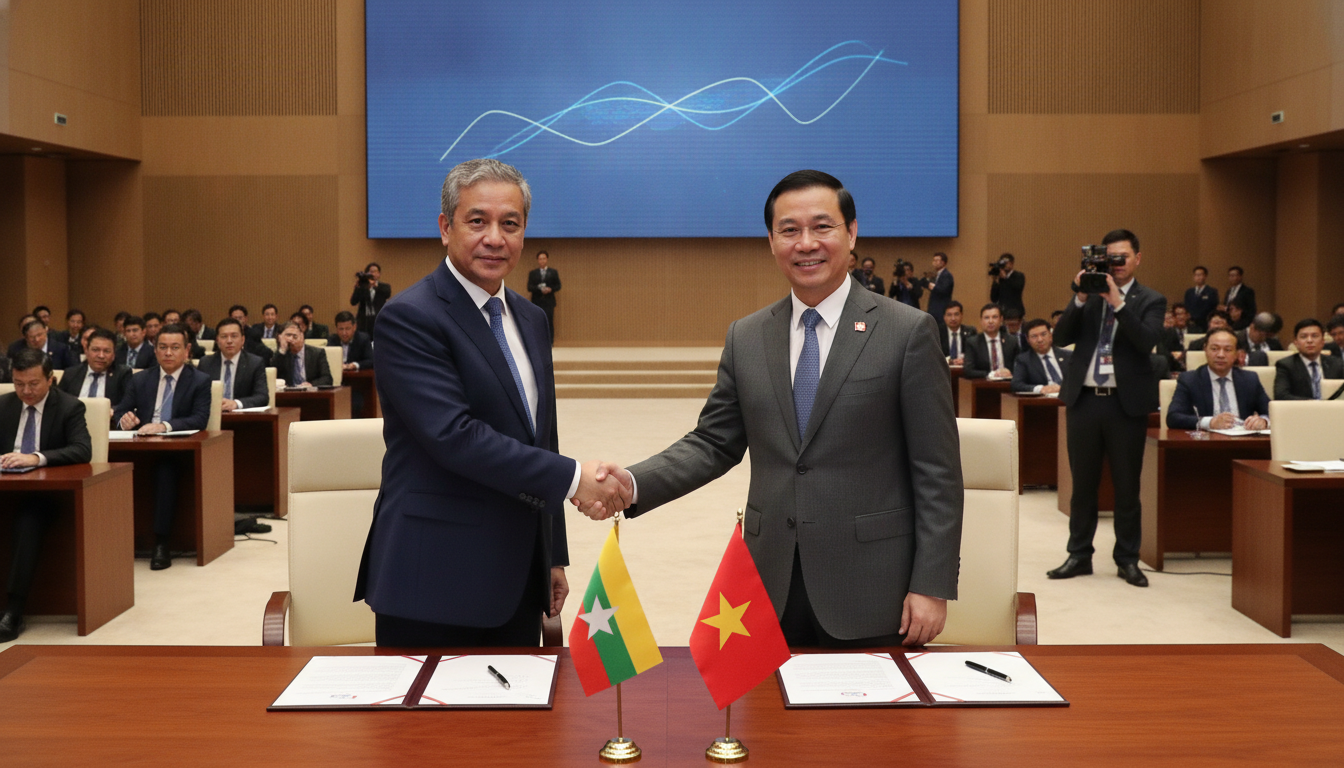
Myanmar-Vietnam trade pact aims to lift annual commerce to $1 billion
Myanmar-Vietnam trade target set at $1 billion as Hanoi and Naypyidaw agree to boost bilateral commerce by nearly 70% during a high-level visit.
Trade target set at $1 billion
Myanmar and Vietnam agreed to raise annual bilateral trade to $1 billion, an increase of nearly 70 percent from current levels, the Vietnamese government announced following a ministerial visit. The commitment was reached during Vietnamese Foreign Minister Le Hoai Trung’s first formal trip to Myanmar since the country’s 2021 military takeover. Officials said the pledge reflects both capitals’ intent to deepen economic ties despite lingering diplomatic sensitivities.
The announcement frames the Myanmar-Vietnam trade relationship as a priority for Hanoi’s regional economic engagement. Vietnamese and Myanmar officials indicated the target will be pursued through stepped-up trade, investment facilitation and cooperation on logistics and border commerce. The move marks a visible warming of economic relations between the two states.
First Vietnamese foreign minister visit since 2021 takeover
Le Hoai Trung met Myanmar’s senior leader Min Aung Hlaing in Naypyidaw on Aug. 26, a meeting that Vietnamese authorities described as part of a broader push to strengthen bilateral ties. The visit is the highest-level Vietnamese diplomatic mission to Myanmar since the 2021 coup and signals Hanoi’s willingness to engage directly with Myanmar’s ruling authorities. Diplomatic sources said the visit was presented as an attempt to secure practical outcomes in trade and connectivity.
The meeting underscores a pragmatic approach by Vietnam’s foreign ministry, balancing regional obligations with economic priorities. For Naypyidaw, the reception of a senior regional minister offers legitimacy and concrete economic prospects at a time when other partners remain cautious. Both governments emphasized that the dialogue will continue through working-level committees and commerce channels.
Bilateral economic priorities and cooperation areas
Vietnamese officials framed the $1 billion target as achievable through expanded exports, investment flows and infrastructure links that ease cross-border commerce. While exact sectoral commitments were not detailed publicly, observers expect attention to agriculture, manufactured goods, supply-chain integration and logistics. Both sides noted the potential for private-sector participation in trade facilitation and joint ventures.
Closer economic engagement could include efforts to streamline customs procedures, enhance road and river transport links and promote private investment into manufacturing and processing. Vietnamese businesses, already active across Southeast Asia, may seek opportunities in Myanmar’s markets, ports and agricultural value chains. Officials said working groups will map specific projects and regulatory measures to reach the new trade target.
Regional and diplomatic implications
The agreement comes amid a complex regional backdrop in which ASEAN unity, human rights concerns and international sanctions shape member states’ policies toward Myanmar. Hanoi’s outreach reflects a broader trend among some regional capitals to maintain economic relations even as political divisions persist. Analysts say the pact will be watched carefully by neighboring countries and external partners.
Vietnam’s move may prompt other states to calibrate their approaches between engagement and pressure, particularly where economic interests intersect with geopolitical considerations. For Myanmar, pledged trade gains offer immediate economic relief and a route to diversify partners. Observers caution, however, that wider acceptance of trade commitments will depend on implementation, transparency and the evolving political environment.
Implementation timeline and monitoring
Both governments signaled that follow-up measures will be carried out through existing bilateral mechanisms and new working groups tasked with trade promotion. Officials said technical teams will convene to set sectoral targets, improve customs coordination and identify quick-win projects that can boost volumes within months. A timetable for reaching the $1 billion threshold was not publicly released.
To track progress, interlocutors suggested regular reporting between commerce ministries and periodic meetings at ministerial level. Private-sector inputs will be sought to refine practical steps, including trade fairs, investment roadshows and pilot logistics corridors. Observers note that the speed of implementation will depend on political will, regulatory alignment and the capacity of businesses on both sides to scale operations.
Potential economic benefits and risks
If realized, a near-70 percent increase in bilateral trade would create opportunities for exporters, logistics providers and investors in both countries. Greater commerce could deepen supply-chain links in Southeast Asia and generate jobs tied to manufacturing and agricultural processing. Companies with cross-border experience may benefit from preferential access to expanding markets.
At the same time, rapid expansion carries risks, including uneven benefits, regulatory mismatches and reputational concerns for firms operating in politically sensitive environments. Stakeholders said that clear governance arrangements and transparent procurement practices will be important to sustain private-sector confidence. Economists highlighted the need for predictable trade policies and rule-based implementation to convert pledges into lasting economic gains.
The Myanmar-Vietnam trade pledge establishes a clear numerical goal that both capitals must now translate into concrete measures, and the coming months will test whether ministerial momentum can be turned into sustained commercial growth.

