
Cable-operated UAVs Turn Tide in Myanmar Conflict as Tethered Drones Evade Jammers
Cable-operated UAVs are increasingly used across Myanmar, with tethered "suicide" drones bypassing jammers and raising civil-safety and legal concerns.
BANGKOK — A recorded video feed from a tethered unmanned aerial vehicle showed an explosives-packed “suicide drone” careering toward a group of people outside a building in western Myanmar’s Chin state before the signal abruptly cut out just above them. The footage, described by local sources, highlights a growing trend: both the military and opposing armed groups are turning to cable-operated UAVs to maintain surveillance and deliver munitions while avoiding radio-frequency jamming. The shift to tethered systems is reshaping frontline tactics and heightening risks to civilians in contested areas.
Video shows explosives-packed drone over Chin state
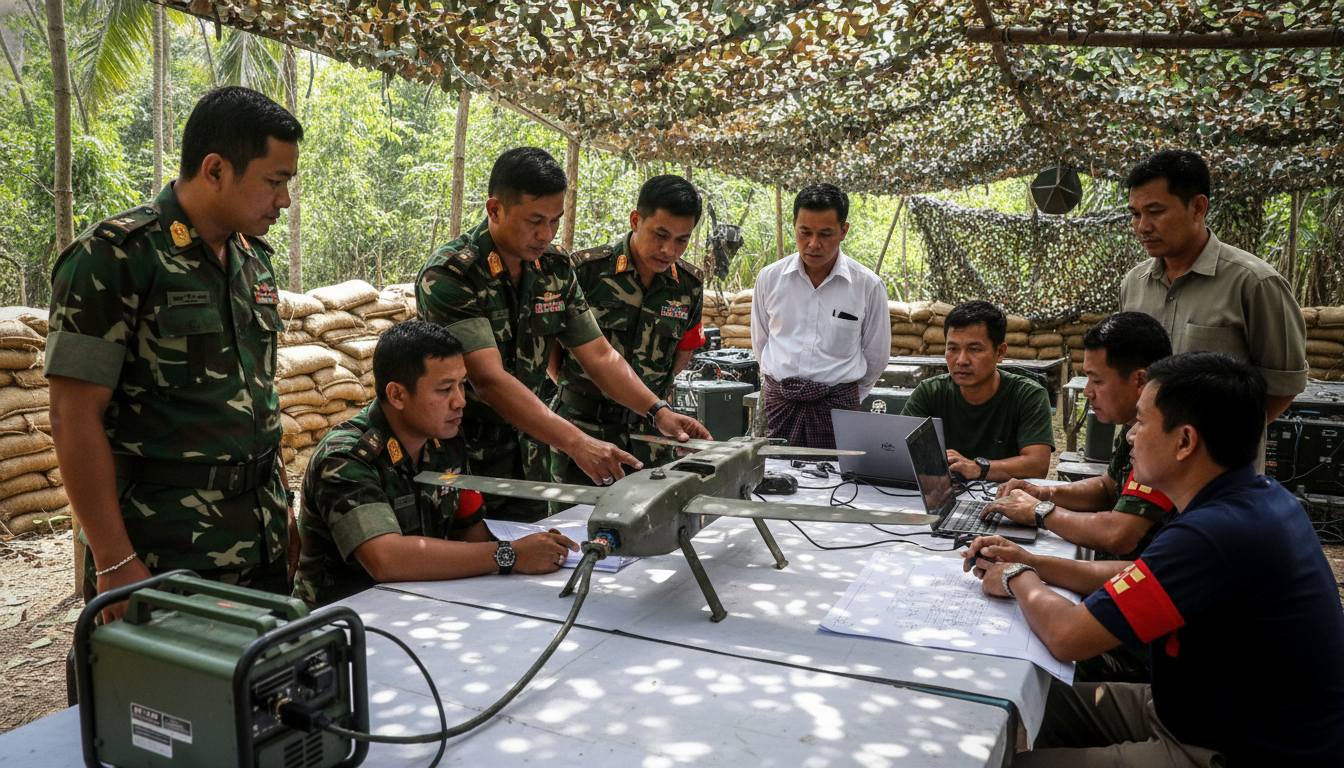
The clip, circulated by local defense group channels, captured the final moments of a tethered UAV’s live view as it approached a crowd in the region. According to sources in Chin state, the craft appeared to be carrying an explosive payload and lost video contact shortly before the apparent impact zone. A photograph of fighters from the Chinland Defense Force-Hakha preparing a fiber-optic drone in March underlines how both improvised and commercially adapted systems are being fielded by non-state actors.
The incident has not been independently verified by international monitors, and claims about the strike’s outcome remain unconfirmed. Nevertheless, the imagery and testimony from the ground point to a substantive tactical change in how aerial technology is being used in Myanmar’s conflict zones.
Cable-operated UAVs resist radio jamming with tethered links
Tethered, or cable-operated, UAVs rely on a physical line to transmit power, control signals and video rather than conventional radio-frequency links. That configuration makes them largely resistant to electromagnetic jamming methods that have been used to disrupt free-flying drones. In Myanmar’s increasingly electronic battlefield, commanders on both sides have sought options that restore reliable observation and command-and-control under contested signal conditions.
The tether can carry fiber-optic lines or reinforced power cables, allowing sustained loitering and higher-definition feeds for extended periods. For operators, these attributes make cable-operated UAVs an attractive alternative when standard drones are degraded by interference or signal denial tactics.
Both the junta and local militias deploy tethered systems
Reporting from the field indicates that the military junta and various ethnic armed organizations and militia units have adopted tethered drones for reconnaissance and, in some cases, direct attack roles. The shared reliance on cable-operated UAVs reflects an arms dynamic in which adversaries borrow and adapt technology from one another to regain lost capabilities.
This convergence also accelerates tactical innovation at the local level, with fighters modifying commercial platforms and constructing improvised launch and tethering rigs. The spread of these systems has been facilitated by their relative affordability and the growing availability of components that can be reconfigured for battlefield use.
Operational advantages and clear tactical limits
Tethered drones offer uninterrupted data links and the potential for longer flight times compared with battery-powered free-flying models. These benefits make them well suited for overwatch, target acquisition and persistent observation of fixed positions. They can also deliver small explosive payloads in “suicide” attack roles when adapted for that purpose.
However, the cable is also an Achilles’ heel. Tethered systems require line-of-sight or fixed deployment points, limiting mobility and the element of surprise. The physical tether can be targeted or cut, and the need for ground equipment means emplacement is more conspicuous and vulnerable to counteraction. These constraints shape how commanders employ cable-operated UAVs, often confining them to defensive surveillance or close-range strike missions.
Humanitarian and legal implications in populated areas
The use of tethered “suicide” drones in or near civilian gatherings raises acute humanitarian concerns. Explosive payloads delivered from low-altitude, cable-operated craft can inflict casualties among non-combatants and damage civilian infrastructure. In conflict zones where front lines run close to villages and towns, the deployment of such systems increases the risk of indiscriminate harm.
Legal experts caution that the weaponization of tethered UAVs does not alter existing obligations under international humanitarian law. Parties remain responsible for distinguishing between combatants and civilians and for taking precautions to minimize civilian harm. The growing reliance on cable-operated UAVs, therefore, presents fresh challenges for accountability and monitoring in areas where access for investigators is already restricted.
Local improvisation and supply challenges sustain the trend
Field interviews and imagery suggest a mix of commercial off-the-shelf systems, locally modified platforms and improvised cable setups are in circulation. Operators have adapted fiber-optic tethers and reinforced cabling to suit specific missions, while workshops in conflict zones reconfigure consumer drones for heavier loads. The adaptability of these systems helps explain their rapid uptake despite supply-chain disruptions and international restrictions on military hardware.
At the same time, sustaining tethered operations requires specialized components and logistical support, including reels, power supplies and skilled technicians. Those requirements create choke points that could shape future deployments if access to parts or technical expertise is curtailed by interdiction or embargoes.
The expansion of cable-operated UAVs in Myanmar’s battlespaces signals a tactical shift that blends low-cost ingenuity with technological workaround strategies. As both sides continue to refine these tools, the conflict’s aerial dimension will likely become more persistent and complex, amplifying the dangers to civilians in contested areas and complicating efforts to document and adjudicate wartime conduct.

