
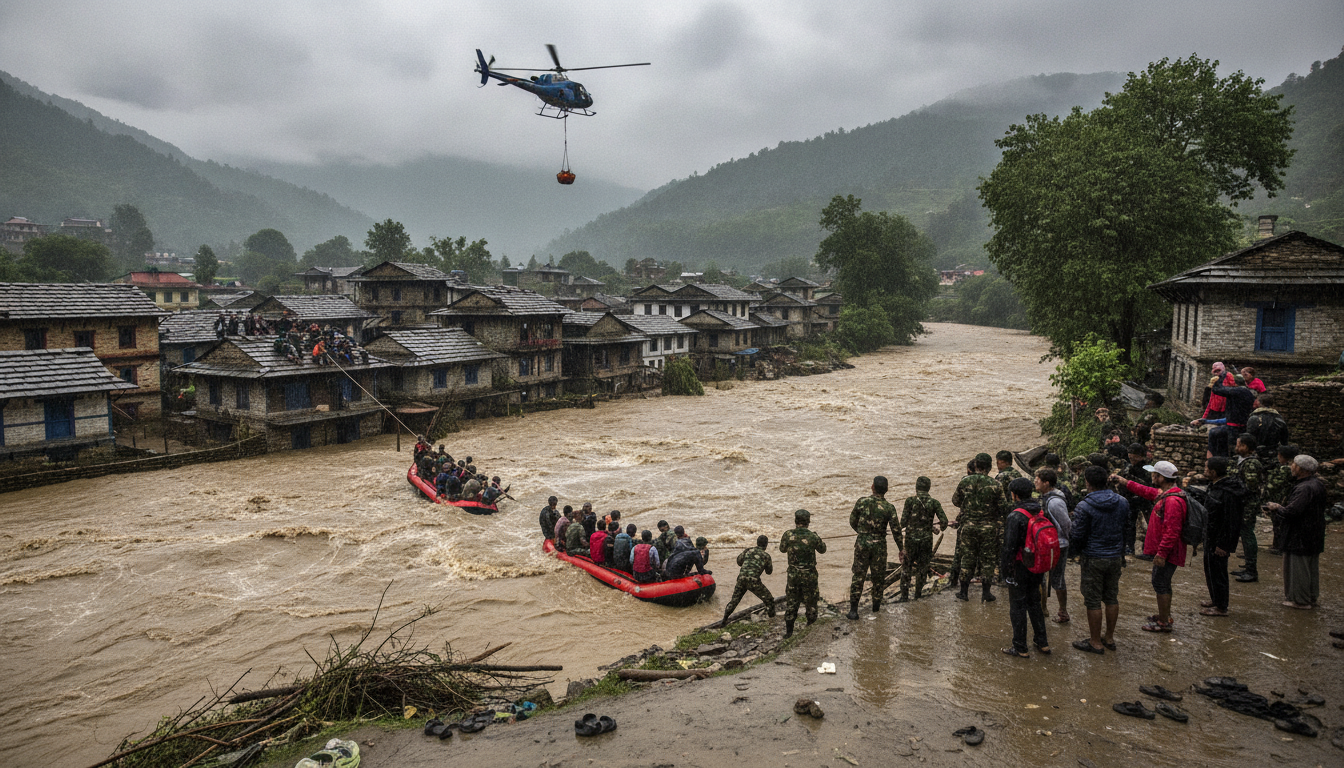
Nepal flash floods leave hundreds missing, many foreign tourists unaccounted as Nepal and China mount rescue operations
Nepal flash floods and landslides on Aug. 26–27, 2026 killed scores and left hundreds, including many foreign tourists, missing as Nepal and China launched large-scale rescue efforts.
Rapid surge devastates Himalayan border communities
A wall of mud and rock plunged into river valleys along the Nepal–Tibet border on Aug. 26, triggering sudden flash floods that swept through towns and villages. The torrents obliterated roads, buried homes under thick mud and carried vehicles away, leaving entire neighbourhoods gutted within minutes. Local officials described scenes of chaos as survivors scrambled to higher ground and emergency teams scrambled to assess damage. (apnews.com)
Foreign tourists among the missing
Officials and tourism authorities warned that a large number of foreign visitors remain unaccounted for after the disaster, with initial tallies varying as search teams combed affected corridors. Nepali authorities and media reports have cited hundreds of tourists — including groups on pilgrimage and trekking parties — among those listed as missing, with counts changing as families register missing persons at relief centres. The volatile numbers reflect the scale of the event and the difficulty of communication in the remote valleys where phone and transport links were severed. (internazionale.it)
Glacial collapse and landslide implicated
Scientists and government sources pointed to a glacial collapse and a massive landslide on the Tibetan side as the immediate trigger that sent a slurry of ice, rock and sediment down tributaries feeding the Trishuli and Bhote Koshi rivers. U.S. and regional agencies monitoring seismic and glaciological activity said the chain-reaction of icefall, slope failure and dammed rivers can produce sudden, high-energy floods that travel rapidly downstream. Experts cautioned that such compound hazards are increasingly visible in high-mountain regions, where steep terrain amplifies the destructive reach of a single collapse. (channelnewsasia.com)
Search-and-rescue mobilization across borders
Nepalese army helicopters, the national disaster response force and local volunteers staged airlifts and river searches from staging points near Nuwakot and Rasuwa districts, where the impact was greatest. Chinese emergency teams conducted operations on the Tibet side and state media reported simultaneous rescue efforts and evacuations there. Authorities established information centres and medical triage tents at army training bases while snares of mud and damaged bridges hampered ground movement. Officials appealed for additional assets, including boats, heavy equipment and canine teams, to reach cut-off hamlets. (internazionale.it)
Consular outreach and international assistance
Several foreign governments activated consular hotlines and dispatched specialists to assist nationals believed to be in the affected region, while neighbouring states pledged logistical support. India and South Korea indicated coordination with Kathmandu to speed rescue missions and to provide rapid-response teams, and multiple embassies urged citizens to register with local authorities if unaccounted for. Governments emphasized that casualty and missing-person figures are provisional and subject to change as search operations continue and lists are cross-checked. (internazionale.it)
Widespread damage and urgent humanitarian needs
Aerial footage and ground reports showed mud-choked streets, collapsed retaining walls and second floors of buildings left submerged in silt in Nuwakot’s market towns. Hospitals received scores of injured people and relief centres reported shortages of clean water, shelter and medical supplies as displaced families sought refuge away from flood zones. Authorities urged the public to avoid travel along the Prithvi Highway and other routes still at risk from renewed landslides and rising tributary flows. (reutersconnect.com)
Rescue teams continued round-the-clock searches on Aug. 27, and officials warned that final casualty and missing-person totals would take days to confirm as access improves and remote settlements are reached. The disaster has underlined the vulnerability of Himalayan communities to rapid-onset glacial and landslide hazards and the urgent need for coordinated cross-border disaster preparedness and early warning systems.

