
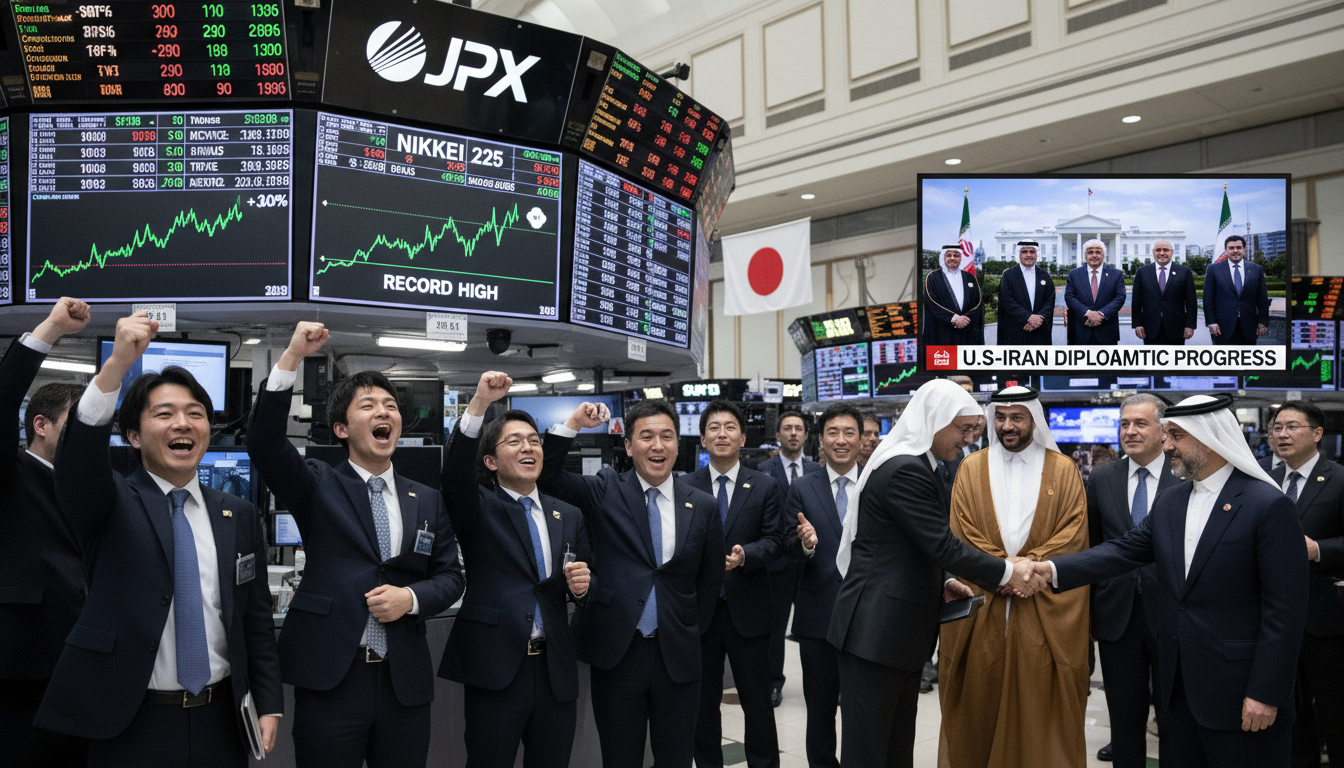
Nikkei average jumps 3% as Tokyo stocks hit record high amid easing oil prices and U.S.-Iran negotiation reports
Japan equities surge as the Nikkei average rose about 3% on May 25, 2026, with Topix reaching an all-time high as oil prices fell and investors embraced riskier assets.
Strong opening: Tokyo leads global markets higher
The Nikkei average climbed roughly 3% on Monday as Tokyo stocks outperformed other major markets, driven by broad-based buying and optimism over reports of progress in U.S.-Iran negotiations. The rally sent the Topix index to a record peak, marking one of the strongest single-day gains for Japanese equities this year. Market participants said the combination of easing commodity pressures and improved geopolitical sentiment encouraged a shift into risk assets.
Trading volume in Tokyo rose as institutional and retail investors added exposure to cyclical sectors, while defensive stocks lagged. The move reflects renewed appetite for equities across Asia, with Tokyo taking the lead amid the broader risk-on environment.
Nikkei average posts one of its biggest daily gains
The Nikkei average’s near 3% advance on May 25 represented a sharp rebound after recent volatility, with many large-cap exporters and domestic financial firms among the notable winners. Dealers reported lively trading in blue-chip names as buyers sought to lock in potential gains from easier input costs and a brighter external demand outlook. The strength in the Nikkei average also attracted short-covering, amplifying the upward move during the session.
Options markets showed rising investor confidence as implied volatility dropped, suggesting traders expect a calmer backdrop in the near term. Nevertheless, some portfolio managers cautioned that momentum-driven moves can reverse quickly if geopolitical or macro conditions shift.
Topix reaches an all-time high on broad-based buying
Tokyo’s broader Topix index climbed to a new all-time high, reflecting buying across multiple sectors rather than concentration in a handful of names. Analysts said the breadth of the rally — spanning industrials, machinery, and banks — underscored a genuine re-risking by money managers rather than a narrow tech-driven spike. The all-time Topix peak signals renewed confidence in corporate earnings prospects and domestic recovery trends.
Market strategists noted that the advance in Topix provided confirmation that the market’s strength was not solely dependent on currency moves or one-off events. The milestone heightened attention on profit-taking levels but also drew fresh interest from overseas investors seeking diversified exposure to Japan.
U.S.-Iran negotiation reports lift investor risk appetite
Reports suggesting progress in negotiations between the United States and Iran were cited by traders as a key catalyst for the rally, easing near-term geopolitical concerns that had weighed on risk assets. While details remained fluid, market participants said any de-escalation in the Middle East tended to reduce safe-haven demand and bolster demand for stocks, particularly those sensitive to global growth. The link between perceived geopolitical calm and equity performance was evident in Monday’s session.
Analysts emphasized that while positive headlines can spur rallies, markets remain sensitive to setbacks or renewed tensions. Investors watching developments closely said they would reassess positions if further diplomatic updates altered the risk landscape.
Oil price slide eases input-cost worries for companies
A notable decline in oil prices ahead of the Tokyo session reduced concerns about rising input costs for manufacturers and transport-heavy firms, providing another tailwind for the stock market. Lower crude helped weaken inflationary pressure expectations, which in turn supported higher equity valuations for sectors reliant on stable commodity costs. Traders pointed out that cheaper energy often translates into improved operating margins for a range of Japanese companies.
Commodity analysts warned that oil remains vulnerable to shifts in supply, demand, or geopolitical supply risks, which could quickly reverse the relief felt by markets. Still, the immediate impact of lower oil was clearly reflected in the positive tone across cyclical sectors during the trading day.
Foreign inflows, currency moves and market mechanics
Several market participants attributed part of the rally to renewed foreign buying, as overseas investors increased allocations to Japanese equities following the strong starts to the week. Currency dynamics also played a role, with some traders noting that a steadier yen supported both export outlooks and the attractiveness of local equities for international funds. Dealers added that position adjustments and systematic buying by funds contributed to intraday momentum.
Despite the inflows, equity strategists reminded investors that portfolio rotations and algorithmic trading could lead to rapid swings. They recommended monitoring order-flow indicators and external news that could affect cross-border investment decisions.
Analysts caution on profit-taking and ongoing risks
While analysts welcomed the strong performance, many urged caution, pointing to the potential for near-term profit-taking after a sharp one-day advance. They highlighted that rallies driven by sentiment can be vulnerable to reversals if macro data disappoints or if geopolitical negotiations stall. Risk managers recommended prudent position sizing and hedging for institutional investors seeking to maintain exposure while managing downside scenarios.
Corporate earnings season and upcoming economic releases were flagged as key near-term catalysts that could either reinforce the rally in the Nikkei average or trigger consolidation. Market-watchers said they would be watching liquidity conditions and bond yields for signs of sustained investor confidence.
Tokyo’s equities closed the session with pronounced gains, reflecting a market that quickly absorbed positive news on multiple fronts. Investors entering the new week face a mixture of encouraging signs and persistent uncertainties, prompting a careful balance between opportunistic buying and risk management.

