
Palau President Warns of Fracture Over China Missile Test at Pacific Leaders’ Meeting
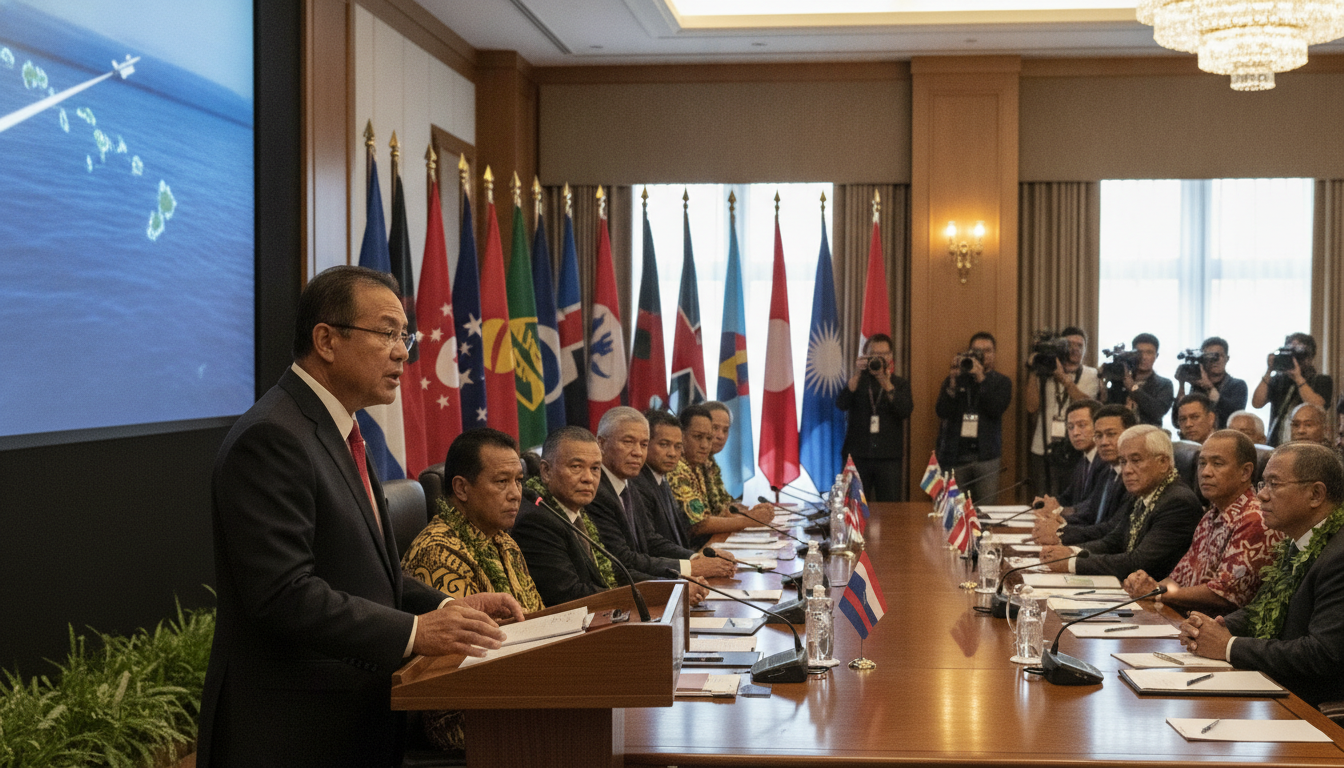
Palau President Surangel Whipps Jr. warned leaders that Pacific unity could fray over a China missile test as the regional summit in Koror convenes this week. The president’s comments on Aug. 30, 2026 place the recent China missile test at the center of debates among island states and partners.
Whipps issues warning as summit opens in Koror
Palau President Surangel Whipps Jr. told reporters in Koror on Aug. 30, 2026 that it would be "unfortunate" if Pacific nations fail to reach consensus in opposing the recent missile test by China. His remarks came as delegations arrived for the annual leaders’ meeting hosted by Palau.
The summit, held in the island capital of Koror, is a rare opportunity for Pacific heads of state to craft unified positions on security and development. Whipps framed the China missile test as a test not only of regional security but of diplomatic cohesion among Pacific states.
China missile test at center of debate
The recent China missile test has become the principal issue on the summit’s agenda, according to statements from Palau’s presidency. Whipps emphasized that an explicit regional stance would signal the Pacific’s collective expectations about actions that affect their territorial waters and airspace.
Leaders face a choice between issuing a firm regional response and keeping deliberations narrowly focused on economic and climate priorities. The tension reflects competing pressures: concerns about security and the practical realities of trade and investment relationships with major powers.
At least four leaders to miss annual meeting
Organizers confirmed that at least four leaders will be absent from the gathering, a development that Palau officials acknowledge could complicate efforts to build unanimity. Those absences reduce the number of voices at the table precisely as members weigh a contentious security matter.
Diplomats said missing delegations can slow consensus-driven mechanisms that Pacific nations traditionally use, such as joint communiqués and coordinated statements. With fewer leaders present, smaller coalitions of states could exert disproportionate influence on the final outcomes.
Diplomatic tensions and regional balancing
The debate over the China missile test highlights broader diplomatic balancing by Pacific nations between security concerns and economic relationships. Several island states maintain deep economic ties with China while also relying on security guarantees and assistance from other partners.
Analysts note that Pacific governments are increasingly navigating a complex triangular dynamic: protecting territorial integrity, pursuing development needs, and managing external strategic competition. That balancing act often produces cautious language in multilateral statements, limiting the force of criticism.
Security concerns prompt differing responses
Government officials and regional observers say the missile test has prompted a range of reactions, from calls for clearer norms to private diplomatic démarches. Some island states prioritize explicit condemnation to affirm maritime and aerial safety, while others favor measured, behind-the-scenes engagement to avoid escalation.
External partners watching the meeting are likely to read any joint Pacific statement for signs of shifting alignments and policy thresholds. For Palau, hosting the summit provides a platform to press for consensus on security-related norms even as its peers weigh the diplomatic costs.
Impact on future Pacific cooperation
A split at the Koror summit over the China missile test could have lasting implications for how Pacific states coordinate on regional security and international law. Failure to agree on a common stance may complicate future cooperation on maritime surveillance, search-and-rescue protocols, and diplomatic coordination in multilateral fora.
Conversely, a negotiated statement that reflects shared concerns—even if diplomatically worded—would demonstrate the Pacific’s capacity to manage sensitive issues collectively. Whipps’s appeal for unity underscores Palau’s interest in preserving the region’s ability to act together when external actions affect its security environment.
The outcome in Koror will be closely watched by Pacific capitals and external partners alike, as leaders attempt to reconcile sovereignty, security, and economic imperatives in their final communiqués.

