
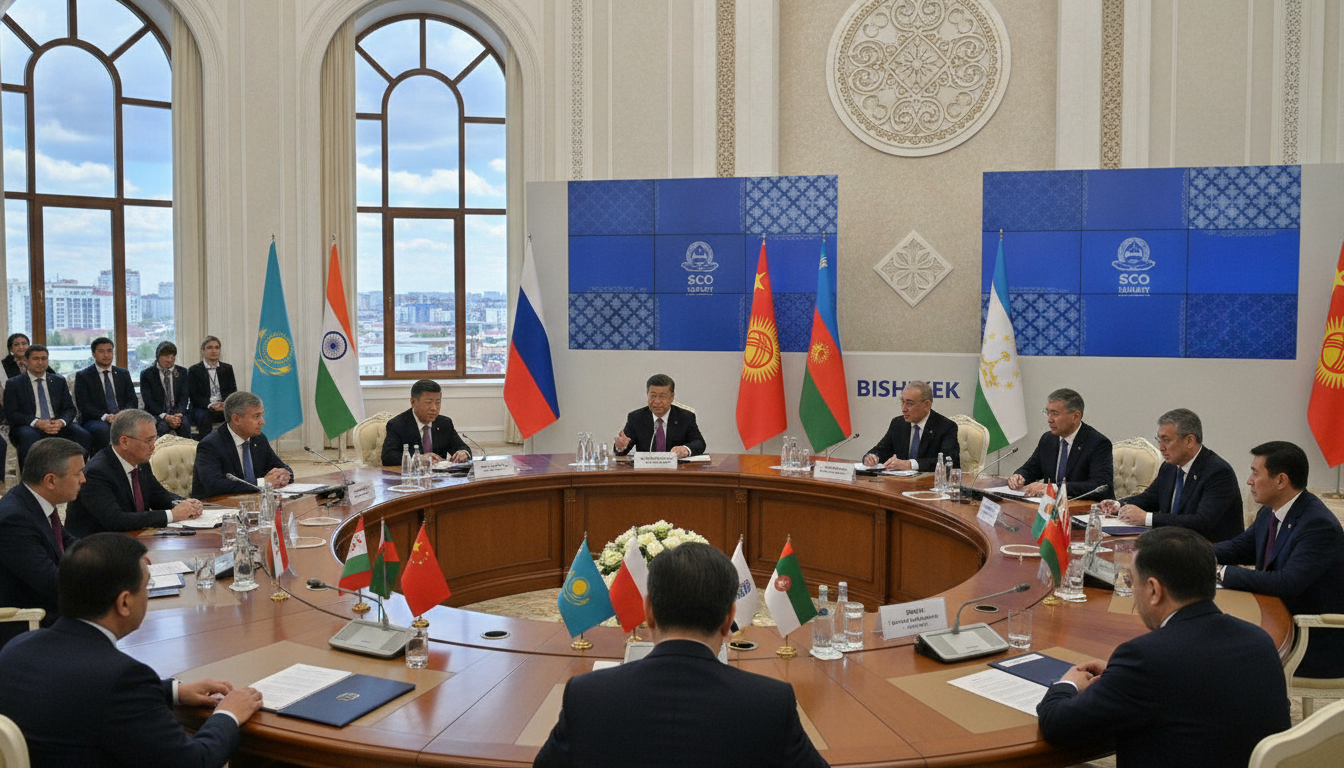
SCO summit in Bishkek: Xi Meets Regional Leaders as U.S. Sanctions Shadow Iran
At the SCO summit in Bishkek on August 31, 2026, leaders led by Xi Jinping convened to advance regional security and trade cooperation while fresh U.S. sanctions on Iran cast a diplomatic shadow over the talks.
The China-led Shanghai Cooperation Organization summit opened in Bishkek with President Xi Jinping arriving for scheduled meetings with Central Asian counterparts and other member states. Kyrgyz President Sadyr Japarov formally greeted Xi on arrival, underscoring the host nation’s role in staging talks that bring together Eurasian capitals. Delegations from SCO members and observers gathered amid heightened attention to Iran, which joined the grouping as a full member last year.
Xi’s Arrival and Bilateral Meetings
Xi Jinping’s presence set the tone for a summit focused on consolidating China’s leadership role within the SCO and expanding pragmatic ties across Eurasia. During the first day, Xi held bilateral discussions with host President Sadyr Japarov and was expected to meet senior officials from Russia, India and several Central Asian states.
Several bilateral sideline meetings are scheduled to discuss bilateral trade, infrastructure cooperation and security coordination. Chinese state media framed the visit as reinforcing Beijing’s commitment to regional connectivity through investment and diplomatic engagement.
U.S. Sanctions and Iran’s Participation
Fresh U.S. sanctions on Iran introduced a contentious backdrop to the summit, complicating the group’s diplomatic dynamics as Tehran deepens its role within the SCO. Iran’s membership has been contentious for Western capitals, and U.S. measures targeting Iranian entities and officials were a live issue at the meetings.
SCO member states must now balance cooperation with Tehran against broader international pressure, particularly in areas such as financial transactions and energy trade. Negotiations on joint statements and communiqués are likely to reflect cautious language on Iran to avoid alienating Western partners while preserving intra-SCO consensus.
Security Agenda: Afghanistan and Regional Stability
Security issues, including stability in Afghanistan and cross-border terrorism, are a priority on the Bishkek agenda. Since the Taliban takeover in 2021, SCO members have repeatedly raised concerns about militant groups, narcotics trafficking, and refugee flows that could destabilize Central Asia.
Delegations are expected to discuss coordinated intelligence sharing, border management and counterterrorism exercises. For central Asian states, security cooperation within the SCO remains a principal rationale for deepening ties with both Beijing and Moscow.
Economic Initiatives and Connectivity Projects
Economic cooperation and connectivity projects are central to the summit, with infrastructure links and trade facilitation taking prominent positions. China’s Belt and Road projects and Beijing-driven financing mechanisms remain key instruments for expanding transport corridors and investment across the region.
Member states will press for practical measures to boost trade volumes, simplify customs procedures and attract private investment. Energy cooperation, including pipeline and power grid projects, is likely to feature in bilateral deals struck on the summit sidelines.
Russia’s Role and Great Power Dynamics
Russia’s participation underscores the SCO’s role as a forum for managing great power competition in Eurasia. Moscow and Beijing have increasingly coordinated on diplomatic and security matters, though each pursues distinct strategic priorities in Central Asia and beyond.
The summit provides a platform for Russia to reaffirm ties with former Soviet republics while seeking cooperation on counterterrorism and regional defence. Balancing Sino-Russian collaboration with the interests of India, Pakistan and Central Asian states remains a delicate task for the organization.
Implications for Japan and East Asian Policy
Although Japan is not a member of the SCO, developments in Bishkek have direct implications for Tokyo’s regional policy and economic interests. A more integrated Eurasian bloc with closer China–Russia cooperation could affect trade routes, energy supplies and diplomatic calculations in East Asia.
Japanese officials are likely to monitor outcomes on sanctions, infrastructure financing and regional security arrangements, assessing how shifts might influence bilateral ties and supply-chain resilience. Tokyo’s approach will balance economic engagement with concerns over strategic stability.
Leaders in Bishkek face the challenge of producing tangible outcomes while managing divergent interests among member states and external pressures related to Iran. Observers will watch for any joint statements on sanctions, security cooperation and economic initiatives that signal the SCO’s direction through the remainder of 2026.
The summit is expected to conclude with a communique outlining shared priorities, but the precise wording on sensitive issues such as Iran and sanctions will indicate how firmly the SCO can present a united front. Follow-up diplomatic activity and bilateral agreements signed on the sidelines may offer clearer signs of concrete progress from the meetings.

