
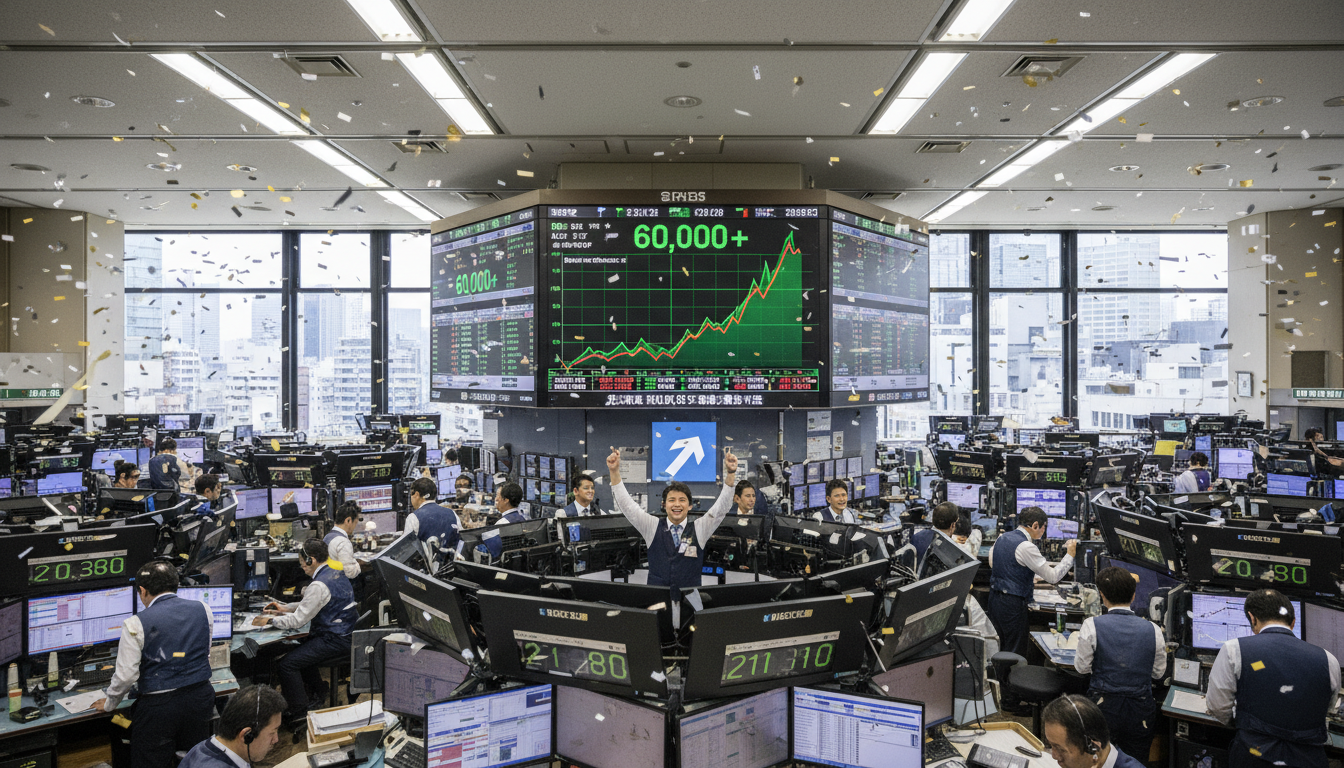
Nikkei Stock Average Tops 60,000 Intraday on April 23, 2026 as Tech Stocks Rally Amid Easing Iran Tensions
Nikkei Stock Average surged past the 60,000 mark intraday on April 23, 2026, driven by a broad tech rally and a temporary easing of tensions related to Iran, though trading remained choppy throughout the day.
Nikkei reaches historic intraday milestone
On April 23, 2026 the Nikkei Stock Average climbed above 60,000 for the first time during trading, marking a symbolic milestone for Japan’s benchmark index. The move reflected concentrated buying in technology-related names, which drew the bulk of new investor capital during the session. Market participants described the advance as significant but fragile, noting that the intraday peak did not immediately translate into a sustained close well above the level.
The spike underscored the market’s sensitivity to both geopolitical developments and sectoral flows, with traders quick to pare positions when headlines revived risk aversion. By late afternoon trading, prices had moderated from their highs as market participants weighed the durability of the rally.
Tech sector led gains
Technology stocks were the principal contributors to the Nikkei’s intraday rise, with large-cap chipmakers, software-related firms and hardware suppliers drawing outsized interest. Momentum in global tech markets filtered into Tokyo, where investors rotated capital toward companies perceived to benefit from secular demand in semiconductors and cloud infrastructure. Analysts on the trading desk said the concentration of gains in a handful of sectors amplified headline moves in the index.
While the tech-led advance provided upward pressure on the Nikkei, other domestic sectors showed a mixed performance, tempering the breadth of the rally. The uneven participation suggested the market was leaning on a limited set of bullish narratives rather than broad-based economic optimism.
Geopolitical developments eased short-term risk
A brief respite in hostilities related to Iran helped lift risk appetite and supported the Nikkei’s jump on April 23, 2026, according to traders. Statements and market signals that implied a reduction in immediate military escalation lowered the risk premium on equities and allowed investors to focus more on corporate fundamentals. That shift proved sufficient to propel the index to its intraday high.
However, market watchers cautioned that the improvement was tentative, and that lingering doubts over the trajectory of the Iran conflict could quickly reverse sentiment. The fragility of the geopolitical backdrop made the session’s gains contingent on further cooling of tensions rather than a definitive resolution.
Volatility and trading dynamics
Trading during the day was characterized by sharp intraday swings and intermittent bursts of volume, reflecting a tug-of-war between momentum buyers and risk-averse sellers. Several traders reported quick profit-taking after the index touched its peak, which contributed to the choppy price action. Options and futures desks also registered elevated activity as institutional investors adjusted hedges around the milestone level.
Market liquidity at certain times was uneven, amplifying moves in top-weighted stocks and feeding headline volatility in the Nikkei. Brokerage sources said that algorithmic strategies magnified intraday oscillations, particularly as stop-loss orders clustered around round-number levels such as 60,000.
Impact on sectors and corporate outlooks
The intraday surge benefited companies whose earnings outlooks are tied to technology spending and global demand for semiconductors. Market observers noted that the rally could improve sentiment ahead of upcoming corporate earnings reports, potentially boosting investor attention on firms with strong margin prospects. Conversely, more domestically focused sectors saw less enthusiasm, underscoring a divergence in how market narratives were being priced.
Some corporate treasuries and exporters are likely watching currency and commodity trends closely, as any renewed geopolitical escalation could lift oil prices and squeeze corporate margins. For now, the primary market reaction centered on equity re-pricing rather than immediate changes to corporate guidance.
Analysts temper optimism with caution
Equity strategists praised the symbolic significance of the Nikkei’s intraday advance but urged investors to remain cautious given the fragile mix of drivers. Key near-term risks cited by analysts include the course of the Iran situation, shifts in global interest rate expectations, and potential profit-taking after a concentrated rally. Several firms recommended monitoring volume and breadth indicators to assess the sustainability of the move.
Looking ahead, market participants identified upcoming economic data releases and corporate results as potential catalysts that could either reinforce or undo the gains seen on April 23, 2026. Analysts emphasized that while the milestone may encourage investor confidence, it does not eliminate structural vulnerabilities in market positioning.
The Nikkei Stock Average’s intraday breach of 60,000 on April 23, 2026 highlighted how quickly geopolitical signals and sectoral flows can reshape market trajectories. Investors and analysts alike said they will be watching whether the market can convert the symbolic peak into a durable advance as trading resumes in the days ahead.

