
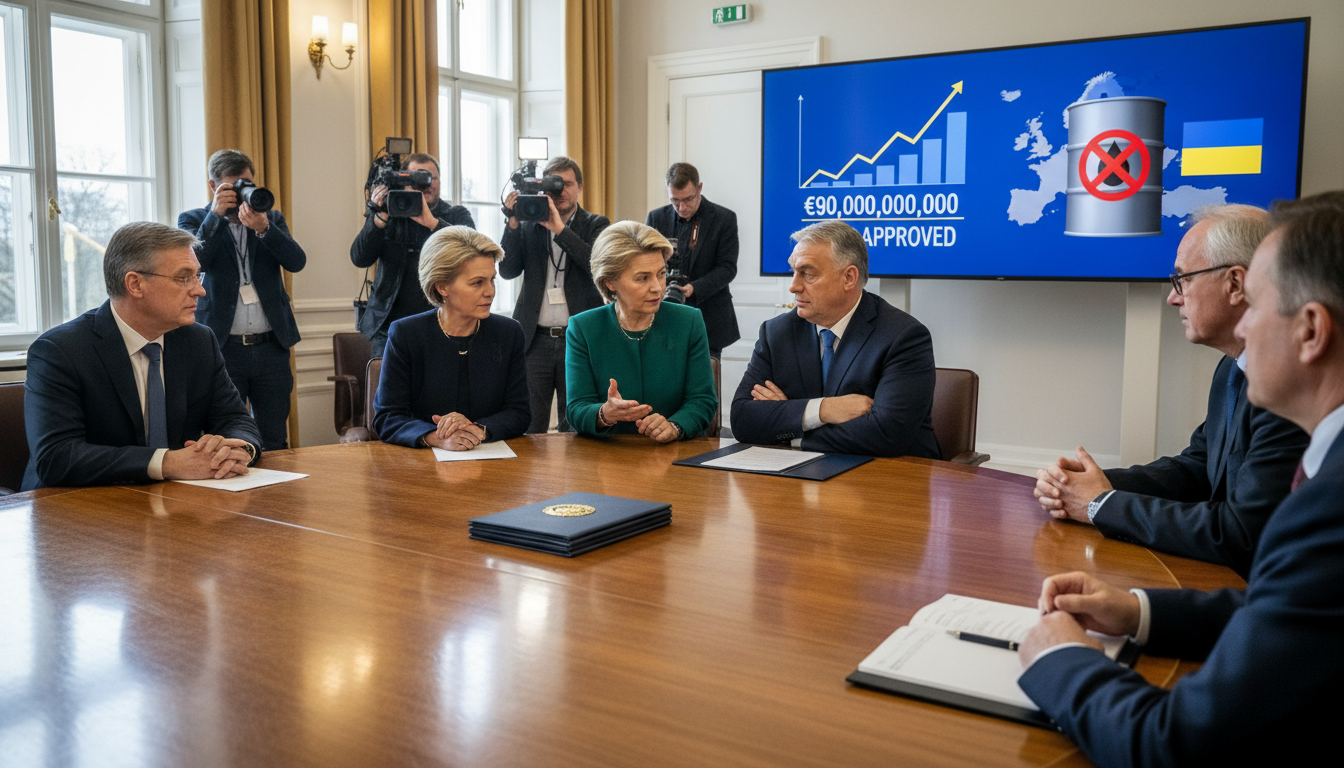
EU Approves €90 Billion Loan to Ukraine After Hungary Lifts Veto
The EU approved a €90 billion loan to Ukraine on April 23, 2026, ending a months‑long standstill after Hungary lifted a veto tied to oil transit through the Druzhba pipeline. This EU loan to Ukraine aims to shore up Kyiv’s finances and support military and reconstruction needs over 2026–2027. (apnews.com)
EU finalises €90 billion loan package
The European Council and EU institutions confirmed full approval of the loan package, which had been negotiated through a legal framework adopted earlier this year. The package is designed to cover Ukraine’s macro‑financial needs and to support defence‑related investment during 2026 and 2027. (consilium.europa.eu)
Budapest’s veto and the Druzhba pipeline
Hungary had withheld support for the loan after flows of Russian crude through the Druzhba pipeline were disrupted, arguing the halt to oil transit harmed Budapest’s energy security. Hungarian Prime Minister Viktor Orbán told EU counterparts on April 19 that he would not oppose the measure once oil deliveries through the pipeline resumed. (euronews.com)
Ukraine’s looming funding gap
Officials in Kyiv and several EU capitals warned that Ukraine faced a serious financing shortfall in early 2026 that could undermine both public services and defence spending. The bloc moved to accelerate approval to prevent an abrupt drop in support that analysts said would have caused liquidity problems for the government and delayed procurement of critical equipment. (apnews.com)
Financing mechanics and legal steps
The loan will be financed through common EU borrowing and implemented under the legal measures the Council adopted in February, with enhanced cooperation mechanisms used where necessary. Conditions attached to disbursement include commitments on rule of law measures in Ukraine and procurement rules intended to prioritise suppliers from the EU, Ukraine or EEA‑EFTA countries. (consilium.europa.eu)
Scope for defence and reconstruction spending
EU documents indicate a significant share of the funds is earmarked to bolster Ukraine’s defence industrial capacity and to support purchases of military equipment sourced from eligible suppliers. The Commission and member states say the arrangement balances immediate macro‑financial needs with long‑term reconstruction priorities. (eeas.europa.eu)
Political fallout and regional implications
The episode exposed fissures within the bloc over energy ties to Russia and the limits of unanimity when national political dynamics intervene. Brussels and Kyiv both signalled relief at the breakthrough, while analysts noted the episode may prompt closer scrutiny of energy transit security across Central and Eastern Europe. (apnews.com)
The EU’s rapid move to unfreeze the loan removes a major immediate financial uncertainty for Kyiv, but implementation will require close monitoring by member states and clear delivery on the conditionalities included in the legal framework.

