
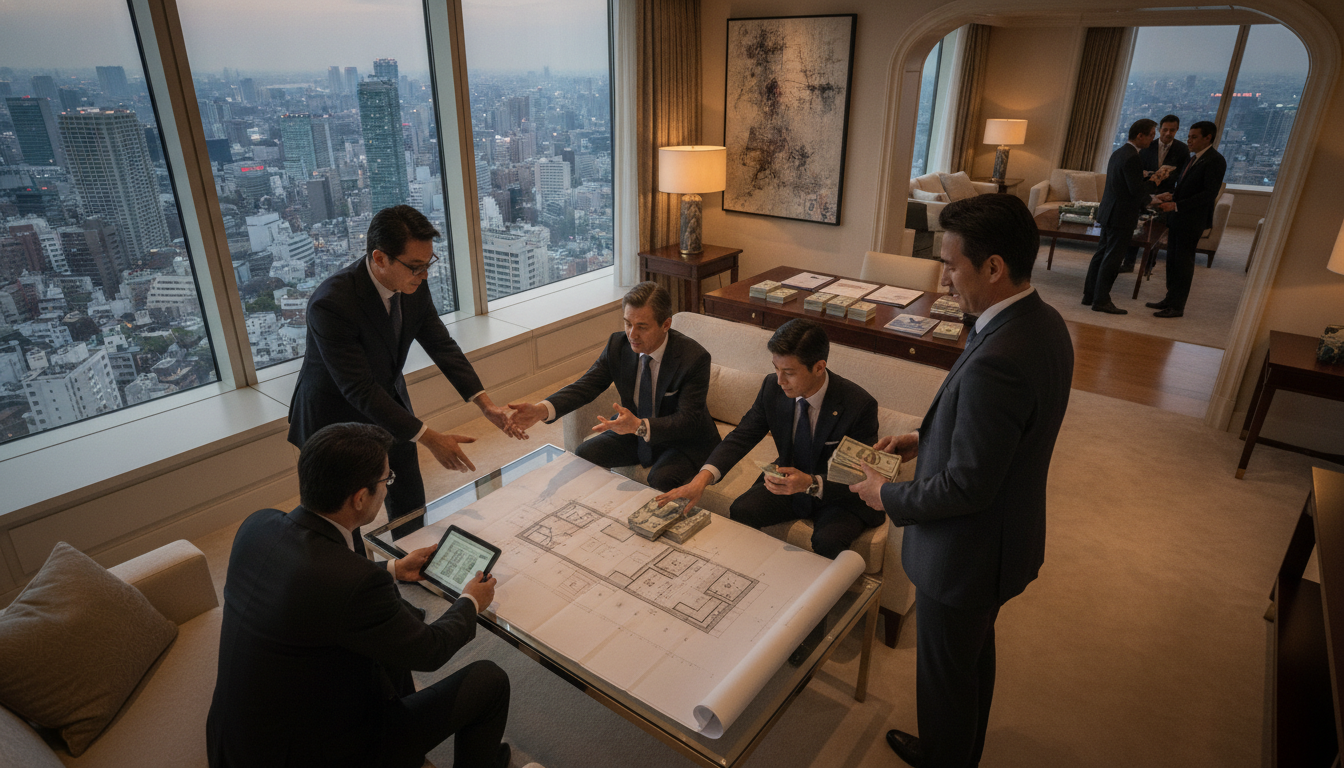
Penthouse owners in Tokyo and Osaka largely paid in cash, Nikkei finds
Nikkei analysis shows most penthouse owners in central Tokyo and Osaka bought units with cash, as domestic and foreign wealth fuels luxury condominium price growth.
Majority of penthouse owners bought without mortgages
A Nikkei review of roughly 300 high-rise residential towers in central Tokyo and Osaka found that most top-floor units were acquired with cash rather than mortgage financing. The pattern is especially pronounced for penthouses and other large luxury units, where buyers frequently completed transactions outright.
Investigators noted that cash purchases complicate market transparency because they leave fewer public financing trails than mortgage deals. Buyers paying in full often close quickly and privately, reducing the visibility of trading activity to standard real-estate monitors.
Nikkei analysis covers about 300 high-rise buildings
The research sample included roughly 300 high-rise condominiums concentrated in central business districts of Tokyo and Osaka. These buildings span decades of construction and include recently completed towers with large, high-end units marketed to affluent domestic and international buyers.
Within the sample, the pattern of cash payments was observed across multiple neighborhoods and building ages, indicating that the phenomenon is not limited to a few trophy towers. Analysts said the dispersion suggests a structural shift in how luxury urban housing is purchased in Japan’s two largest metropolitan markets.
Domestic and foreign wealthy buyers are active in resales
Market participants told researchers that both wealthy Japanese individuals and foreign buyers have been active in trading luxury units, often treating penthouses as asset-class investments. Resale activity among affluent owners has pushed up prices in some central-city pockets where supply of large floor-area units is limited.
Real-estate brokers cited cases in which buyers who purchased years earlier, sometimes in cash, traded units again for profit or portfolio reallocation. The mobility of high-net-worth owners contributes to volatility at the top end of the market and can amplify price swings when multiple transactions cluster in short periods.
Illustrative purchases show scale of cash deals
One example highlighted in the analysis involved a roughly 200-square-meter top-floor unit in a 48-story condominium in Osaka, reportedly bought in cash about ten years ago by a private business owner. Such purchases underline how sizable cash capacity among buyers has shaped ownership patterns in premium towers.
Market sources said similar transactions occur regularly for large units whose value and perceived scarcity make them attractive to buyers with ready liquidity. These deals often set local price benchmarks that influence valuations for surrounding units and comparable towers.
Price impact and spillover risks for broader housing market
Industry analysts warn that concentrated cash purchases at the luxury end can push price references higher and indirectly affect valuations down the spectrum. When penthouse trades establish new high-water marks, sellers of smaller units may adjust price expectations, tightening supply at the upper end and complicating affordability discussions.
The limited volume of comparable large units means each resale carries outsized influence on local price indices and broker appraisals. Observers caution that if speculative trading among cash buyers accelerates, it could create localized bubbles that later compress demand and depress prices.
Regulatory and transparency challenges emerge from cash transactions
Regulators and tax authorities face hurdles in tracking high-end cash purchases, which can obscure beneficial ownership and complicate anti-money-laundering oversight. The prevalence of outright payments for expensive residential real estate increases scrutiny on whether existing reporting and verification frameworks are sufficient.
Policymakers considering interventions must balance protecting legitimate privacy for buyers against the need for market transparency. Potential measures under discussion by industry experts include enhanced reporting for high-value transactions and tighter corporate ownership disclosure for real-estate purchases.
Wealth-driven trading of penthouses in central Tokyo and Osaka is reshaping the luxury condominium market, with cash payments by domestic and foreign buyers pushing valuations and raising questions about transparency and regulatory responses.

