
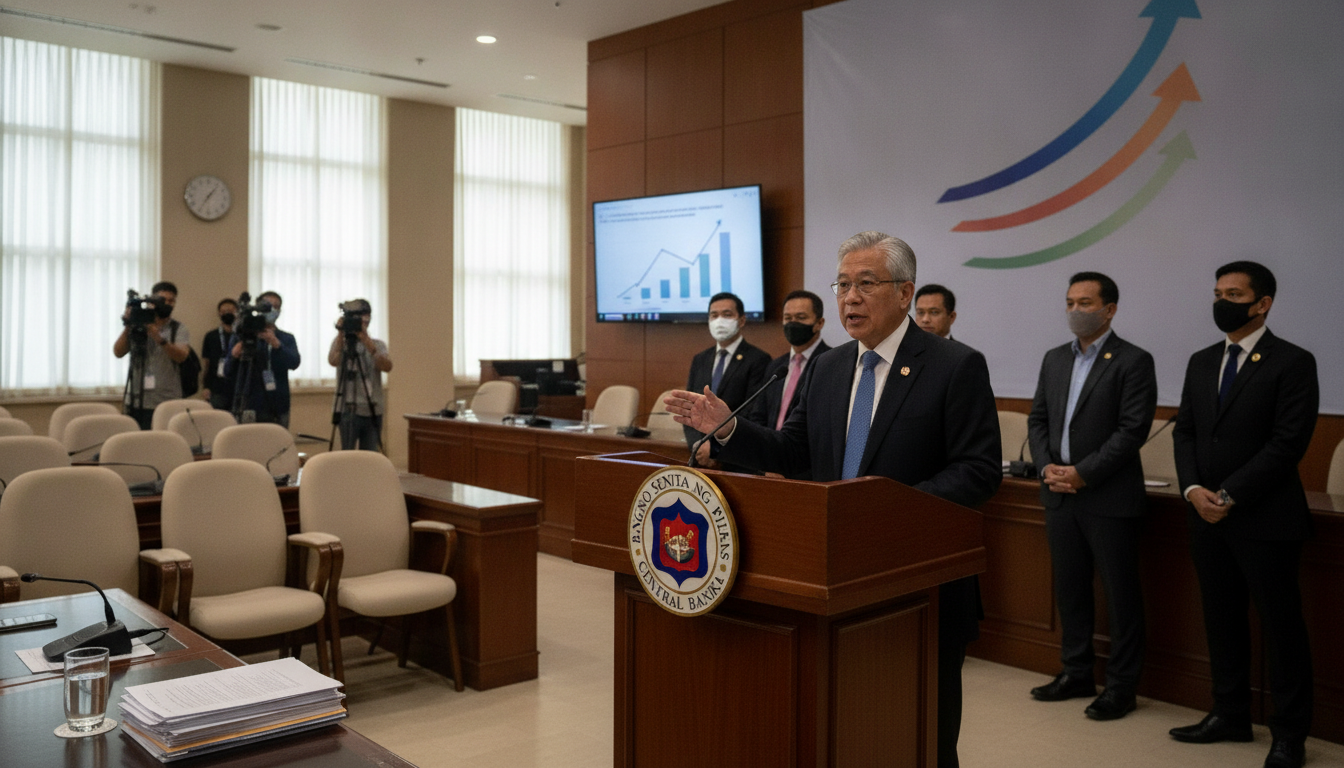
Philippine central bank raises interest rate as inflation stays above target
Philippine central bank raises interest rate by 25 basis points on June 18, 2026, to curb inflation driven largely by higher fuel costs linked to the Iran war.
The Bangko Sentral ng Pilipinas (BSP) raised its policy rate by 25 basis points on Thursday, continuing a tightening cycle aimed at reining in inflation. The move comes as price growth remains above the central bank’s target range even as the pace of increase shows signs of slowing.
Analysts said the decision reflects persistent upside risks from energy costs and imported inflation, with the BSP signaling it will remain data-dependent. Markets were watching for any indication that monetary policy will shift toward a sustained pause or further hikes in coming months.
BSP approves 25 basis-point increase
The central bank’s Monetary Board voted to lift the main interest rate by 25 basis points at its June meeting.
Officials framed the action as necessary to temper inflationary pressures stemming from recent spikes in fuel prices, which have fed through to transport and production costs. The board emphasized a cautious stance, noting that policy would be adjusted in line with incoming economic data.
Fuel costs and the Iran war shape inflation
High fuel prices were identified by the BSP as a key driver of the current inflationary bout.
Energy costs rose after geopolitical tensions in the Middle East, particularly the Iran war, tightened global oil markets and lifted import bills. Those higher costs have translated into elevated consumer prices for transport and goods, sustaining inflation above the central bank’s preferred trajectory.
Market and currency reaction
Local financial markets registered a muted response immediately after the announcement, with bond yields inching higher as investors priced in a slightly tighter policy outlook.
The peso experienced modest volatility against major currencies as traders weighed the impact of a rate rise on capital flows. Market participants indicated they will be sensitive to future BSP statements for clues on the timing of any further tightening.
Effects on borrowers and businesses
For borrowers, the central bank’s decision will likely translate into higher interest costs on new loans and some variable-rate debt.
Corporate treasurers and household borrowers are expected to reassess financing plans as lending spreads narrow in a higher-rate environment. Sectors reliant on fuel and logistics may face margin pressures if elevated energy costs persist.
Policy outlook and forward guidance
BSP officials described the stance as data-driven, signaling that future moves will depend on developments in inflation, exchange rates, and the external environment.
Analysts said the bank could opt for further modest hikes if inflation proves sticky, but may pause if price growth continues to moderate and global energy markets stabilise. The central bank’s communication aims to balance inflation control with support for economic growth.
Global oil shock adds external risk
The continuing disruption to oil supplies from the Iran war has introduced an external shock that complicates domestic policy choices.
Higher global fuel prices not only raise direct consumer costs but also affect production and transport across the economy, creating a pathway for imported inflation that monetary policy must consider alongside domestic demand conditions.
The BSP’s 25 basis-point increase underscores the challenges of navigating inflation that is driven both by domestic factors and volatile international commodity markets.

