
Philippines, Japan Bolster Defense Ties Over South China Sea; Manila to Buy Five Destroyers
Philippines and Japan strengthen defense ties over the South China Sea with ship transfers, a patrol aircraft and Manila’s planned purchase of five destroyers.
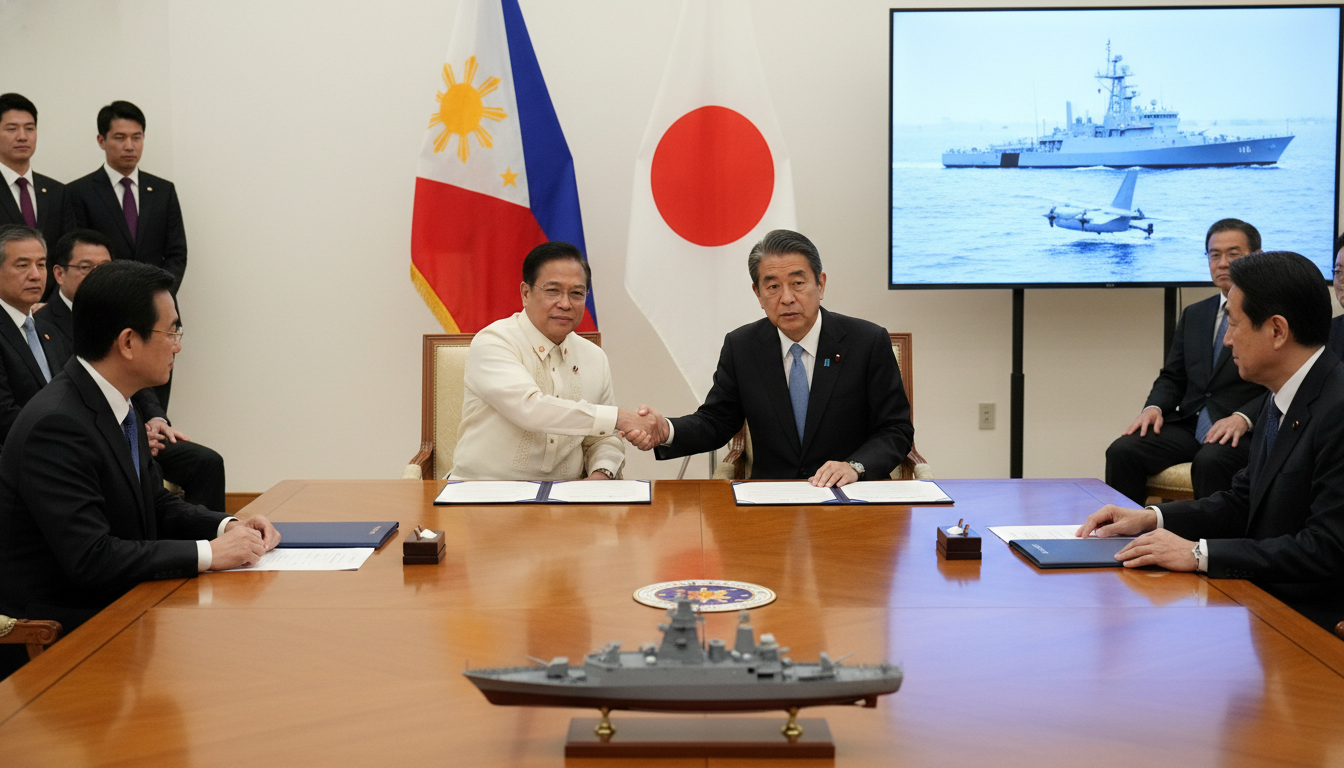
The Philippines and Japan announced plans to deepen defense cooperation in response to what both ministers described as growing assertiveness by China in the South China Sea.
Speaking in Singapore on May 31, Philippine Defense Secretary Gilberto Teodoro said Manila will purchase five naval destroyers, while Tokyo and Manila identified warship transfers and a maritime patrol aircraft among priority items.
The ministers framed the moves as aimed at strengthening maritime domain awareness and deterrence without seeking confrontation.
Bilateral Message in Singapore
The public remarks by defense officials came after meetings held on the sidelines of a regional security gathering in Singapore.
Both countries’ ministers emphasized coordinated planning and stepped-up logistical and training support as components of the broadened defense partnership.
Officials described the announcements as part of an incremental programme of capability-sharing that will unfold through formal agreements and scheduled transfers.
Plans for Warships and a Patrol Aircraft
Tokyo and Manila placed the transfer of smaller surface combatants and a maritime patrol aircraft high on their shortlist of cooperation measures.
Japanese assistance is expected to include technical support, parts and potential refurbishment work to enable donated or transferred vessels to operate within the Philippine fleet for extended patrols.
A patrol aircraft delivery aims to enhance Manila’s ability to monitor maritime activity, track incursions and improve search-and-rescue coverage across contested waters.
Manila’s Purchase of Five Destroyers
Defense Secretary Teodoro announced that the Philippines plans to buy five naval destroyers to modernize its fleet and expand high-end surface warfare capacity.
Details on procurement timelines, budgets, and preferred suppliers were not released immediately, and Philippine authorities said acquisition processes will follow domestic regulations and oversight.
The planned destroyer purchases signal a longer-term shift by Manila to procure more capable platforms that can operate beyond its immediate coastal areas.
Regional Response to China’s Actions
Both ministers linked their closer cooperation to a perceived increase in assertive maritime activity in and around the South China Sea.
They stopped short of naming specific incidents in their joint statements, but framed the measures as defensive enhancements designed to preserve freedom of navigation and the rule-based order at sea.
The emphasis on surveillance, platform availability and interoperability underscores a focus on deterrence by improving situational awareness and response options.
Wider Security and Diplomatic Implications
Enhanced Japan–Philippines defense cooperation is likely to be read across the region as both a bilateral upgrade and a contribution to wider maritime security efforts.
For Manila, the combination of capability transfers and planned acquisitions helps address longstanding gaps in patrol capacity and sustainment, while for Tokyo it represents a deeper operational partnership with a fellow maritime democracy.
Diplomats and analysts in the region will watch how the move affects diplomatic dynamics, military postures and peacetime crisis management in neighboring waters.
Implementation, Oversight and Training Ahead
Officials from both countries said follow-up working groups will detail timelines, maintenance plans and personnel training necessary to integrate transferred platforms into Philippine service.
Procurement of complex systems such as destroyers typically involves phased funding, parliamentary approvals and extended delivery schedules that can span several years.
Capacity-building for crews, joint exercises and logistical support are being planned to ensure the new and transferred assets become operationally effective once received.
The announcements mark a notable deepening of defense ties between Tokyo and Manila, blending immediate capability transfers with longer-term acquisitions to address maritime security challenges in the South China Sea.
Both governments said further technical discussions and formal agreements will be published as they are finalized, and they reiterated a shared preference for diplomatic channels to manage tensions while strengthening deterrence through cooperation.

