
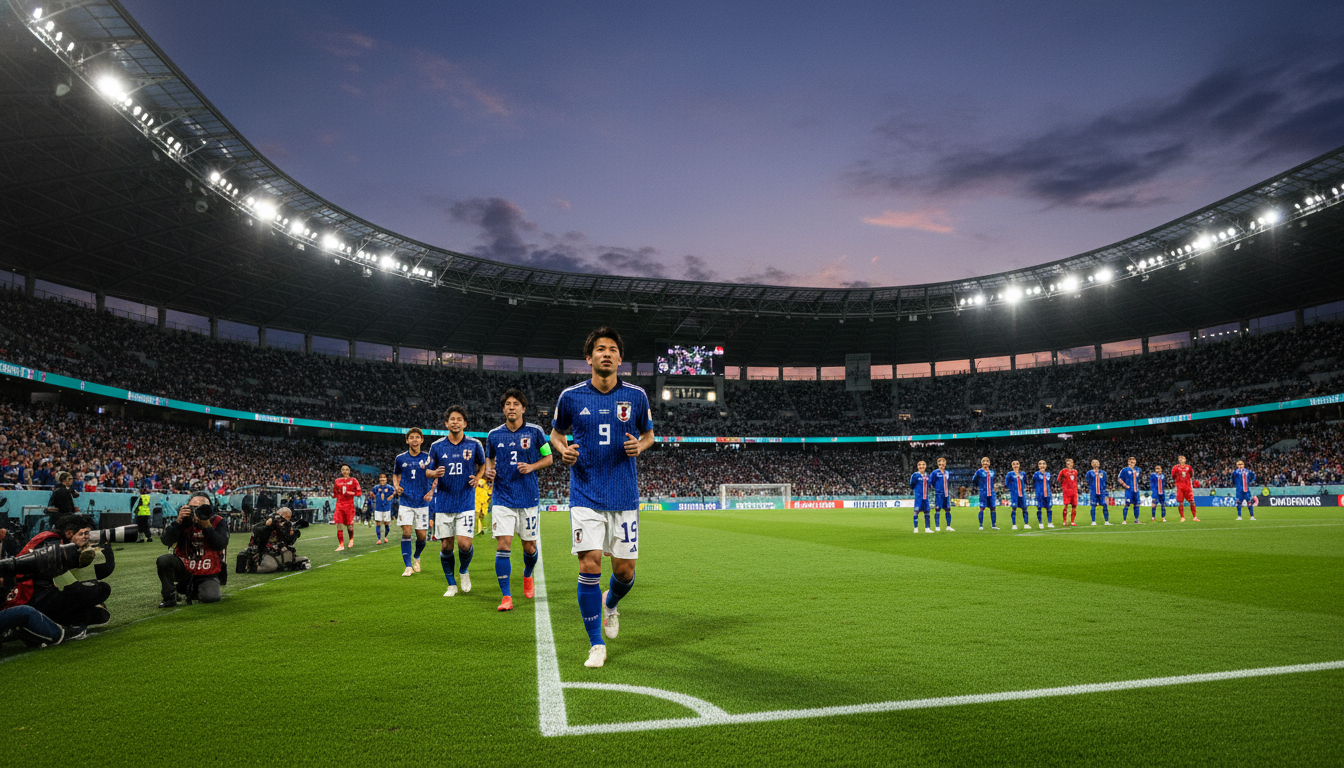
Japan vs Iceland friendly in Tokyo tests returning stars ahead of 2026 World Cup
Japan vs Iceland friendly at MUFG Stadium saw Japan start recovered internationals Wataru Endo and Maya Yoshida, as the coach evaluated fitness and cohesion before the North American World Cup.
Japan v Iceland friendly on May 31, 2026, at Tokyo’s MUFG Stadium served as the national team’s final rehearsal before the World Cup in the United States, Canada and Mexico.
The match offered the coaching staff an opportunity to assess players returning from injury and to trial combinations ahead of the tournament.
Japan entered the game ranked 18th by FIFA, while Iceland stood 75th, underscoring the match’s role as preparation rather than a competitive test.
Starting lineup featured multiple returning internationals
Coach selected a starting eleven that combined established names with players recently back from injury.
Center backs Kō Itakura and Takehiro Tomiyasu, both listed with Ajax, were named in the back line alongside captain Wataru Endō of Liverpool and veteran Maya Yoshida of LA Galaxy.
Goalkeeper Ayase Suzuki, midfielders Ao Tanaka and Takefusa Kubo, and forwards including Ayase Ueda and Junya Ito completed a side aimed at balancing match sharpness with tactical checks.
Selection highlighted experience and fitness checks
The call-up of Maya Yoshida marked his return to the starting group after his first selection since the Qatar World Cup, providing an experienced presence for younger defenders.
The inclusion of players who recently recovered from injury was central to the coaching staff’s brief, with minutes and movement monitored closely by medical and technical staff.
Officials framed the fixture as a last controlled setting to confirm readiness rather than to overhaul the final World Cup roster.
Tactical approach focused on cohesion and defensive shape
Japan set up to probe Iceland’s organization while prioritizing defensive stability in the early phases of the game.
The selection of two Ajax defenders suggested an emphasis on playing out from the back and maintaining positional discipline against a compact opponent.
Substitutions later in the match were used to test midfield link-up play and to give coaches a clearer picture of transition scenarios likely to arise in tournament play.
Individual performances drew mixed assessments
Several players displayed encouraging signs of match fitness, with midfield links and forward pressing noted as positives by staff present at the stadium.
Coaches singled out combinations between the midfield trio and wide attackers for showing early understanding, though some passing sequences lacked the final pass that would turn possession into clear chances.
The match also flagged areas for improvement, particularly in set-piece concentration and defensive reactions to second balls.
Stadium atmosphere and coaching observations
MUFG Stadium provided a high-profile setting for the final pre-tournament friendly, with supporters and staff focused on the broader World Cup preparation rather than the result alone.
Coaching staff used the controlled environment to evaluate not only physical recovery but also leadership dynamics, with Yoshida’s presence offering an on-field reference point for younger teammates.
Technical reports compiled after the match emphasized the value of live minutes for players returning from injury, underscoring their role in final selection discussions.
Next steps toward the North American World Cup
With the friendly completed, Japan’s staff will collate medical updates, match data and scouting reports to refine the final World Cup group and game plans.
Players who earned valuable minutes will face a short turnaround as camp coaches balance rest with targeted training ahead of travel to the tournament venues in the United States, Canada and Mexico.
The match in Tokyo thus closes the immediate preparation phase and shifts attention to match-specific plans for Japan’s opening fixtures in the global event.
Japan’s coaching staff will now weigh the performance evidence from the Tokyo friendly as they finalize their World Cup plans, using the fitness information and tactical observations gathered on May 31 to shape the squad and strategy for the tournament.

