
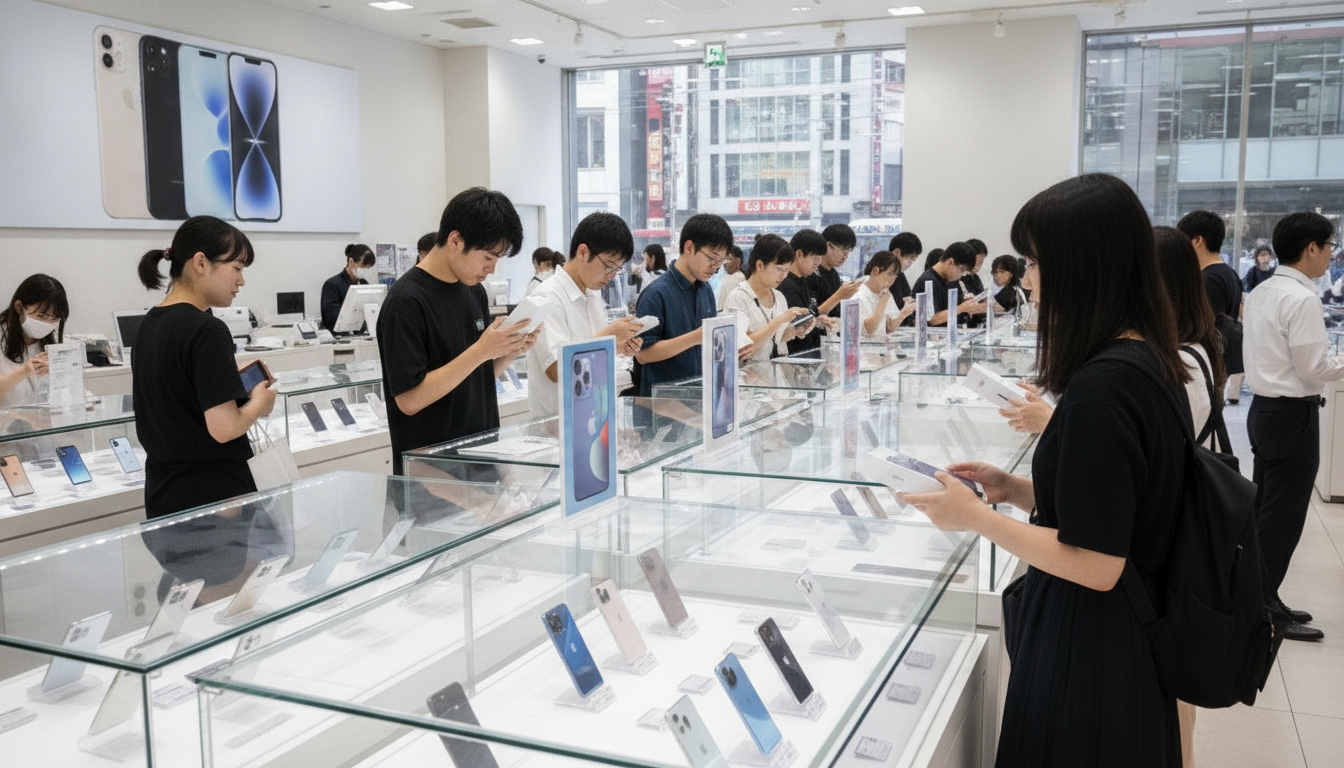
Refurbished iPhone Sales Surge in Japan as Consumers Shift After Apple Price Hikes
Japan shoppers and businesses turn to used devices amid higher new-phone costs, weak yen and memory shortages; refurbished iPhone sales have more than doubled since July.
TOKYO — Refurbished iPhone sales have surged across Japan as consumers and corporate buyers pivot from new-device purchases following Apple’s July price increases. Retailers and secondary-market dealers report a sharp rise in demand for used smartphones and IT equipment, driven by the weak yen and component shortages that have pushed new-device prices higher. The trend is noticeable in sales of older models such as the iPhone SE, which are moving quickly through used-device channels.
Market Shift After Apple’s July Price Rise
Japan’s consumer electronics market has reacted quickly to Apple’s decision to raise prices in July, according to multiple retailers and resale platforms. Sales of refurbished iPhones more than doubled in the weeks after the announcement, with buyers citing affordability and immediate availability as key factors. The weak yen has magnified the price impact for Japanese consumers, making secondhand and refurbished models significantly more attractive.
Retailers say the jump in demand is not limited to private buyers. Small and medium-sized enterprises are also shifting budgets toward refurbished IT equipment to stretch procurement dollars. The combined effect has tightened supply in the secondary market even as refurbishment businesses ramp up capacity.
Currency and Component Shortages Intensify Demand
Two structural pressures are amplifying the move to used devices: currency depreciation and memory-chip shortages. The weaker yen increases the local price of imported electronics, while limited supply of memory chips and certain components has raised manufacturing costs globally. Together, these factors have driven retail prices for new smartphones upward, closing the price gap that once favored new-device purchases.
Refurbishers report longer lead times for sourcing replacement parts, but still find it easier to deliver refurbished units than manufacturers can supply new ones. This has created a near-term advantage for secondary-market sellers, who can refurbish and circulate devices faster than production cycles for brand-new models.
Retail and Repair Sector Response
Retail chains, independent repair shops and online marketplaces have responded by expanding refurbishment services and stockpiling tested used units. Some large electronics retailers have increased buy-back incentives to secure inventory, while specialist refurbishers are investing in quality-control processes to reassure buyers about battery health and warranty coverage.
Industry participants say price transparency and certified refurbishment programs are helping convert cautious buyers. Stores offering short-term warranties and graded-condition listings report higher conversion rates, and some have launched trade-in promotions that bundle refurbished phones with service plans to attract price-sensitive customers.
Corporate Procurement and IT Equipment Reuse
Corporate buyers are among the most active in the refurbished market, seeking to preserve capital by extending the life of existing devices. IT departments in Japan report increased procurement of refurbished laptops, tablets and smartphones to meet tight budgets without sacrificing essential functionality. This shift is particularly acute among smaller firms that lack the purchasing power of large enterprises.
Leasing and device-management firms are also seeing higher demand for refurbishment and redeployment services. The secondary market’s growth is encouraging a more systematic approach to device lifecycle management, with companies opting for phased replacements and certified refurbishment chains to maintain security and compliance.
Impact on Apple and the Secondary Market Outlook
Analysts say the immediate effect of the price hikes is a stronger secondary market, though the long-term implications for Apple remain mixed. Higher entry prices for new models can compress unit growth, but premium brands often retain desirability that supports resale values. Apple’s overall revenue mix could shift if more users delay upgrades or choose certified refurbished options over brand-new phones.
Secondary-market leaders predict sustained demand for at least several quarters while currency volatility and component constraints persist. However, they caution that supply dynamics could change if component markets stabilize or if exchange rates strengthen, which would ease pressure on new-device pricing.
Despite the boom in refurbished sales, some consumers still prioritize the latest features and carrier promotions, which limits how far the secondary market can encroach on flagship demand. The balance between cost-conscious buyers and feature-driven upgrades will shape market outcomes moving forward.
Consumers and businesses adapting to higher new-phone prices are also prompting policy conversations around device reuse and e-waste management. Extended warranties and quality-assurance labeling for refurbished units are emerging as ways to build trust and promote sustainable consumption patterns.
As market participants adjust strategies, the refurbished iPhone channel in Japan has become a crucial outlet for meeting immediate demand while manufacturers and carriers calibrate pricing and supply plans. The coming months will show whether this surge represents a temporary reaction to price shocks or a longer-term shift in purchasing behavior.
Overall, the rise in refurbished iPhone sales underscores a broader recalibration in Japan’s electronics market, driven by currency moves, supply constraints and changing buyer priorities.

