
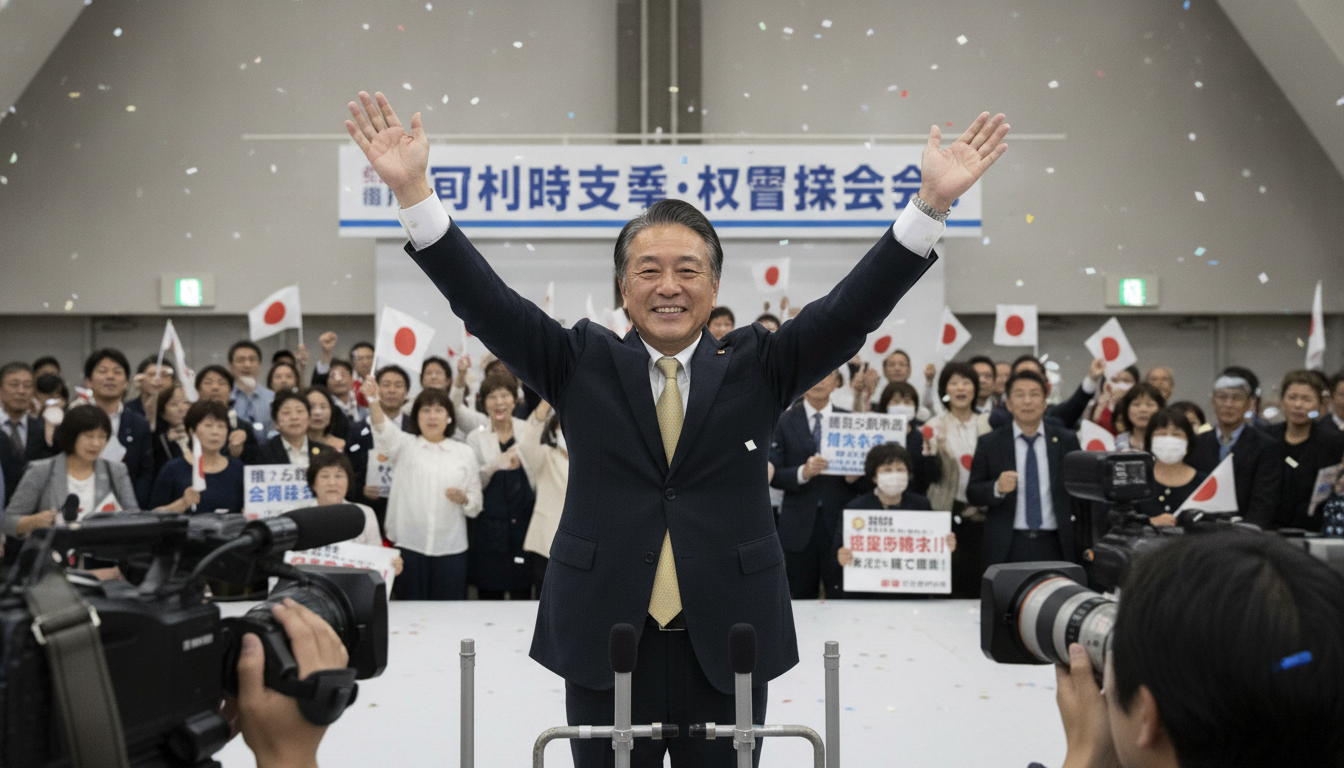
Kikuchi Wins Shimotsuma Mayoral Election, Securing Third Term
Hiroshi Kikuchi won the Shimotsuma mayoral election on Aug. 2, 2026, defeating bakery owner Makoto Inoue in a special vote after Toyoji Sudo’s death.
Election Results and Turnout
Hiroshi Kikuchi, 64, reclaimed the mayoralty of Shimotsuma City in Ibaraki Prefecture in the single-seat contest held on August 2, 2026. The city election management committee reported that of 32,820 registered voters the turnout was 52.79 percent, slightly higher than the 52.00 percent recorded at the previous city vote. Kikuchi defeated his sole opponent, 57-year-old Makoto Inoue, a local bread manufacturer and retailer, to secure a third term in office. The result closes a brief period of political uncertainty that followed the sudden death of the sitting mayor earlier this year.
Circumstances That Prompted the Special Election
The vote was convened after Mayor Toyoji Sudo, who had won the mayoral contest in March 2026, was found dead in a drainage channel in Yachiyo on June 15, 2026. Prefectural police investigators have stated they regard suicide as the likely cause, and the city moved quickly to set the special election required by law. Sudo’s death cut short his first term and set the stage for a contest that many residents viewed as a referendum on continuity and local governance. Election officials and municipal staff oversaw an expedited timetable to ensure the city had an elected mayor to lead into the autumn fiscal and policy cycle.
Campaign Strategies and Voter Outreach
Kikuchi’s campaign combined appeals to his record with a ground-level voter outreach effort focused on former townships that make up the current city. He began the campaign by visiting his native Chiyokawa area and worked with allied city councilors to canvass neighborhoods across the old Shimotsuma city district using a campaign vehicle. Kikuchi emphasized stability and experience, arguing that his previous two terms provided a tested foundation for the city’s next phase. Inoue built his campaign around a message of renewal, positioning himself as the political heir to the late mayor and pursuing endorsements from prominent local assembly members and councilors.
Support Coalitions and Endorsements
Makoto Inoue received explicit support from a local Liberal Democratic Party prefectural assembly member and members of the city council’s largest faction, the Citizen Club. That coalition sought to continue the policy direction advanced by Toyoji Sudo, using slogans such as “Rebuild Shimotsuma” and pledges to usher in a new era for the city. Kikuchi, running as an independent like his opponent, attracted backing from other municipal lawmakers and community leaders who pointed to his prior achievements. The contests of endorsements and grassroots mobilization played out largely in the city’s population centers, where both candidates concentrated efforts to sway undecided voters.
Policy Themes and Priorities Stressed by Kikuchi
Throughout the campaign Kikuchi highlighted initiatives from his earlier two terms, citing an expansion of revenue from the hometown tax system and the introduction of free school lunches for junior high students as signature accomplishments. He pledged to deepen investments in education and social welfare and to lay out policies with five- and ten-year horizons. Kikuchi also promised continuity in municipal services while aiming to strengthen fiscal measures that have been key to recent budget planning. His message appealed to voters concerned about steady management and long-term planning after a period of disruption.
Inoue’s Pitch as Successor to Sudo
Inoue framed his candidacy as a continuation of the policy ethos associated with Toyoji Sudo, arguing that the electorate should endorse a candidate who would carry forward the late mayor’s priorities. He emphasized local economic revitalization and community rebuilding as central campaign themes, seeking to translate sympathy for Sudo into political support. Despite endorsements from influential local politicians, Inoue was unable to close the gap against Kikuchi’s emphasis on experience and administrative track record. Observers noted that the narrow margin in the March election, when Kikuchi lost by just 262 votes, had suggested a competitive field that this contest ultimately resolved in Kikuchi’s favor.
What the Outcome Means for Shimotsuma’s Governance
Kikuchi’s return to the mayor’s office gives Shimotsuma an experienced executive to lead the city through the remainder of the fiscal year and into planned infrastructure and welfare projects. The election result also underscores the local electorate’s appetite for familiar leadership following a string of unexpected events earlier in 2026. City hall now faces the task of reconciling campaign promises with budget realities and the needs of communities affected by demographic change and economic pressures. Officials will need to translate campaign pledges into concrete timelines and funding plans that can withstand scrutiny at council meetings and in public forums.
Kikuchi’s victory closes a politically turbulent chapter for Shimotsuma while setting a course for administrative continuity and modest policy ambitions. The new term will test whether the campaign’s promises on education and welfare can be implemented amid constrained resources and shifting local demands.

