
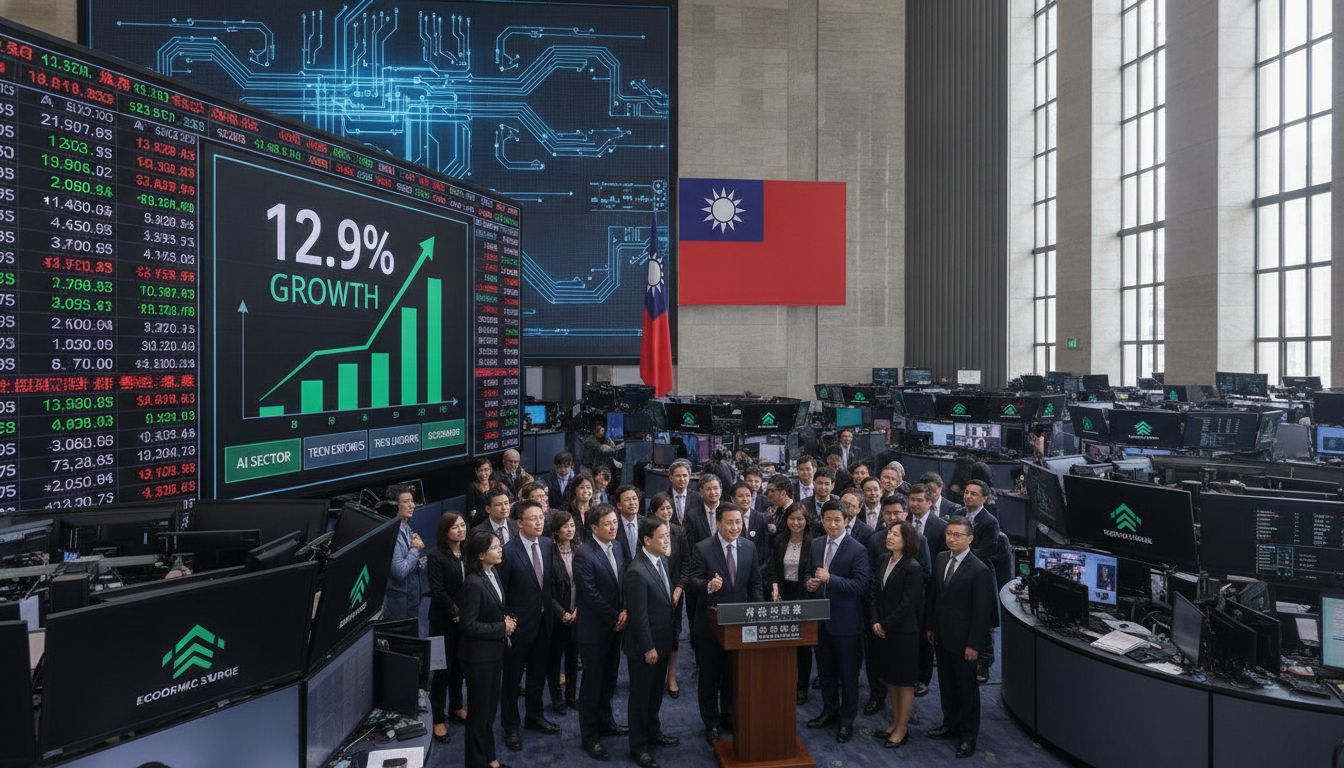
Taiwan economy soars 12.92% in Q2 as AI boom and U.S. ties lift output
Taiwan economy grew 12.92% year-on-year in Q2 as AI investment and stronger U.S. trade lift exports, posing distribution challenges for the Lai administration in Taipei.
Q2 Growth Surges 12.92% Year-on-Year
Taipei’s statistics agency reported that Taiwan’s economy expanded 12.92% on an annual basis in the second quarter, marking one of the strongest quarterly performances in recent years. The pace is driven largely by a sharp rise in exports and investment linked to the global artificial intelligence buildout. Officials and analysts say the headline figure reflects concentrated gains in semiconductor-related manufacturing and services connected to the tech supply chain.
AI Buildout Lifts Manufacturing and Services
Major Taiwanese firms have benefited from surging global demand for AI-capable chips and related components, which has translated into higher factory output and capital expenditure. Manufacturing lines producing semiconductors, test equipment and advanced packaging have reported robust order books, supporting hiring and higher utilization rates. The ripple effect has also reached logistics, software services and business-to-business suppliers that support chipmakers and data center projects.
Stronger U.S. Trade and Investment Links
Trade and investment ties with the United States played a central role in the quarter’s performance, with companies on both sides deepening procurement and supply-chain relationships. Increased U.S. demand for hardware tied to AI and data centers has lifted Taiwanese exports, while U.S. investment in local facilities and partnerships has supported new capacity. Observers say the combination of export strength and inbound capital helped boost domestic production beyond what domestic demand alone would explain.
Lai Administration Faces Distribution and Policy Tests
The Lai administration has noted the need to translate fast growth into broader benefits for households and smaller firms, while preventing overheating in specific sectors. Taipei’s leaders face the dual task of sustaining investment momentum and addressing distributional imbalances that can arise when gains concentrate in high-tech clusters. Policymakers are weighing targeted fiscal measures, training programs and incentives to broaden access to jobs and supplier opportunities across regions.
Inflation, Capacity Limits and External Risks
Rapid expansion also raises questions about inflationary pressure and capacity constraints in sectors experiencing the strongest demand. Companies report tightness in skilled labor and certain inputs, which could push wages and costs higher and prompt price adjustments in some segments. External risks remain, including shifts in global tech demand, supply-chain disruptions and geopolitical tensions that could affect trade flows with major partners.
Outlook, Forecasts and Policy Implications
Economists caution that while the current data point is striking, quarterly swings in economies closely tied to advanced manufacturing can be large and subject to cyclical reversal. The near-term outlook will depend on sustained global demand for AI-related products and the ability of Taiwanese firms to expand productive capacity without producing significant bottlenecks. Policy choices in Taipei—ranging from investment incentives to workforce development—will shape whether strong growth becomes a durable expansion or a shorter-lived surge.
The Q2 headline underscores how closely Taiwan’s fortunes are now tied to the global AI buildout and to strategic trade partners, and it places immediate pressure on the Lai administration to ensure growth is resilient and inclusive.

