
SoftBank batteries to be made in Japan as group pursues lithium- and cobalt-free cells for AI data centers
SoftBank to produce lithium- and cobalt-free batteries in Japan, aiming to power growing AI data centers with next-generation cells and repurpose a former Osaka manufacturing site.
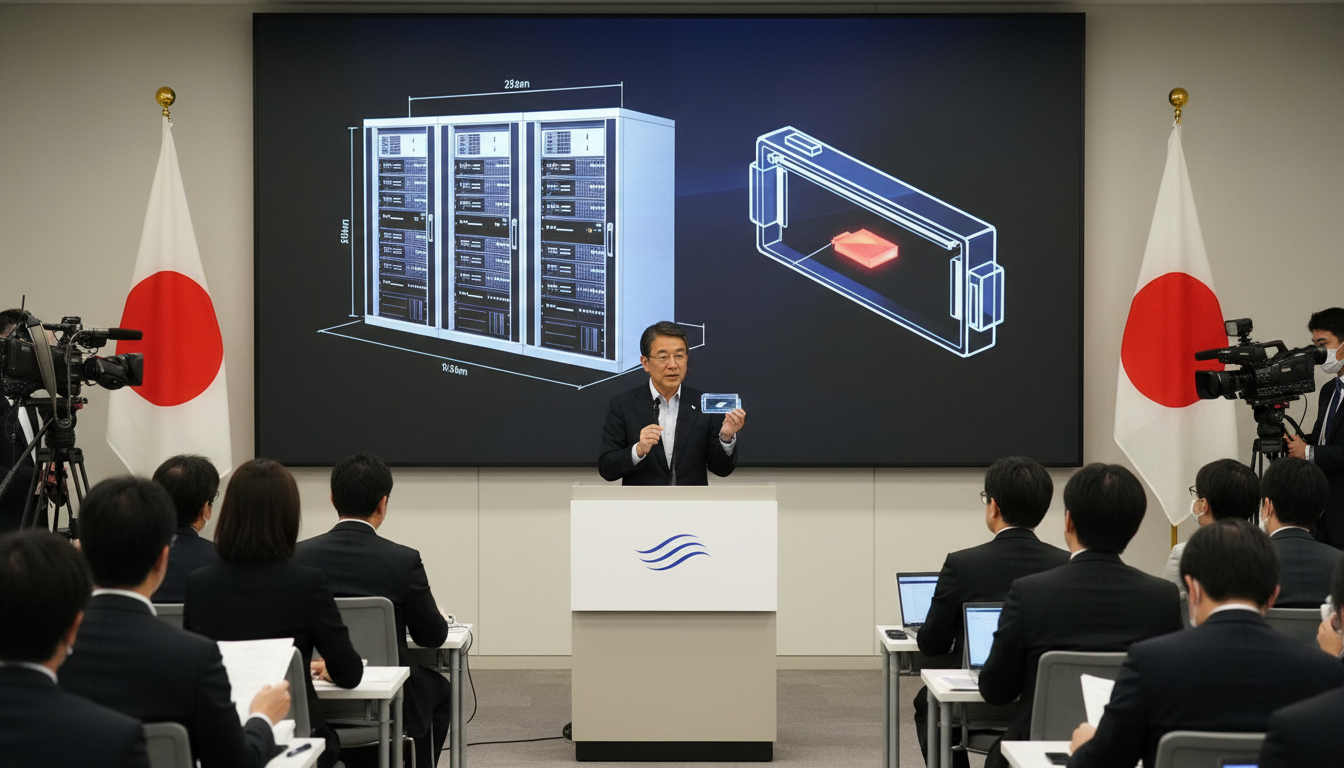
Japan’s SoftBank Group has unveiled plans to manufacture lithium- and cobalt-free batteries domestically as part of a broader push to supply power for expanding AI data centers. The move centers on next-generation power cells that avoid expensive and geopolitically sensitive materials, with production expected at a repurposed industrial site near Osaka. SoftBank batteries are being marketed as a strategic bet on AI infrastructure resilience and a way to reinvigorate local manufacturing capacity.
Osaka site to be repurposed for battery production
The group plans to locate manufacturing on the grounds of a former large-scale display panel facility near Osaka that has been idle since its previous owner ceased operations. The site’s existing industrial footprint and logistics links are seen as advantageous for a rapid conversion to battery assembly and testing. Local officials and industry stakeholders are watching closely because the development could bring new jobs and sustain supply-chain activity in the Kansai region.
Repurposing legacy factories for advanced battery work reflects a broader trend in Japan of retooling existing industrial assets to meet new technology needs. The choice of an established manufacturing campus also lowers initial capital outlays for utilities and transport access relative to building a greenfield plant. Observers note that the project’s success will depend on securing stable electricity, skilled technicians, and timely regulatory approvals.
Next-generation cells that avoid lithium and cobalt
SoftBank’s planned cells are designed to operate without lithium and cobalt, two materials that have been central to current mainstream battery chemistries but are costly and subject to supply constraints. By removing those elements, developers aim to reduce raw-material expense and lessen exposure to volatile commodity markets. The approach also seeks to address environmental and sourcing concerns attached to cobalt mining and long lithium supply chains.
Manufacturers pursuing alternative chemistries are focusing on abundant materials and cell designs that retain energy density and safety while cutting cost. Achieving parity with established lithium-ion performance will be a technical challenge, especially for high-demand applications. The company has emphasized that the batteries are intended for stationary, high-capacity uses such as data-center backup and load balancing rather than for most electric-vehicle applications at this stage.
Partnership with South Korea’s Cosmos Lab
SoftBank’s initiative includes a collaboration with a South Korean startup, Cosmos Lab, which will contribute technology and development expertise to the project. The partnership combines SoftBank’s capital and infrastructure ambitions with Cosmos Lab’s cell-design capabilities, aiming to accelerate product development and scale-up. Joint efforts will focus on adapting cell prototypes for mass production and meeting the specific needs of data center operators.
Cross-border technology partnerships have become a common route to rapid commercialization in competitive battery markets, allowing companies to pool R&D strengths and share manufacturing risk. The deal signals interest from established Japanese players in leveraging regional innovation networks across East Asia. Executives on both sides have said that aligning technical roadmaps and production timelines will be a priority in the coming months.
Targeting the power needs of AI data centers
SoftBank is positioning the batteries to serve data centers, where the growth of large-scale artificial intelligence workloads is driving a surge in electricity demand. AI servers require stable, high-capacity power and increasingly sophisticated energy management systems to cope with variable loads and redundancy requirements. Batteries that provide rapid response and cost-effective energy buffering can help operators reduce peak charges and improve uptime.
As AI computing clusters expand, operators seek localized energy solutions to limit dependence on long-distance power transfers and spot-market volatility. Stationary batteries integrated with on-site generation or grid services also support decarbonization goals by enabling more efficient use of renewables. SoftBank’s plan aims to capture this intersection of commercial demand and sustainability priorities.
Implications for Japan’s industrial strategy and supply chains
A domestic battery program that avoids critical raw materials could strengthen Japan’s industrial resilience and reduce import exposure. Policymakers have increasingly prioritized domestic capabilities in strategic technologies, and private-sector initiatives like this one feed into broader national goals for technological sovereignty. The project may prompt competitor firms and investors to accelerate similar efforts in order to remain competitive.
Industry analysts caution, however, that scaling alternative battery technologies from pilot lines to commercial volumes is capital intensive and technically demanding. Success will hinge on securing reliable supply chains for alternative feedstocks, achieving consistent manufacturing yields, and winning early customers among major data-center operators. Government support, incentives, or procurement commitments could influence the pace and scale of adoption.
SoftBank’s announcement adds to a wave of activity in the energy-storage sector as companies seek to pair computing growth with new power solutions. If the venture progresses to large-scale production, it could reshape parts of the domestic battery market and influence regional technology alliances.
The coming months will focus on prototype validation, regulatory clearances for the repurposed Osaka site, and negotiations with potential data-center partners. Observers expect the partners to publish more detailed technical roadmaps and timeframes as development milestones are reached. The initiative represents a strategic attempt to align Japan’s manufacturing heritage with the rising energy demands of AI infrastructure.

