
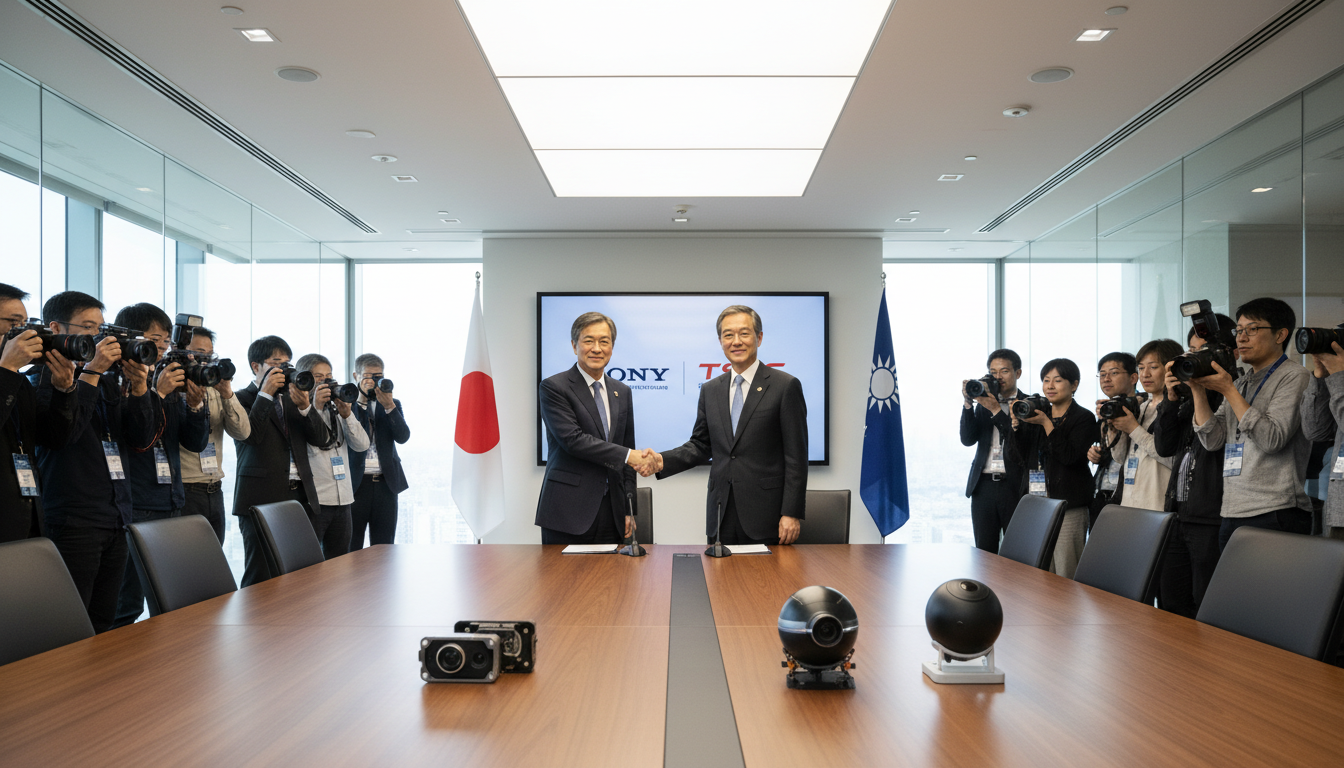
Sony TSMC image sensors partnership aims to accelerate Sony’s push into robotics and automotive
Sony to deepen partnership with TSMC to build next-generation image sensors for AI, targeting robotics and automotive sectors while forecasting double-digit profit growth.
Sony announced on May 8, 2026 that it will deepen its partnership with Taiwan Semiconductor Manufacturing Co. to co-develop next‑generation image sensors optimized for artificial intelligence, marking a strategic push into robotics and automotive markets. The move, framed by the company as a response to rising demand for advanced perception systems, accompanies a forecast of double‑digit profit growth for the fiscal year.
Details of the partnership announcement
Sony said the expanded collaboration with TSMC will focus on developing image sensors that integrate AI capabilities at the sensor level to speed data processing and reduce power consumption. Company executives characterized the effort as a combining of Sony’s sensor design expertise with TSMC’s advanced foundry and packaging capabilities.
The announcement outlined joint development work rather than an immediate change in mass production volumes, signaling a multi‑stage plan from prototype to commercialization. Sony attributed the partnership to accelerating requirements from sectors where sensors must operate in real time under demanding conditions.
Technical focus on AI‑enabled sensor features
Engineers will prioritize on‑device AI functions that preprocess visual data before it reaches higher‑level compute units, according to the company’s statement. These features are intended to cut latency for tasks such as object recognition, motion detection, and anomaly identification in both vehicles and robots.
Sony also emphasized improvements in dynamic range, low‑light sensitivity and reliability to meet automotive safety and industrial robotics standards. The firm identified power efficiency and package integration as key technical priorities for the next‑generation sensor lineup.
Targeting robotics and automotive demand
Sony’s stated goal is to expand beyond its stronghold in smartphone cameras and capture share in fast‑growing robotics and automotive applications. These markets increasingly require high‑performance sensors for autonomous navigation, driver assistance systems and machine vision in factory automation.
Analysts say robotics and automotive customers value not only raw image quality but the ability to process complex scenes with minimal latency. Sony’s strategy positions the company to sell sensors together with AI‑driven capabilities that can simplify system design for original equipment manufacturers.
Manufacturing role for TSMC and supply chain implications
TSMC will play a central role as the foundry partner, providing access to advanced node manufacturing, heterogeneous integration and high‑volume packaging technologies. Sony framed the partnership as leveraging TSMC’s process and assembly expertise to accelerate time‑to‑market for new sensor architectures.
The collaboration is likely to require coordinated investment in capacity and yield ramp‑up across both firms’ supply chains. Sony indicated it would work closely with TSMC on development schedules, but provided no specific production timeline at the time of the announcement.
Sony’s market position and competitive context
Sony remains the global leader in image sensors used in smartphones, automotive and industrial applications, and this initiative aims to reinforce that position. The company signaled that adding on‑chip AI capabilities would differentiate its products in markets where integration and system performance are decisive.
Competitors in the sensor space are also pursuing advanced features and automotive certifications, making speed of innovation and manufacturing scale critical. Sony’s alliance with a leading foundry underscores a broader industry trend toward deeper vertical collaboration between device designers and semiconductor manufacturers.
Financial outlook and strategic implications
Alongside the partnership news, Sony forecast double‑digit profit growth, citing momentum in semiconductor and electronics segments as key drivers. The company indicated that it expects to increase investment in sensor development to capture larger shares of robotics and automotive supply chains.
Investors will watch whether the collaboration with TSMC accelerates commercial adoption and margin expansion, particularly as customers demand automotive‑grade reliability and long lifecycle support. Sony framed the move as part of a longer‑term plan to diversify revenue streams and capitalize on AI‑driven sensing opportunities.
The expanded Sony‑TSMC effort represents a calculated step toward embedding intelligence at the sensor level, a change that could reshape how machines perceive and respond to complex environments. As development progresses, market participants will closely monitor technical demonstrations, certification outcomes and the timing of production ramps.

